
FWD:labs

Blog


Chromakey green is synonymous with VFX

Chroma key green is synonymous with VFX and is the hue for the labor protest

And the Oscar goes to … “Life of Pi” for excellence in visual effects painstakingly made under the guise of sustainable schedules and fees.

Bill Westenhofer is the film’s visual effects supervisor, whose company Rhythm & Hues had to announce bankruptcy and layoffs at the same time as the work brings in over $500 million worldwide. During the brief time-allotment for the speech, he brought this news to light:

“Sadly, Rhythm & Hues is suffering serious financial difficulties now. I urge you all to remember …”

That line was drowned out by the telecast producers fade up of the “Jaws” hook, which in turn has given further rise to the outrage.
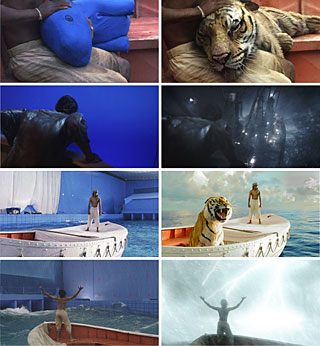
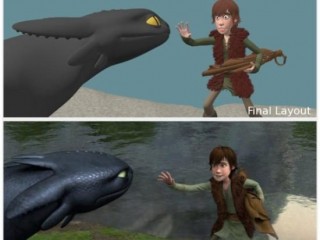
Before (left) and after (right) of four shots in 'Life of Pi'

Before (left) and after (right) of four shots in ‘Life of Pi’

The visual effects industry, not unionized (yet) and therefore disadvantaged to negotiate fair pay, have been pushed for years to deliver better, faster, and cheaper work than ever before.

Since work-for-hire does not provide back-end profits, artists don’t benefit if the work does well at the box office; only if it looks great does their work lead to better work, brighter trophies, or wider peer appreciation. Producers and studios do benefit, reaping box office percentages if their bet pays off, even at the expense of throwing fairness under the train.

While this is nothing new or unique to visual effects, It seems that at some point the production budgets need to just go over to accommodate the professional work it got. Where does it simply require more investment, delay the release, and/or compromise and what can be done or revised at the given deal?

Drawing attention to the misfortune, 400 picketers protested outside the Dolby Theater while the Oscars were telecast. Since the snub, over 31,000 have followed up on facebook.com/ VfxSolidarityIntl and many have turned their social media profiles chromakey green in solidarity. Comparisons of shot before and after the VFX have also been circulating, which clearly show the technical prowess and challenge involved with this film.

Some of the best slices of commentary in the media are linked below:

What are your thoughts on this matter?

Author

Aaron Proctor
Founder, FWD:labs
Director of Photography site
Contact


  • Published in Film + Web

beck-lincoln-chrismilk

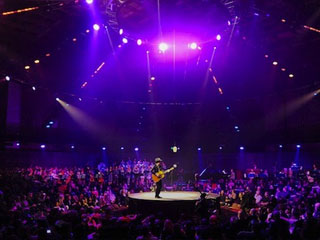
Beck’s “Hello, Again” is an experiment from Lincoln Motor Company which utilized director Chris Milk and his team to create an immersive, interactive online experiment.

Screenwriter Joe Halstead, a member of FWD:labs, first found the music “one for the history books,” but then got on the website. “When the webcam kicked on… This is amazing… This is the future… Absolutely blown away by this. Completely stunning.”

What makes this project unique? Fast Company’s contributing writer Rae Ann Fera wrote “A New Vision For Sound”, where she interviewed director Chris Milk for a “masters class” in how they made it work:

  • Binaural Recording

    “[B]ecause I was recording the Beck performance with three 360-degree cameras, I needed the [binaural] heads facing in every direction simultaneously. I needed the sound recorded as if you were facing both towards and away from the musicians, in all 360 degrees, all at once. The solution was a head with ears all around its circumference. I assumed the solution already existed. It didn’t, so I had to invent it.” — Chris Milk, Director

  • 360 Degree Cameras Without a Nadir/Zenith Hole

    “Michael [Kintner]’s 360Heros system uses six GoPro cameras to record in every direction. Because of the way he places the support structure to hold the rig, he’s able to visually erase the support later as it lives between the paralaxing of two camera positions.” — Chris Milk

    [See Cubify for a further article on this.]

  • Facial Tracking Webcam Support

    “We then wrote some code that pairs the bitmap data to the 360 footage, so when a user moves their head to the right within the webcam frame, we quickly detect that movement and the code tells the footage to move to the right based on a calculated speed.” — Zachary Richter, Stopp L.A.


Author

Aaron Proctor
Founder, FWD:labs
Director of Photography site
Contact


oreo-super-bowl

My copywriter colleague appeared on cue in my office doorway this morning, demanding to know my favorite Super Bowl ad. I said I didn’t have one.

The best ad, I said, was a tweet. I had plenty of company.

Oreos’ quick and quick-witted response to the Big Game’s big blackout trumped everything in 30-, 60-, 90- or 120-second format this year, including its own whisper spot, a “meh” effort at best.

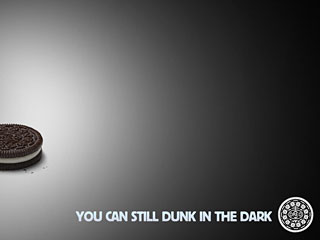
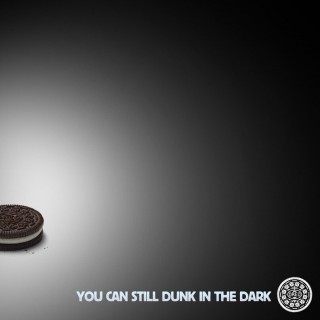
But, knowing opportunity strikes suddenly and without warning in a digitally-enabled Super Bowl, the Oreo client and its team, digital shop 360i and media services power player MediaVest among them, were ready. They tweeted “Power out? No problem.” and included a pic of the iconic cookie above the headline “You Can Still Dunk in the Dark.”

They were able to do this because everybody involved–creative and strategy teams and the client–were together in an office at 360i’s Manhattan headquarters for just this eventuality.

And they killed. More than 12,500 retweets, over 19,000 likes on Facebook. And once again, Oreo establishes its bona fides as a smart marketer, digitally competent and able to bring the brand to anyone, anywhere and with impact.

Once again, if you didn’t need reminding, it was the combination of old and new platforms married to opportunity that sealed this deal. The Super Bowl, in fact, has become as much a platform for state-of-the-digital art plays as it has for the conventional commercial.

And not incidentally, a testament to the criminally under-appreciated truth that you don’t need fart jokes, animals, babies or Bar Rafaeli kissing a geek to stand out in a Super setting.


Author

Jack Feuer
Advisory Board, FWD:labs
Bio


paperman-tn

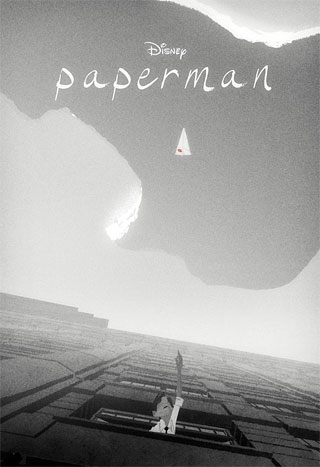
Maybe one day we can have consistent theater-going experiences where a well-crafted short film leads us into the feature — instead of pre-show “entertainment,” looping slides, endless trailers, and other uncomplimentary advertisements. Just like the old days, right?

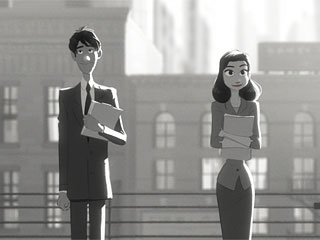
Making the viral rounds nowadays is “Paperman,” the Disney short film screening now before “Wreck-It Ralph,” which is directed by first-time director John Kahrs. Over two million people saw it on YouTube within the last two days, thanks to a solid marketing strategy that ensured what viewers were watching is what the studio had posted, and not a bootlegged version, where the demand beat the supplier.

https://www.youtube.com/watch?v=aTLySbGoMX0

paperman

(Check out some behind-the-scenes of “Paperman” at It’s Art Magazine for how the film was made. Collider also has an interview with Kahrs on how “[t]hey were looking for things to push technology and fill people’s time in that gap between Tangled and Wreck-It Ralph.”)

Sometimes called a double feature, a film before the main attraction was popular for studios to do with “B”-grade pictures until 1948 (United States v. Paramount Pictures, Inc.). Short films were included there until the 1950’s when someone decided television was taking off and short-form ideas would be better suited there. Since then, attempts with shorts before a feature — and the idea of literally showing two features back-to-back — were made around Disney’s Roger Rabbit in the 1980s and “Grindhouse” in 2007, respectively, but neither took off.

One problem might have been excessive studio control. Cut to the late 90’s where you add in a commercial element and you’ve got only one pioneer still experimenting with short films before a movie: Coca-Cola. Between 1998 and 2010, the Coca-Cola “Refreshing Filmmaker’s Award” sported 90-second films before some features. The films they proceeded (in just 20,000 test locations) had no choice over what the pre-show was and it’s likely the theater (and the awarded filmmaker) only benefitted from the branded content.

Where it has succeeded is when Disney/Pixar and other animation studios include their own, fostered, and top-rate works — starting in 1984 and continuing today. Alternatively, look at how musicians often hand-pick who opens for them on tour. The fans might dig it, or might skip it, but new stories and talent are exposed in very cost-effective way.

Could there be a renaissance of short-form content before features outside the world of festival and revival screenings, or is it forever destined for online and filler for broadcast? Why does it still work for animated films while it’s gone by the wayside for feature film presentations?


Author

Aaron Proctor
Founder, FWD:labs
Director of Photography site
Contact


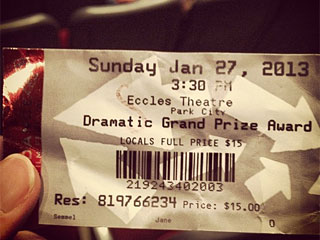
Sundance 2013. CC Photo by Flickr / downtowntraveler.

Sundance 2013. CC Photo by Flickr / downtowntraveler.

Just under 1% of the 12,146 films submitted were screened at the 2013 Sundance Film Festival. Here is a recap of the films whose creative and business acclaim caught my attention:

Big winners

  • Updated 1/30/2013: First Showing has a breakdown of all the sales at Sundance, including one of the highest sales ($9.75 million) for “The Way, Way Back”
  • Fast Company spoke with Ryan Coogler, director of “Fruitvale,” which won the Grand Jury Prize, the Audience Award, and about a $2,000,000 distribution deal with The Weinsteim Company after it’s opening weekend premiere
  • Kickstarter financing was behind 17 films, including five winners (“Blood Brother” won the U.S. Grand Jury Prize for Documentary and the Audience Award for U.S. Documentary; “The Square” won the Audience Award for World Cinema, “This Is Martin Bonner” won the Audience Award: Best of NEXT; and “Inequality for All” and “American Promise” won special jury prizes)

Available to watch

  • Sundance Channel had video of Robert Redford talking about how technology is changing filmmaking — also check out Redford’s talk on a sense of place
  • Fast Company rounded up 12 short films — already on YouTube’s Screening Room channel — and highlighted the fact that 65 of 8,102 short submissions were accepted
  • LiveStream provided live and archived some official video, but the ones to consider watching are the shorts awards and the closing night awards
  • The New Yorker wrote about Kahlil Joseph’s work, “Until the Quiet Comes,” which won the Short Film Special Jury Award [embedded below]

[vimeo]http://vimeo.com/48551671[/vimeo]

Cream-of-the-crop commentary

  • The Salt Lake Tribune (via The Denver Post) proclaimed Sundance 2013 the year of the female director — related, Los Angeles Times fully transcribed the “Women Directors’ Roundtable”
  • New York Magazine / Vulture.com calls out the best performers of Sundance 2013, most notable Michael B. Jordan (“The Wire,” “Friday Night Lights”) in “Fruitvale” and also Scarlett Johansson in “Don Jon’s Addiction,” the Joseph Gordon-Levitt directorial debut which got picked up for several million
  • Rolling Stone’s Peter Travers picked 5 films with great trajectory for the coming year, including “Sound City,” the Dave Grohl “love letter to the historic Sound City Studios”
  • Variety talked seven-figure deals and quotes CAA on whether VOD is a player this year for distribution
  • Los Angeles Times noted that the sales of documentaries this year are like hotcakes, including “Dirty Wars” (winner of the Cinematography Award [U.S. Documentary])

Useful asides

  • Facebook had a strong official (and ad-filled) presence, but noticeably missing from the community management efforts were replies to questions and follow-ups to news/awards teasers
  • IndieWire gave a rundown of their 30 reviews, including the Casey Affleck/Rooney Mara drama “Ain’t Them Bodies Saints” (winner of the Cinematography Award [U.S. Dramatic] and in negotiations with IFC for distribution) and the Ethan Hawke/Julie Delpy sequel “Before Midnight”
  • Esquire had 9 lessons from their coverage, including how Daniel Radcliffe, Michael Cera, and Amanda Seyfried premiered roughened-up images of themselves thanks to their independent films
  • Sundance.org appropriately cross-linked the list the winners with each film’s details page, including archives for past festival films and winners

(Curious about past Sundance coverage? We’ve touched on different facets in past articles.)


Author

Aaron Proctor
Founder, FWD:labs
Director of Photography site
Contact


Part of a series of posts about great film, web, or design artists and their work abuzz online and in-person.

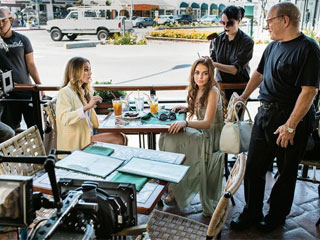
Set photo of “The Canyons” by Jeff Minton for The New York Times.

  • “Here Is What Happens When You Cast Lindsay Lohan in Your Movie” (The New York Times, January 10)
    “[Author Bret Easton] Ellis, [producer Braxton] Pope and [director Paul] Schrader are putting up $30,000 apiece. The rest will be raised on Kickstarter with promises of cameos, script reviews and — for the low, low price of $10,000 — the money clip that Robert DeNiro gave Schrader on the set of ‘Taxi Driver.'”
  • “Panasonic’s Any Battery Light isn’t picky about battery size, takes anything in your junk drawer” (Gizmodo, January 3)
    “The Any Battery Light can siphon power from AA, AAA, D and C-sized batteries, lighting the dark with just a single serving of any compatible size. Loading it up with all four provides up to 86 hours of continuous LED illumination.”
  • “The 12 (Or So) Mistakes Online Video Marketers Always Make” (Mediapost, January 2)
    “The most painful ‘mistake’ is trying too hard to go viral. Usually this involves a failed attempt to be funny, which ends up creating consumer disdain for the advertiser.”
  • “Humble Beginnings” (Alex McCaw, December 17, 2012)
    “Twitter started out as a podcasting site, Flickr a multiplayer game, Youtube a dating website, Yelp a email recommendations service and PayPal was hell bent on transferring IOUs between Palm Pilots. … All of these successful tech companies were simple, humble and ugly when they first launched, but the one thing they all had in common is that they did something simple, and they did it well.”
  • “Orwell, covered up” (Creative Review, January 3)
    “[Designer David] Pearson’s adept use of type – as demonstrated in his work on Penguin’s Great Ideas series of short, influential texts – is once again at the fore of each of the designs. And that includes what is perhaps one of Penguin’s most radical covers of recent years, for Nineteen Eighty-Four, where the title and author’s name are almost completely obscured by black foiling.”

Author

Aaron Proctor
Founder, FWD:labs
Director of Photography site
Contact


  • Published in FWD:labs

This year has a theme of collaborative leverage. Even with a leviathan of projects that start with a prospectus hand-in-hand with persistent crowd-funding strategies, we’ve found those with the tenacity to keep things on the front burner paid off well — even if it takes years.

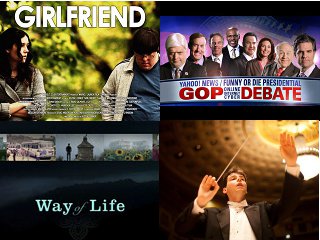
Given lower and lower budgets that press us creatives for new and faster ways to collaborate, pioneers like “Girlfriend” director Justin Lerner and “Way of Life” director David Driver kept their work going and going, not by coasting on coattails, but keeping the momentum forward and clearly communicating their updates online.

With 34 posts this year, including several from contributing authors, here is a selection of favorite subjects covered on our blog.

  1. How Kodak Can Become Profitable Again
    Once a pioneer, this company lost an edge. Others have been quicker to move forward while maintaining high standards.
  2. Making Funny or Die’s GOP Debate
    Spending some “sleepless, dreamless nights working” is one route to seize the day.
  3. Thoughts on Dynamic Pricing for Cinemas, Based on Theatre
    How selling tickets early, and raising the cost if seats begin to run out, is one business model in other industries to consider for film distribution.
  4. Everything New Is Old Again
    “Figure out how to tell a story with moving pictures and sound or sell a product through video content.” Guest columnist Jack Feuer postulates it’s time to think for twenty-years out.
  5. Licensed music for video on a budget
    When you can’t hire a composer, here is what we can recommend that’s different, half the price, and without delay.
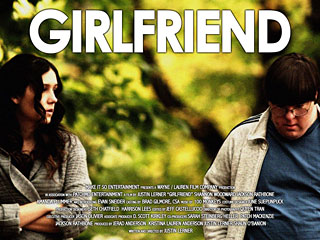
  6. Making “Girlfriend”
    “Making a film is … war,” Justin Lerner notes. After long battles, he won.
  7. Layout: Bringing It All Together
    A learning piece by Dreamworks animator David Badgerow on layout, “the cinematographers of the (animated) movie.”
  8. WebGL: How the Future Looks
    An interview with Google’s Michael Chang on how WebGL applies to immersive storytelling and the future of online video.
  9. The Benefits of Incentivizing Fundraising
    Everyone’s doing it, but guest author Courtney Robertson spells it out: “As much as we may wish it were otherwise, people rarely, if ever, give something for nothing.” She provides some tips for creative like-minds.
  10. Crowdfunding “Way of Life”
    Director David Driver raised over $20,000 on IndieGogo for completion funds. No easy accomplishment. We asked his strategy for every step of the way.

One of your favorites not on the list? Browse the archive and comment below.

Finally, check out our 10 best posts of 2011, 2010, 2009 and 2008.


Author

Aaron Proctor
Founder, FWD:labs
Director of Photography site
Contact


  • Published in Design + Web

Image by @antjan. (Used with her permission. Because it would be wrong to use it without her permission.)

In case you’ve been living off the grid the last couple days, Instagram (now a wholly owned subsidiary of Facebook Inc) released new terms and conditions. Buried deep within this 6,000 word document was new language allowing them to use your photos however they wanted and for commercial gain, without your permission. This caused a blogosphere/social media universe firestorm of biblical proportions. Users were rightfully pissed off, felt manipulated, used and duped. Facebook and Twitter were overrun with promises to shut down accounts, file for divorce and bring in the National Guard. The terms and conditions aren’t going into effect until January 16th, but its never too early for some righteous indignation posted on Facebook for your like-minded friends to share and commiserate.

I was struck by the intensity of the public response. (Though I don’t think they’re wrong — just possibly a bit overheated.) Taking a long, deep breath I read all the posts and delved into the mainstream media’s coverage, looking for some “fair and balanced” reporting. Here are a few thoughts, for what they’re worth:

  1. What was Instagram (slash Facebook) thinking? Did they actually think that no one would read through the entire (intentionally murky) document? That we’d all be too busy wrapping presents, too drunk on egg nog to notice? How would you feel if that charming photo of your beloved Grannie wound up as the centerpiece of a campaign for adult diapers? Or that oh so embarrassing photo of you slumped over the bar on St Patrick’s Day was used to advertise erectile disfunction? Let’s call this whole episode what it is: an epic PR fuck up of the highest magnitude.
  2. Instagram as its widely used today is kind of a joke. 99% of the users post endlessly self-indulgent, amateur photos of their cats, sunsets and the all-too-infamous “selfies.” You know you’ve really made it when the parody video goes viral. (Take a look. It’s actually funny and manages to satirize Instagram AND Nickelback at the same time.) Nowadays everyone is the manager of their own brand identity, their own personal VP of Marketing. Here I am at this fabulous concert. What an amazing vacation I’m having. Jealous yet? But so what. Who cares. Don’t follow them. Curate what you choose to look at and respond to. In our day-to-day lives we are saturated with imagery, most of it bad, but of course you can choose to ignore most of it. Are you really concerned that all the servers storing those billions of images will shut down the power grid?
  3. I have to say I actually like Instagram and use it all the time for work. Somehow, without my noticing, Instagram became a visual diary of my life, a photographic record of my friends, family and meaningful events. And for someone with a notoriously faulty memory this is an indescribable gift. But equally importantly, Instagram has become a source of inspiration and reference for my assignments as an art director and photo editor. Many of the people I choose to follow are talented photographers, and many of them are producing extraordinary work on their iPhones and sharing it daily. I would suggest that in a few cases this personal, off-the-cuff work is stronger and more profound than their assignment work. I’m actually hiring photographers because of their Instagram work. I”m seeing depth and quality that I didn’t always see on their websites. And for this reason I’d be sad to see all of you immensely talented photographers bail. You know who you are!
  4. I have to ask: What did you think would happen when Facebook paid ONE BILLION DOLLARS to buy a company with five employees? Of course they’re going to monetize their investment. No one ever confused them with a non-profit. It’s not when, it’s how, that’s the problem. Had Instagram changed their Terms of Service in a transparent, public way, clearly stating the changes, and promising to only use your images if you gave the company permission (and possibly offered a modest fee) all of this drama could have been avoided. So, what’s happened since the day before yesterday? Instagram is backpedalling as fast as they can. The bad PR is lethal. And users are abandoning ship like its the last voyage of the Titanic. Ultimately the terms will be modified, well before January 16th, and you can decide whether you can accept the contract. Your call. If you don’t believe me you can read it in The Paper of Record.

So, here’s my Modest Proposal. Don’t export all those beautiful photos to Flickr quite yet. Take a deep breath. Sit tight. See how this all plays out. You can always bail in mid January, just as I might do if they don’t make the terms equitable. I’m an optimist: maybe we won’t plunge off the fiscal cliff, maybe they will ban assault rifles, and maybe, just maybe we can all still keep our Instagram accounts — because I know you’d hate to miss that really meaningful picture I took of my cat.

(Originally published at chessdesign.tumblr.com.)


Author

Charlie Hess
Art Director


Part of a series of posts about active artists with the tenacity to take their project to completion.

Cesar Kuriyama started out with an idea to archive his life. No 24/7 video feed, no Facebook posts, and no edited reality TV pilot. He simply shot, cut, and uploaded a seemingly random montage of his life, using one second to represent one day for over a year.

[vimeo]http://vimeo.com/37792362[/vimeo]

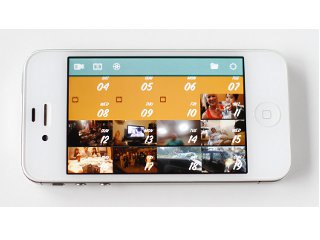
Just uploaded nine months ago, his video went viral, his talk at TED was well received, and now he’s crowd-funding for an app that makes montage a cinch. (Alchemy50, an application design/development studio in Brooklyn, is providing the technical chops, optimizing for iPhone 5.)

What he learned throughout the process is really the best story. Here are some quotes from his front-page’d Reddit and his thorough Kickstarter posting, which — 8 days out from wrapping — is over 200% funded beyond his needs:

Processing Re-evaluation with Video

“I worked in 3D VFX for many many years… in Advertising… Work was basically my life… constant 100 hour work weeks… decided to do something about it… so I saved every penny I could for 2 years so I could quit my job and take a frugal year off from work to re-evaluate what I should do with my life. I made this video in the process.”

Limitations of Film vs. Over-Capture of Digital

“Digital Cameras have made it easy to capture our lives, so most people are over doing it. And just because we can, doesn’t mean we should. The limitations of rolls of film used to force us to prioritize what was worth capturing & what wasn’t. I believe we should record less, & live more. Ruthlessly record only what’s most important.”

Unintended Benefits

“This project has produced an interesting side-effect: it encourages me to do at least one interesting thing every day.”

Constraints Lead to Creativity

“We’ve run into other strange things that have forced us to change course from the initial plans – a good example of this is that we initially thought we’d be able to use the native camera, but apparently it violates the Apple ToS [terms of service] to have an app launch the camera in Landscape mode, so we ended up having to build our own camera module. Although we believe this will work in our favor long term.”

Personal Record vs. Social Record

“I rarely capture the best moment of a day. A lot of the seconds you see are actually from before or after a moment I want to remember, but seeing the moment I did capture still brings me back. Trying to record the perfect second puts too much pressure on myself, and becomes a chore. Wouldn’t it be better to fully live an experience, than risk missing it while trying to capture it?”

Hat tip to the multiple points to interact with his crowd-funding effort. There are multiple videos, various photos, and many side stories. Together, along with the content, it’s more likely to be successful.


Author

Aaron Proctor
Founder, FWD:labs
Director of Photography site
Contact


  • Published in Film + Web

Matchbox 20 video by TIC360.tv

For immersive and engaging cinematic experiences, there is 3D and then there is interactive 3D video. Much like a video game experience involving your keyboard or mouse, there’s a lot of innovation among the tools to connect filmmaking with interactive.

Behind the scenes look at the Red Bull shoot. Photo by MakingView.

Take the Red Bull Media House’s marketing for example. They continue to experiment with interactive online video content, now using Making View’s ViewCam. It’s a mere 1.3 pounds. Just recently, the company attached it to an F1 race car driver (embedded below) and a mountain biker to demonstrate the equipment’s capabilities. From the commentary online already, fans love it. The creative experiments and joys of having $5.5 billion in revenue last year, right?

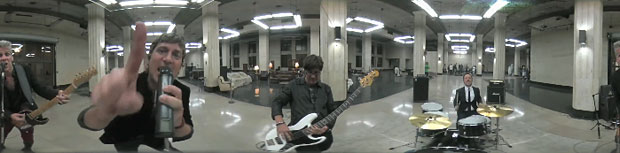
Another company, EyeSee360, sells a GoPano Plus ($699) and a GoPano Micro for the iPhone ($79). TIC360 recently shot the Matchbox 20 “She’s So Mean” music video using the Plus model with a JVC 4K camera. They also rolled on the Space Shuttle Endeavor’s trip through Los Angeles. The New York Times reviewed their launch in 2011. GoPano also has its own iPhone app since the player format is not standard.

On the engineering front, digital media entrepreneur Jeff Glasse at Koget raised over $120,000 on Kickstarter for a Dot, a 360 degree video capture for the iPhone 4 and 4S, which is now for sale.. Computer engineer Jonas Pfeil engineered a “Throwable Panoramic Ball Camera” in 2011, but it needs investors before shipping to market. The CAVE Laboratory at Columbia University also has been experimenting with 360-degree projects like a Cyclops and Zoomnicam camera.

Obviously, this kind of work leaves life to chance, cinematography on the sidelines, and editing in the dust. This foray into a different kind of 3D camera technology, however, combines an added level of creativity through the use of smaller cameras, while adding a level of audience engagement with its online distribution. However, the usage of these cameras, and the technology itself, hasn’tt yet been perfected. Some issues include the lack of interoperability of a video player: each company has their own Flash player, which locks out iOS users.

Where else are 360 cameras going? There’s the not-so-hand’s-on Google Street View, which has an option to utilize WebGL, the technology engine that makes viewing outside of Flash possible as well as 3D graphics on top of video. Gone will be security cameras pointing in just one direction, too. The security logistics of one camera pointed everywhere at once has Doo Technologies in business.

What else is out there? How can 360-degree experiences provide more story?


Author

Aaron Proctor
Founder, FWD:labs
Director of Photography site
Contact


[vimeo]http://vimeo.com/53155584[/vimeo]

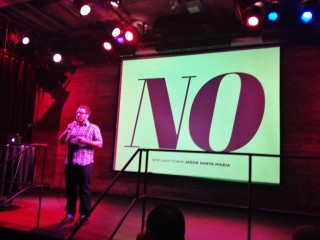
Jason Santa Maria speaking at CreativeMornings. CC Photo by Simon Collison.

Part of a breakfast lecture series for creative types called CreativeMornings, a New York-based effort (now worldwide) from Tina Roth-Eisenberg (aka swissmiss), designer Jason Santa Maria spoke in October. His topic at their Kickstarter benefit in New York was about “saying no.”

As a design school graduate, I’ve always admired Jason’s work in website, identity, and letterprint design. His pixel-perfect work is most known for upgrading WordPress , AIGA, Dictionary.com and Typekit, along with several online portals for print publications like the Chicago Tribune and Chicago Now.

On the matter of choices between 20 and 40, Jason added more on his blog:

It might be saying no to a project or job, or even something that you think you can’t say no to, but finding the strength to set your own priorities for what you want is one of the most crucial things you can do in life. Saying no used to make me uncomfortable, and despite making many mistakes on my way there, I’ve learned to feel good about saying it. The talk is just a short 20 minutes, but sums up most everything I’ve learned about the topic in all my years working and living.

Have you set your priorities for what you want out of a job? Do tell in the comments below.


Author

Aaron Proctor
Founder, FWD:labs
Director of Photography site
Contact


  • Published in General

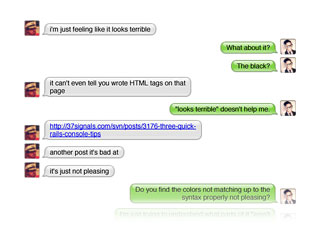
“It looks terrible.” “What about it?”

You’ve heard it before. Maybe someone thinks your work doesn’t “feel” right or considers it “way” off base, when the solution is simply correcting the tone of voice or adjusting the color they dislike.

When everyone’s expertise comes to the table, it’s easy to fall into the trap of worrying too early about the details that matter to them most. Save yourself a few minutes of needless fiddling, ask for clearer feedback sooner than later.

— Mig Reyes, designer at 37signals, who recently wrote “A case for clarity in feedback”


Author

Aaron Proctor
Founder, FWD:labs
Director of Photography site
Contact