FWD:labs

Blog


Back in 2003, I co-produced “The Plagiarist” for FWD:labs. This wasn’t long after I had met Aaron at lunch in a UCLA cafeteria and heard about FWD:labs for the first time. I liked that it was an up-and-coming operation. I liked the work it had produced. I liked the artists that were affiliated. It was something I felt I could contribute to creatively and operationally.
Drive

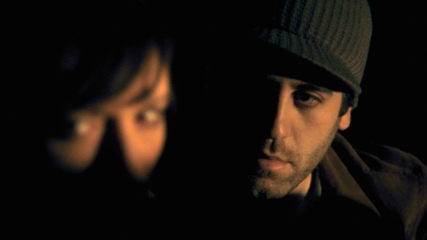
Over the next three or so years I was a PA on the set of a zombie student film, produced and acted in a couple short films (including “Drive”), and aided numerous other FWD:labs productions.

Years later, and one month ago, I joined the FWD:labs team as an Executive Producer and Consultant. February was an exciting whirlwind: I got deeper into the grind of a web based production company and observed where the company is, and what it can grow to become.

Here are my observations and impressions one month in:

Workflow

Emerging from six years of tightly organized and monitored large company work flows, it’s been difficult yet ultimately rewarding to be a part of a predominantly project-based work flow again. Project management is a very detail-oriented process and our company has many tools at our disposal to ensure every aspect is addressed (e.g. Google Apps, Basecamp, and Harvest). Producing has been a learning experience as well. The back-end work has been streamlined via Google Docs and we now have official FWD:labs templates to use for all client web and video proposals, agreements, invoices, etc.

In addition to the web based tools, we have the physical presence required to turn things around faster. Working in tandem with Aaron in Long Beach on a recent interview piece, I was able to oversee audio while he worked the camera. I conversed with the interviewee and established a comfortable working atmosphere while Aaron adjusted lighting and camera angles. I supervised the script and helped load and unload equipment. Our tag team allows for a speedy, yet still professional, production.

Producing

We produced two works this last month, a short film titled “Mother Earth Speaks” and a UCLA Magazine doc titled “To the Rescue: Team Rubicon’s Josh Webster.”

Both productions were informative and fun. I’m realizing that my responsibilities as a producer are never-ending, in a good way. The key is getting all the pieces in place before the camera starts rolling. When a client didn’t have the necessary locations confirmed the day before a shoot, I immediately suggested that we push the timetable back another week or two in order to get all locations and personnel confirmed. While at a friend’s house in the Hollywood hills, I inquired about its viability as a future music video shot location. It’s become good practice to never quite stop thinking like a producer.

Salon

I also helped host February’s salon (#53 if you’re keeping count), and it was a ton of fun! Ten creatives, ranging from costume designers to documentary filmmakers and everything in between, attended a downtown bar and conversed for hours.

As someone who was fortunate enough to be local when the FWD:labs salons (then the “Wine and Cheese Salon”) first started at Aaron’s apartment at UCLA, it was a great pleasure to rejoin this consistent opportunity to meet and socialize with like-minded individuals once again.

The Future

There’s a lot in store for FWD:labs! We are focusing our energy on many research and development initiatives that will enable FWD:labs to highlight its own best selling points. This will include new web app tutorials, print collateral development, and a wide variety of video productions and official websites. The newsletter will also come more frequently and the website will undergo further updates to the Productions page as well the back-end and sign-up pages. All of these will aim to strengthen the communication within the FWD:labs collective and spawn a higher turnout of updates, collaboration, and networking.

From 2010 through 2011, I had continuously told myself (and Aaron) that as soon as a fitting position opened up at FWD:labs, I would move back down to Los Angeles in order to take it. I’m thankful one did. I’m very passionate about my new role and responsibilities and urge you to reach out to me with website/blog/other feedback. I feel it’s important to continuously promote our channels of communication to help the business and all of our creative endeavors thrive. I very much look forward to helping FWD:labs grow and working with all of you.


Author

Chad Liffmann
Executive Producer, Film + Web + Design, FWD:labs


  • Comments Off on My First Month

  • Published in Film + Web

David Kruschke works at Studio G, Google’s in house video production team, as a director, producer, and editor. FWD:labs spoke with him about the new spot, “Best Best Man – Google Docs for Android.”

What were your decisions behind the “best man” storyline?

David Kruschke We thought a wedding would be a fun and interesting reason for people to collaborate. It’s also something people could easily relate to. We tried to emphasize the fun side of it with our production design and character quips.

And, the camera angles that anonymize the user while demonstrating gestures and features?

DK I wasn’t specifically seeking to anonymize the user. If you watch closely, all the characters actually have personalities that come across by the type of edits and changes they make to the best man’s speech.

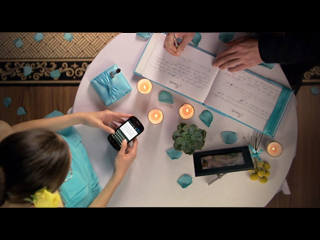
The camera angle came about because I wanted the look and feel of a wedding but didn’t want to use green screen or go on location. By shooting top down, we were able to convey the essence of a wedding by building what I call “micro sets”. These sets look realistic from a bird’s eye perspective (top down), but if the camera was angled any other way, you would see the studio and the lighting gear.

What would you say are the key elements to keep in mind when directing a product video and what do you have to avoid?

DK You need to remember the main message you want the audience to take away from the video and have a strong vision about how you’re going to achieve that. It’s a short amount of time and you do not want to distract from the message.

How much time did it take to shoot the video vs. time spent in post-production?

DK Thanks to the great team of people we worked with, the video only took two days to shoot.

Since I was also the editor for this project, I stayed late on day one and assembled the footage. On day two, I spent my lunch and breaks cutting in the selects. By the end of the shoot, I had a pretty good rough cut to show. Two weeks after that, the Official Google Blog post featuring this video went live.

How have product videos impacted the nature of advertising over the last few years? What’s changed? Thoughts on the future of product videos?

DK Product videos have become a popular advertising method because the entire message can be delivered in a few minutes (or even less) and people have fun watching. At least the good ones, that is. When a product video goes viral, the viewers win and the company wins.

Having a clear script is becoming more important than having the highest production value. In other words, it’s more about what’s being communicated than how gorgeous and smooth the shots are.

I think in the future we’ll see companies placing more and more focus on education to draw in more users.

Moving forward, what type of product videos would you like to do next, and still in the director’s chair?

DK I’d like to keep doing what I am doing: communicating the value of Google products to the users.


Author

Chad Liffmann
Executive Producer, Film + Web + Design, FWD:labs


CC Photo by Electrospray (Flickr)

Sports. Theatre. Concerts. They all seem to do dynamic pricing these days. If it’s a losing team, slow night, or not yet sold out, venues sometimes drop ticket prices. On the flip side, if it’s in demand, official ticket prices go way up. Whether it’s an Oscar winner or a popcorn blockbuster, as Wired Magazine’s Rafi Mohammed recently speculates, what if movie theaters did the same?

Take a look at the theatre business. Pros for dynamic pricing in the theatre, from what I can tell, mostly benefit the presenting organization (but it doesn’t always have to). Dynamic pricing allows you to sell shows and set prices based on demand. I think of it as a more engaging way to look at the inventory on hand. You constantly have to be evaluating what the market wants. If demand is high for a show, you can raise the prices; while lower-income people won’t necessarily make it to your show, those with higher incomes (who were going to come buy the $80 ticket) will probably buy the $95 ticket. And those minor increases to your bottom line can make huge impacts. Think about it: you’ve already created a budget based on what you expect to sell. If you all of the sudden start making $15 more a ticket in a 2,000 seat house, in one night you’ve made an additional $30,000… which is enough to make up for a low-selling night you had two weeks prior.

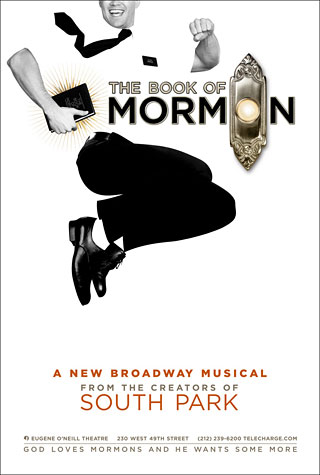
In a weird way, you also create buzz around the show, and your organization. Broadway has done this for years. It’s the reason why “Book of Mormon,” which is from the creators of “South Park,” is selling its premium seats currently for close to $400. All it takes is reading even one random article about the show to know it’s become what everyone wants to see in New York. If people are paying $400, it must be good, right? And if a theatre is constantly producing work whose ticket prices rise, then they must have good taste, right?

It’s also especially good if you think about it the other way. Dynamic pricing allows you to drop the price if you have a show that isn’t selling. If you can’t sell a ticket for $20, by dropping the price even $5, you might convince a skeptical audience to spend the money. They might take a chance, assuming that price change allows you to hit the sweet spot. In theory, even if you can only sell 20 more tickets, that’s an additional $300 in the scenario above. And while monetarily there is not as many pros for the organization in the short term there, you’ve gotten 20 more people in your doors, 20 more people talking about your theatre to their friends, and 20 more people who might just turn into patrons.

Finally, dynamic pricing allows you to do what is a theatre marketers greatest challenge (or one of them), and that’s to sell tickets early in a run. Typically, preview periods and the first week after opening are a tough sell. Reviews haven’t come out, people’s friends haven’t seen the show, and how on earth are you going to get people to come see your show if they haven’t heard anything about it? With the price of the average theatre ticket, you aren’t just going to drop that kind of money on a whim. However, if you have single ticket buyers who seem to come back year after year (students, young adults, young parents, and so on who like your work but don’t have the cash to buy a subscription) who now knows if they wait for the review they might have to pay more, they might be more inclined to buy early. To do some research on their own. To take a chance. This gives the organization some much needed cash up front to pay for the next production.

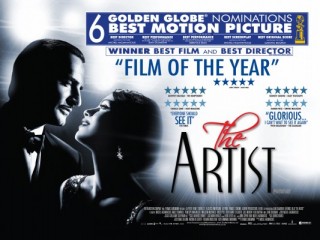
Movie theatres need to be smart about how they implement this model. Just because “Extremley Loud and Incredibly Close” was nominated for an Oscar, it still doesn’t mean I really think it’s worth paying more money for. However, let’s say I hadn’t seen “The Artist.” All I’ve heard is rave reviews and it won a bunch of awards. If demand remains constant or even increases, now maybe you have some proof people actually would spend some money on it.

Overall, this concept isn’t a new one. Organizations providing goods to consumers have employed this model consistently from the beginning of time. There is only so much inventory to sell, so you find the sweet spot, where your demand meets supply and you’ve therefore maximized profits.


Author

Courtney Robertson
Non-Profit Arts Administrator
@quartersmarie


  • Published in Film + Web

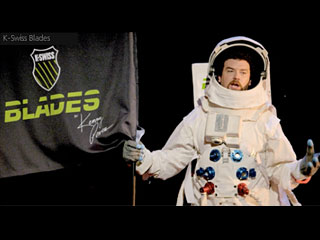
This is one way to try and sell shoes … and an HBO sitcom. Jody Hill directs the latest K-Swiss “Kenny Powers” short [NSFW], “Blades,” with actor Danny McBride and agency 72andSunny.

(The Hill/McBride collaboration, which goes beyond the HBO series “Eastbound and Down” starring the fictional character Kenny Powers, started back at the University of North Carolina School of the Arts in Winston-Salem. (The show began its third season this last Sunday, February 19.) 72andSunny is also behind the provocative Benetton ads, which features different political leaders kissing each other. The spots use FunnyOrDie for its online distribution, whose audience skews older.)

In an interview last year with CNBC regarding the initial “Kenny Powers – K-Swiss CEO video (Uncensored)” video:

“What attracted me to this company was the fact that we can take risks to get noticed that the other bigger brands wouldn’t take,” said Chris Kyle, the company’s vice president of marketing, who joined K-Swiss from Adidas [in 2010]. “Adidas can outspend us by massive amounts, so our job as a little company is to do our best to make some noise.”

That noise has come at a significant cost. The company is expected to pull in $281 million in sales this year. That means that they do 1/100th the sales that Nike does.

A second campaign followed suit and Fast Company commented on the metrics:

The campaign was notable for a few reasons, not least of which was the simple fact that a marketer was putting its brand in the hands of such a spectacularly non-aspirational (fictional) athlete. But the campaign also marked an unusual three-way co-branding exercise, simultaneously promoting Tubes, season 2 of Eastbound, which was scheduled to launch a month after the campaign broke, and a Hollywood star on the rise.

Powers’ return is an indicator of the success of that inaugural campaign, and not just as a giant Eastbound promo. The videos earned millions of views online (a million on FunnyorDie), resulted in a 1256% increase in Facebook fans and landed the brand atop the “biggest buzz” list in industry trade Footwear News. Perhaps more to the point, K-Swiss also reports a 250% increase in online sales post-Powers.

But take a look at the stock. In an article two days ago on The Motley Fool, K-Swiss is still losing money … fast:

K-Swiss’ abandoning of its bread-and-butter classic tennis-shoe business is particularly disturbing given how long the company has tried to angle the company toward the sportier side of the market and failed. It’s been more than four years now, and in that time the company has burned through a good portion of its cash. In the past six years, it has lost nearly 60% of its revenue.

Are these ads helping save K-Swiss’ bottom line? Perhaps a little bit. Despite being entertaining and opinionated content, and despite being part of a year-long campaign, K-Swiss may be faced with the Old Spice effect: brand awareness isn’t enough for massive changes in consumer behavior. (See our guest editorial from Jack Feuer on this 2010 campaign.)

What hasn’t helped is the management decisions to run K-Swiss like a Swiss Army knife: jack of all trades, master of none. (They spent a bundle of cash recently going after a line of karate apparel.) What has helped is the creative decisions to go over-the-top to help K-Swiss appear like a super shoe. This is totally the right move for a company that needs to go all-in. Does a bump in online sales move the needle of profitability? Despite being a digital world, that’s not enough and perhaps the foul-mouthed approach is a dud. Because at the end of the day, sales is king.


Author

Aaron Proctor
Founder, FWD:labs
Director of Photography site
Contact


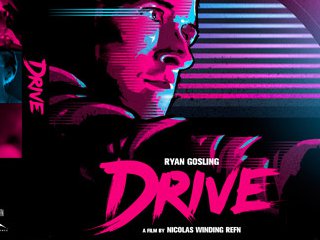
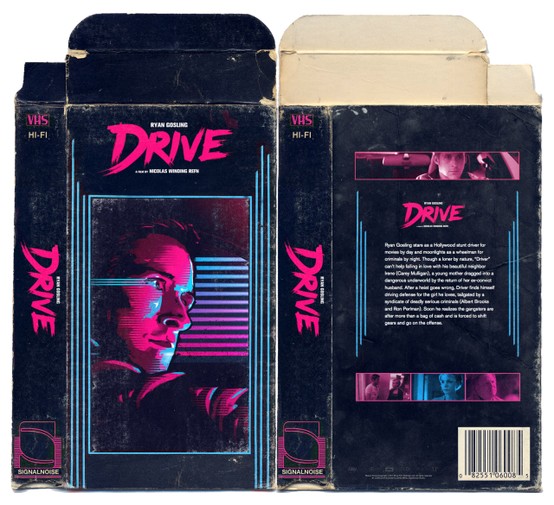
Designer James White on the impetus of his official “Drive” print collateral:

After seeing the film DRIVE I knew immediately I wanted to create a poster for it. I got to work and after a few days I finished my hot pink tribute to the movie. After it’s launch I was buried with comments, tweets and emails from people wanting a copy of the unofficial poster which was all very unexpected. After a little while of negotiating, my agent and good pal Ollie Judge inked a deal with Film District to make this poster official.

Check out the poster. You can also print your own Blu-Ray cover at signalnoise.com. And take a look at a conceptual VHS version, which fits well with the “Drive” genre.

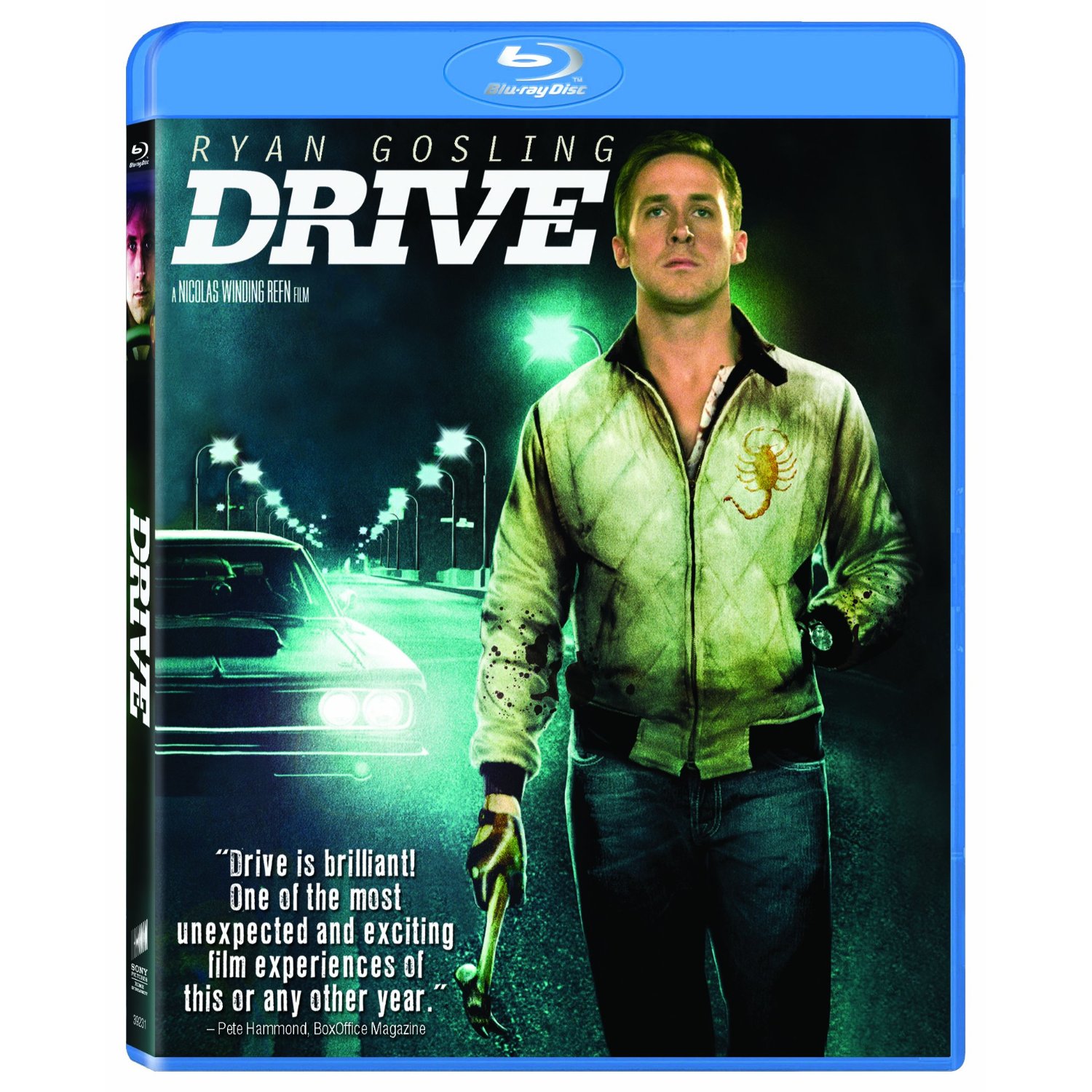
For comparison, here’s the less-inspired, official Blu-Ray cover.


Author

Aaron Proctor
Founder, FWD:labs
Director of Photography site
Contact


Part of a series of posts about great film, web, or design artists and their work abuzz online and in-person.

  • “How the Unconscious Mind Boosts Creative Output” (Miller McCune’s Tom Jacobs) “A study … finds allowing ideas to incubate in the back of the mind is, in a narrow sense, overrated. People who let their unconscious minds take a crack at a problem were no more adept at coming up with innovative solutions than those who consciously deliberated over the dilemma.” (via Wired and director Jaraad Virani)
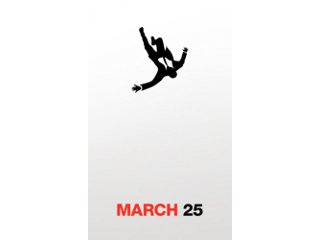
  • “9/11 and The Fall of ‘Mad Men'” (Imprint’s Michael Dooley) “This 9/11 connection hasn’t been a big secret. On the other hand, it hasn’t really been very widely acknowledged… until now. Imaginary Forces’ rich, subtle, and iconic motion graphic had left much to our imaginations. But the poster leaves us with practically nothing, both literally and figuratively. Layers of subtext are lost, and less is… less.” Also check out Art of the Title’s interview with Imaginary Forces. (via Salon and Imaginary Forces)
  • “For Your Consideration” (Tumblr) “What began as a joke on [Facebook] with April turned into me making some For Your Consideration posters. Because Oscar season is nigh and I think it’s time Channing Tatum gets the recognition he deserves.” (via Evil Media Empire)
  • “Lucky Elephant – Edgar” “To create the scene of the journey up into the stars, [director] James [Trosh] built a Helium Balloon which would carry his robot into the stars. Laden with a whole bunch of technology which allowed him to track its progress via GPS and locate the tin explorer when it landed. Most importantly though was the filming of Edgar’s flight, which James and his team managed by rigging up a GoPro HD Hero, with external power pack and sizeable SD card. … More recently, Jame’s footage has been picked up by GoPro themselves and has been used in a whole bunch of advertising, including its very own 30sec TV commercial airing on national TV.” (via The Mill, the visual effects shop who also makes the free iPhone app, Mill Color)

Author

Aaron Proctor
Founder, FWD:labs
Director of Photography site
Contact


  • Published in General

Michael Grecco

Dear Friends and Creatives,

I support Protect IP and SOPA. This might be an unpopular stand but the unbridled fears about Protect IP and SOPA are in my professional mind unfounded.

Social media is reacting to what I see as a very well orchestrated misinformation campaign claiming that enacting these bills would amount to censorship of the Internet. People are being asked to sign petitions that don’t fully explain the bill and misrepresent its ramifications.

As part of a coalition called the Copyright Alliance, we suggested this legislation as just one part of a slat of copyright issues that the CA is pursuing legislation on. Myself, Theresa Raffetto and Steve Best even travelled personally to Washington D.C. and addressed Senators and the Congress to take the stand and support rogue website legislation that led to Protect IP and SOPA.

But now I see people waving around the First Amendment in protest but without actually reading and fully understanding the actual bill proposed. It reminds me how often famous leaders are misquoted by millions on the web as masses of people simply react and repost without much thought.

Before signing and spreading around a charged piece of rhetoric, first read the actual bill being proposed. Here are some links to the facts: house.gov and thehill.com

I did and still do support Protect IP and SOPA.

The proposed legislation states that you must have a court agree that the accused, is infringing by showing a history of infringement. These are foreign sites that you would otherwise have no jurisdiction over. In my professional opinion, this is a fair law that is meant to justly protect copyrights.

Here is just one of hundreds of personal examples as to why we need this law to pass:
I made a film called Naked Ambition, An R Rated Look at an X Rated Industry. It was also published as a book. The film was distributed by Apple, Netflix and Warner Brothers. Regularly, I received a Google alert for sites where my film was available for free. In total, I received 107 emails listing multiple sites that I never had contracted with, offering my film for free.

Protect IP puts muscle behind closing down foreign sites whose main purpose is to steal and distribute copyrighted material that costs working professionals (not just corporations) hundreds of millions of dollars every year.

Here is just one of hundreds of links to sites offering my movie for free that I never made a deal with.

Remember, that according to the proposed bill a US court must agree that the site has a history of intended infringement.

But don’t take my word for it. Read some more facts and decide for yourself.

For all working artists, copyrights protect us from being totally corrupted. I support SOPA and Protect IP, and I stand proudly by that decision.

Michael Grecco
National Vice President
American Photographic Artists
Advocacy Chair


Author

Michael Grecco
Photographer
Website


Eastman Kodak filed for bankruptcy today. Some say, further cementing the claim that “film is dead.” Besides that sign of the times, the real question is how can this once industry-leader stay profitable in a changing market place?

Kodak’s CEO, Antonio M. Perez, who came from HP and began in 2003, and other members of the management team have yet to steer a sustainable course after eight years of no profit. As the name-brand in quality film stock for decades, the company, who also once held a profitable piece of the chemical market as well, recently took their chances in the inkjet printer market. But without creating a superior product and without selling expensive ink, the printers have so far failed to compete.

Summarized in today’s New York Times, you could see it coming over the last four decades:

First came foreign competitors, notably Fujifilm of Japan, which undercut Kodak’s prices. Then the onset of digital photography eroded demand for traditional film, squeezing Kodak’s business so much that in 2003 the company said that it would halt investing in its longtime product.

Smaller companies and their leadership like RED and ARRI advanced competitive products by rocking the competition. Their products are compatible, modular, and evolving, which contribute to a positive user experience over time. They’ve focused on core competencies and customers. DP Art Adams, who commented on this topic on the CML (Cinematography Mailing List), notes that RED offered the market a unique product, rather than offering something identical. We haven’t seen that from Kodak and we should have from a company who brought us Kodakchrome, Brownie cameras, and a hundred years of film.

Kodak, who pioneered some of the first commercial digital cameras like the first megapixel CCD but failed to embrace them, is now selling their digital imaging patents while filing (and winning) various patent infringement suits with companies like Apple. This short-term strategy may help with operating costs, while the Chapter 11 filing will help with pension obligations, but it lacks long-term innovation.

Perhaps the future of Kodak begins with being proactive and strategically focusing on their current and past customers. The company makes a fantastic product, sometimes with cutting-edge innovation like the Vision 2 and Vision 3 lines of motion picture stock which focused on quality, color, and resolution. But they cannot sustain their business-as-usual model of expensive and mass-manufactured labs alongside controlling and risk-averse share holders. Reactive leadership, and tangential priorities rooted in yesterday’s market, stifles the innovation and abandons the pioneers who made the company a leader. The company needs to experiment with wild ideas: would it be worth a price jump if you could purchase a customized look — more than just a four-digit stock that gets a D.I. wash later? Could you imagine a baked-in, custom stock before you shoot, stored as a digital combo ala ordering paint at Home Depot to match with repeat orders? What Kodak needs now more than ever is the foresight to adjust to lower-cost, faster-iteration research and development and evolve into a company who once again embraces and stands for quality.


Author

Aaron Proctor
Founder, FWD:labs
Director of Photography site
Contact


  • Published in Film + Web

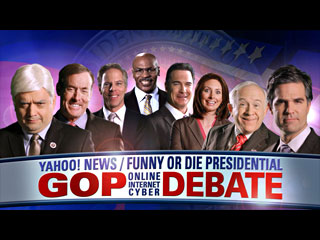
How was it to edit the “GOP Presidential Online Internet Cyber Debate” for Funny Or Die / Yahoo News? What was unique about this collaboration?

Hank Friedmann Usually they work with their own kind, but most of their editors had fled for the holidays. They heard about me through the grapevine and called me in. Thank goodness I don’t celebrate the solstice! They said it was one of their biggest projects ever, and it had a huge time crunch, but I did not give a crap. I chose to be one of many talented people that the producers pulled together at perhaps the most difficult time of year. I was very willing to spend sleepless, dreamless nights working on it because this is the kind of job I dream about anyways. I helped make a lot of sketches in college (Fireside Chats) and always thought I’d work in some form of comedy. Yet somehow I got into directing music videos and editing tons of music videos and commercials. I love doing that stuff, but it felt reeeeeeeaaal good to be doing this.

What were some of your influences or approaches for the cut, especially with so many funny moments, especially Mike Tyson’s Herman Cain?

HF It had to feel tight and broadcast-quality in order for the jokes to succeed. We kept it pretty sterilized with title-safe fonts and shiny graphics so that the jokes could shine through. It grated my soul to cut out so many jokes – and there were a lot of jokes left on the digital cutting room floor-o-sphere. But we had to keep the pace up, and so we’d often viciously cut to the root of the jokes. With Cain, we looked at some FOX news promos for tone. There were lots of good written jokes, but a good amount of funny came from the magical mind of Mr. Tyson, so we found ways to squeeze his jokes in. Although the script was solid from the get-go, we were always open to additional jokes and flourishes from the performers.

What’s your favorite part of the cut? Anything left on the cutting room floor that you wish stayed in the piece?

HF My absolute favorite thing was Larry King flapping his arms in an attempt to get Cain to leave (seen in a wide shot). Close second is Cain opening his mouth to talk at any moment. In third place is Perry’s racist joke, because I’m surprised Yahoo! would let it fly. The most tragic omission was an alternate ending to Obama’s rebuttal. After he introduces his book, a pair of 8-bit sunglasses come down and the words “deal with it” flash on screen. It’s from some internet meme that I had never seen, but it works well even if you’ve never seen the meme. We were pretty crushed when Yahoo! asked for a more generally approachable ending. The new ending’s pretty hot too, but soon you’ll be able to see the original on my reel – hankf.com.

How was your latest collaboration with Scott Yacyshyn? How long have you two worked together?

HF Scottsworth and I met at UCLA and have made tons of sketches (Fireside Chats, which is now Olde Money Boyz) and animations and shorts together. All the Funny or Die graphics people had fled for the holidays, so I suggested Scottsamillion. He did art and design on videos for the Onion out in NY, so he was a shoe-in. I should say that, when they came back from vacation, the Funny or Die director/editor guys did a bunch of the graphics and effects, like Herman Cain’s flying machine. But Scott was responsible for most of the graphics. He’s also a good writer and director and performer! Don’t you DARE think for a SECOND that he wants to work for MSCNNBC or anything.

Any special workflow in your edit for this timely content? How much time did you have between receive it to a final cut?

HF Footage trickled in over a week, and I synced, prepped, and cut assemblies from that. Once it was in a good place, I distributed portions to the returning Funny or Die director/editors, and we spent about 48 hours polishing all the bits and adding graphics. I guess things ran through my fingers at the end, but it was really a collaborative effort. Super collaborative. So collaborative it hurts. But it hurts so good.


Author

Aaron Proctor
Founder, FWD:labs
Director of Photography site
Contact


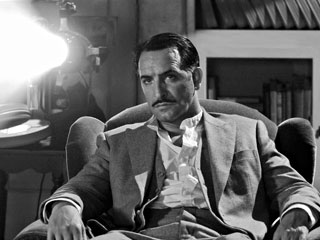
Columnist Jason Bailey at Flavorwire has put together a list of 10 notable sequences in sound films that choose moments to go silent. On the heels of award nominations for “The Artist,” telling a silent story of the end to the silent era, the article notes that “countless sound directors have used silent storytelling techniques to great effect, eschewing dialogue (and sometimes even sound effects) to work through their narrative beats via purely visual means.”

Number 4 on their list was “Le Samouraï” (1967), along with “There Will Be Blood” at number 10. See their article for all.

Any other favorites in feature film? How about short, broadcast, or online content?


Author

Aaron Proctor
Founder, FWD:labs
Director of Photography site
Contact


  • Published in FWD:labs

Of the 43 posts this year, ranging from inspired accomplishments to working through obstacles, here is a selection of favorite subjects covered on this blog.

  1. Perspectives on Overtime in the Film Industry
    Some “pro” and “con” reminders about 12-hours on/off that oft go overlooked outside the union
  2. Podcasting for Writers
    FWD:labs member Eric Szyszka explores another medium that’s found a whole new audience
  3. Why did Final Cut drop Pro?
    When you change too much and alienate your base, Apple places a bet which has pro editors jumping ship
  4. Defining the Cinemagraph
    A whole new look at the GIF animation when the loop is intentional and well-composed
  5. Even Glodell’s One-of-a-kind “Bellflower”
    A great tale of independent filmmaking, even if it means trading a custom flamethrower to bring on a benefactor
  6. “Don’t Ever Get Off the Bus”
    Advice from a director who keeps on churning ’em out, in a year where Terrence Malick returned to directing after six years
  7. Making “11-11-11”
    DP Joseph White’s own words on the psychological thriller, including the lessons to simplify and to observe actors’ desires and instincts
  8. When Art Imitates Art
    Imitation might be a form of flattery, but in commercial art, it’s not cool — getting one either some flaming on Twitter or some lawsuits in court
  9. Making “Osama bin Laden’s Final Video”
    5 Second Films shoots weekly, but jumped on a headline for some extra timely entertainment
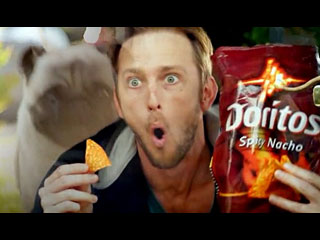
  10. Big Game Gig: “Pug Attack” Actor Talks Super Bowl Spot
    Actor Jeff Lorch’s own words on a spec commercial that won the grand prize of bring broadcast at this year’s Super Bowl after a simple concept and excellent approach to grassroots, online marketing

One of your favorites not on the list? Browse the archive and comment below.

Finally, check out our 10 best posts of 2010, 2009 and 2008.


Author

Aaron Proctor
Founder, FWD:labs
Director of Photography site
Contact


  • Comments Off on 10 Best Posts of 2011


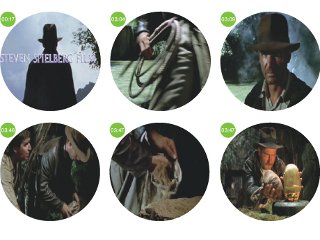
Method, the design firm behind the Boxee and Autodesk re-brands, blogs a little differently. Called “10×10” to celebrate their 10th anniversary, one article to note is “Raiders of the Lost Overture” written by Method’s principal, Paul Valerio.

The commentary looks at the opening sequence of “Raiders of the Lost Ark” as a model for how brands should tell stories.

[Raiders is] a 13-minute masterpiece of storytelling, despite the fact that what happens is completely independent of the actual storyline of the rest of the film. However, the scripted storyline is really not what the movie is about. … Steven Spielberg and George Lucas conceived the movie as an homage to the cliffhanger B-movie serials of their youth. Their love of those movies is what this movie is about, and that’s what is communicated, with a bare minimum of dialogue, in the opening sequence. However, in order to succeed commercially, the movie needed to appeal to a much wider audience than the relative handful that would get all the sly references to the serial genres sprinkled throughout the film.

And we see the same in “The Social Network”:

Software development and intellectual property lawsuits are not exactly slam-dunk blockbuster material. The opening sequence deftly depicts what really is compelling: how a brilliant, yet socially inept teenager can be both ignorant of and insightful about the nature of popularity, and how powerful that combination can be. It’s also about the hyperactive pace of everything in our digitally-driven culture, and how loneliness and socializing inhabit the same emotional space. All of those themes are baked into that opening sequence, and by the time the title credits start, the audience both recoils from and feels pity for Zuckerberg’s character. A nifty trick.

The article wraps back to five key design guidelines, which Valerio connects to IKEA to a new airport terminal at San Francisco International:

  • Show, don’t tell
  • Know what your story is about, not just what happens
  • Empathize with your audience
  • Be honest
  • Level-set
  • Make it worth seeing more than once

View Method’s PDF to read more.


Author

Aaron Proctor
Founder, FWD:labs
Director of Photography site
Contact