FWD:labs

Blog


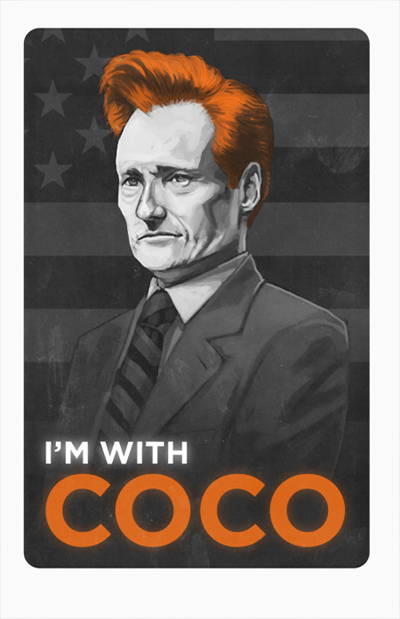
I'm With COCO. Art by Mike Mitchell.

It all began with a late-night tweet — “what do y’all think of this?” — and the “I’m With COCO” movement was born. The tweet’s author and “Coco” artist is Mike Mitchell, a twenty-something Los Angeles resident who recently quit his job to work as a freelance artist.

Mitchell woke up the next morning to find it was literally an overnight internet sensation. “I do a lot of pop-culture based stuff,” he explains, “but nothing has gotten close to this. I got woken up by TMZ this morning,” noted the Village Voice.

In an interview with People, he added, “I finished the design and sent it off on Twitter, and I woke up the next day and it had started. It already had wheels and it just blew up from there.” Mitchell has now thrown himself into “I’m With Coco” full-time, not just to support O’Brien but to support charity. A dollar of every order at the online “I’m With Coco” shop goes toward Planting Peace, which is helping relief efforts in Haiti.

Support on Facebook alone extends between six pages, totaling over 590,000. Each uses Mitchell’s artwork as the icon of support.

Art as a creative force is increasingly common. We’ve seen popular images become a focal point in the media increasingly recently: Barack Obama in 2008 and now this in 2010. (See our guest post on Shepard Faireys’ artwork.)

Is this kind of movement a trend? Or has it always been there?

(Thanks to screenwriter Eric Szyszka for the topic.)


Author

Aaron Proctor
Founder, FWD:labs
Director of Photography site
Contact


  • Published in General

Part of a series of posts about great film, web, or design artists and their work abuzz online and in-person.

Mapping time travel

Lucas Looks Back On Movie-Making
From a recent interview on NPR’s Fresh Air: “‘We loved movies, we loved making movies, and we cooperated with each other and were helping each other,’ Lucas says. ‘We were like, you know, rebels trying to work our way in somehow.'” Read the transcript, download the MP3, or listen on their site player.

DXG readies first 3D camcorder
“Believe it or not, that $400 isn’t just for the camera. You also get a 7-inch digital video viewer. The 3D in both the camcorder’s 3-inch 3D LCD viewfinder LCD and the frame look almost holographic.” As CES, the company promised an SD version under $200. However, in a comment on CNET.com by a 3D content provider, Simon Sieverts, “all these fixed inter-axial cameras are ultimately going to be a disappointment for their owners because the distance between the lenses should reflect the distance between the camera, the subject and the background.”

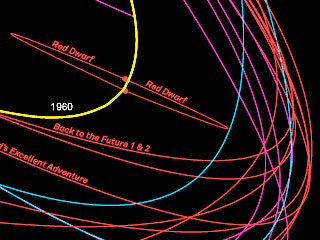
Time travel in popular films
Information Is Beautiful hosts a visualization from David McCandless, Dominic Busby, and Alice Cho, which was just published in the book, The Visual Miscellaneum. Also check out the blog post by McCandless about the process.


Author

Aaron Proctor
Founder, FWD:labs
Director of Photography site
Contact


  • Published in Film + Web

INST MSGS

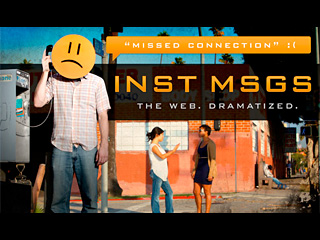
One part Craigslist’s “Best Of.” One part quality production. INST MSGS is a new show from photographer Mathieu Young, collaborating with show creator Justin Simien and producer Ann Le.

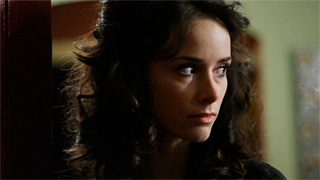
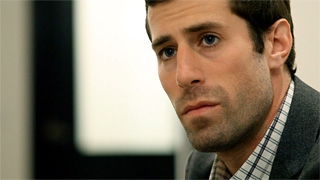
The series got picked up by Revision3 (“Digg Nation”), made the front page of iTunes, and features an ensemble cast, including Abigail Spencer (“Mad Men”) and Josh Cooke (“Four Kings,” “I Love You Man”) in the 8th episode, “R U THERE?”, released today.

You can subscribe to INST MSGS on iTunes or watch on Revision3.

What are you bringing to web series? Your latest episode is certainly more “artistic.” Where are you going with INST MSGS for the rest of your 13-episode season?

Justin Simien The internet tends to be pretty funny and so naturally the show sometimes goes for laughs. But with our pilot episode, and particularly our latest “R U There” we wanted to speak to the humanity behind these conversations. Not to get too heavy or anything, but what’s interesting to me about all of this “mass communication” and “social networking” is the vast amount of things you can’t say. There’s a lot to life and inter-human connection that doesn’t translate over AIM or on a Craigslist ad.

As far as where the season is going, there’s going to be less Craigslist, and a few adaptations of source material that we think will surprise you.

Mathieu Young Yes, it is a constant evolution. I have spent the past few years focused on photojournalism, so the shift to video has had a learning curve for me.

How much of the show is based on actual Craigslist personals or instant messages?

JS A lot of the early episodes are Craigslist heavy, simply because that was easier and less expensive to shoot. A series of MOS scenes with narration from a Craigslist ad was just more doable for us in the beginning, because we had to produce a lot of episodes very quickly at first. Now that we’ve kind of hit our stride production wise, we’re able to do the “talkies,” some of the instant message conversations that actually sparked the idea for the show in the first place.

The original short, 'My Women,' became the first episode.

I’ve seen the original short. How did you get Revision3 to buy the show?

JS Our producer Ann Le deserves the credit for the Revision 3 deal. My priority was to see if the concept would work and hopefully find a way to make more. Ann had the foresight to enter it into festivals, shop it around and specifically approach Revision 3 who were fortunately looking to get into more narrative shows.

What are the pros and cons of delivering the show via Revision3?

MY Revision3 has been a great partner. We have got over 250K eyeballs on our work through them. The only challenge is matching our show with their format, which is usually more host driven, but figuring out how to work within those parameters is just another challenge.

The show made the front page of iTunes. Did you set out to create a popular show? Or was the initial plan to take a good idea and see where it goes?

JS I wasn’t sure what the reception for the show would be because it so different. There’s no central cast, the genre and tone change each week, and unlike a lot of other web shows we often rely on subtly to get the story across. I knew it was a show I would watch, and I’m just glad to see there are more people out there like me.

MY Our only plan has been to make a good show, put it out there, and see what happens. Good press and getting featured like that has all been gravy.

Abigail Spencer

Josh Cooke

What are you most proud of with INST MSGS? What’s your favorite segment thus far?

MY I’m actually most proud of the visual variety that we’ve had in the season. One of the things that attracted me to the project was the challenge of shooting different styles. It’s been great fun to undertake what seems impossible on paper and to pull it off.

JS I’m proud of everything we’ve been able to accomplish with literally no money and even less time. Secret Tweets, where we used anonymous tweets from SecretTweet.com as the inner dialogue of a series of zoo animals still stands out for me as a favorite.

I’m also really happy with the newer episodes coming out that are actually based on people’s Instant Messages. Our current episode R U There starring Abigail Spencer from “Mad Men” and Josh Cooke from “Four Kings” and “I Love You Man” is one I’m very proud of.

What camera are you shooting on?

MY We are shooting the show on the [Canon] 5DMKII.

Generally speaking, what’s the budget? Since it’s low, how do you keep it bootstrapped?

MY We are also working on a shoestring budget; to put it in real numbers I try to keep the G&E budget to under $50 per episode. The constant challenge is to try to do a lot with a little (and even less time), but the footage that comes out of the camera is such great quality that it makes it achievable.

JS Ha. “Budget.” The budget is virtually non-existent. I owe so much to Ann Le and Mathieu Young who give their time, talents, and money when necessary to get the show made. Ann does keep a running budget going that’s incredibly streamlined, and we do what we can with what we have.

What do you think of the requirements from advertisers, such as shooting the ads with your episode’s cast?

JS It’s a bit of a challenge because our show doesn’t lend itself naturally to product call outs, like a hosted show might. But web shows are the wild wild west, and helping advertisers find a way to monetize it is just part of the work you have to do to be successful in this arena.

How is your collaboration with your team?

JS It’s really the best team I’ve ever worked with. From the beginning Ann Le has been everything I could hope for in a producer / director collaboration. She’s incredibly resourceful, relentless, brings so much creatively to the table, and on top of that she cooks for us at our production meetings. I also got really lucky having Mathieu Young on board. He’s a great director in his own right, a brilliant photographer, and his input has been so crucial to the success of the show. Mathieu and Ann are both great storyteller as well, and I feel really fortunate to have gotten to work with them.

Are there plans for a second season?

JS I love doing this show and I think if we can find a way to make it bigger and better then anything in the first season, we’ll be back for a second. We’re only half way through the first season though, and it all comes down to how well this one does, so keep watching, sharing and nominate us for the Streamys (Best experimental!)


Author

Aaron Proctor
Founder, FWD:labs
Director of Photography site
Contact


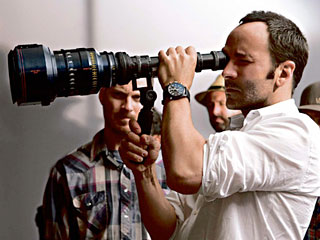
Tom Ford on the set. Photo by DP Eduard Grau.

On KCRW’s radio program The Treatment, film critic Elvis Mitchell interviewed fashion designer Tom Ford, now a first-time filmmaker, writing/directing/producing the feature, “A Single Man.” Some keynotes included:

  • “Make a silent film.”
  • “Reinforce the beauty in life.”
  • “This is the first thing I’ve done in my life that is purely expressive. … When I design clothes, I design them to sell. … You could make a film this way too.”
  • “I want to make a film that I’m proud of.”
  • “When you love it, usually you can feel that on the other end. … They end up speaking to people. … I had to find my voice as a filmmaker.”
  • “‘This is going to take 6 weeks.’ It took me 5 months [to edit].”
  • “I don’t think beauty has to necessarily be expensive. … Necessity is the mother of invention.”
  • “A lot of people advised me against it, but I decided to finance the film myself.”
  • “When I have a film that I’m proud of, I’ll release it and then I’ll talk about it.”
  • “We’re going to just hold the camera on you. … I used 3000ft. of film on that. I couldn’t just yell ‘cut.'”

You can listen to the show or download an MP3 at KCRW.com.

Also check out Laura M. Holson’s article for The New York Times, “Tom Ford: Design Director,” and Variety’s interview with the 27-year old DP, Eduard Grau.


Author

Aaron Proctor
Founder, FWD:labs
Director of Photography site
Contact


  • Published in FWD:labs

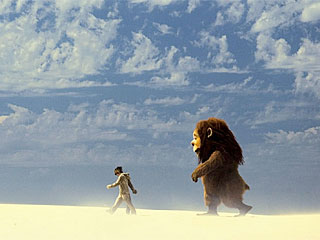
'Where The Wild Things Are'

The director of 'Where The Wild Things Are' made #8

Of the 48 posts this year, here is a selection of favorite subjects covered on this blog.

  1. Now Playing: “500 Days” Music Video
    Zooey Deschanel’s comment about collaboration is a great reminder of the joy of working with other like-minded creatives
  2. Chris Milk’s Heartache
    Excellent commentary from the music video director, including “MTV, our birth mother, has abandoned us on the stairs of the internet like a shriveled up old man baby.”
  3. Spike Jonze’s Authenticity
    “Everything we did, all the decisions that we made, were to try to capture the feeling of what it is to be 9.” Such a guiding mantra.
  4. Jay-Z’s Rhapsody
    Ten album covers recreated in a seemingly seemless 60-second spot.
  5. More than fair use of Shepard Fairey’s Obama HOPE poster
    In a guest post by director Mathieu Young, he suggests, “[i]f it wasn’t for Shepard, that photo would’ve been just like thousands of others, and fallen into obscurity.”
  6. 4 Years Later: Making the Short Film “Paradise Regained”
    An exclusive interview with director Jaraad Virani about his ambitious 35mm sci-fi drama.
  7. Making “Boom Boom Pow” Pop
    An exclusive interview with two visual effects designers and how they contributed to the Black Eyed Peas music video.
  8. Leveraging Your Fan Club
    My theory on the future of profitable film distribution online. Variety contributor, author, and FWD:labs reader Scott Kirsner would agree.
  9. Taking Guy Richie’s Nike Spot to Next Level
    Excerpted from the Cinematography Mailing List, various technicians weigh in on the helmet-camera commercial
  10. iPhone Apps for Filmmakers
    Our most popular resource — by far — which now also includes apps for Google Android and Windows Mobile.

Other favorites not make the list? Browse the archive and comment below.

Also, check out our top list for 2008.


Author

Aaron Proctor
Founder, FWD:labs
Director of Photography site
Contact


  • Published in Film

Halo 3: ODST's Live Action Trailer

Halo 3: ODST's Live Action Trailer

In the same vein as James Cameron’s immersive experience with the 3D filmmaking of “Avatar” are recent works by commercial director Rupert Sanders.

Whether it’s first-person point-of-view or simply focusing on one character, these spots take you right into their world with a simple, opinionated constraint. Take the “Halo 3: ODST” live action trailer as a perfect example of the viewer feeling the experience, even though it’s a video game trailer minus the video game.

Sanders is a name to keep watching. (The “Halo” film, slated for 2012, doesn’t yet have a director.) He’s already racked up a couple Grand Prix awards at Cannes 2008 and two best director nom’s at DGA 2006 and 2008, respectively.

Halo 3: ODST – “We Are ODST” Live Action Trailer

Agency: T.A.G., San Francisco
Executive Creative Director: Scott Duchon
Agency: T.A.G.
Client: Halo 3 ODST
Executive Creative Director: John Patroulis
Art Director: Aramis Israel
Copywriter: Rick Herrera
Agency Executive Producer: Hannah Murray
Agency Producer: Joyce Chen
Production Company: MJZ
Director: Rupert Sanders
Executive Producer: Eric Stern
Director of Photography: Greig Fraser
Editorial: Final Cut
Editor: Eric Zumbrunnen
Post Producer: Kelly Garcia
Executive Producer: Saima Awan
Visual Effects: Asylum
Visual Effects Supervisor: Rob Moggach
Executive Producer: Michael Pardee
Producer: Ryan Meredith
CG Supervisor: Jens Zalzala
Telecine: MPC
Colorist: Mark Gethin
Music: Human
Music Producer: Mike Jurasits
Sound Design: Brian Emrich
Mix: Loren Silber
Mix: Lime Studios

Watch an extended 2:38 version or launch the HD version at gametrailers.com.

For more immersive filmmaking from Sanders, check out his Wolverine “Captivity” spot.

(via director Mickey Finnegan and /Film)


Author

Aaron Proctor
Founder, FWD:labs
Director of Photography site
Contact


  • Published in General

Part of a series of posts about great film, web, or design artists and their work abuzz online and in-person.

Fantastic Mr. Fox

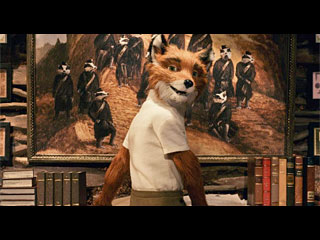
MakingOf.com has a behind-the-scenes featurette about “Fantastic Mr. Fox” and the technology for handling 20tb of data and streaming the shot to the director, who was overseeing part of the shoot from Paris and London.

(via producer Brooke Dooley)

FORA.tv has an interview with David Lynch and why he turned down “Return of the Jedi,” recorded from a conversation at The Hudson Union Society.

(via Digg)

Part of Capacity's case study

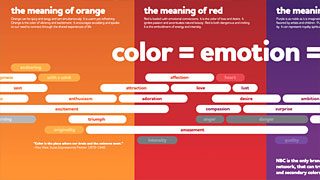
Part of NBC’s fall campaign for “more colorful” programming included new branding work by Capacity, who posted a case study.

(via Computerlove – Contemporary Creative Culture)

“Brick” filmmaker Rian Johnson made “Evil Demon Golfball from Hell” as a student. He used a small prop and ran with it, making something out of nothing.

https://www.youtube.com/watch?v=gKo8hj40dPg

(via screenwriter Eric Szyszka)


Author

Aaron Proctor
Founder, FWD:labs
Director of Photography site
Contact


  • Published in Film

30 Seconds to Mars

30 Seconds to Mars

[Updated 12/6/2012: This interview is no longer available. Please contact the editor if you have any questions.]


Author

Aaron Proctor
Founder, FWD:labs
Director of Photography site
Contact


psa

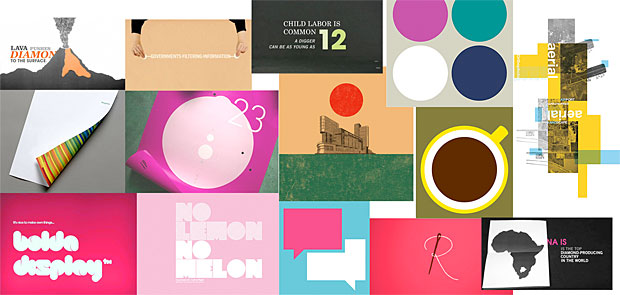
“Stop Stupak!” spot
Client: Planned Parenthood Federation of America
Length: 0:49
Director/Writer: Jaemin Yi
Motion Graphic Artist: John Hwang
Voiceover: Kathleen Turner
Music: Chris Muir

Planned Parenthood contacted me and said they needed a YouTube-ready PSA in one week’s time. It was gonna be a challenge for sure — a project like this usually needs 2-3 weeks minimum — but always up for a challenge, I decided, “Why not?”

Immediately we launched into planning and writing. The writing part is always the most crucial for me, especially for a PSA, where a message needs to be communicated very specifically and in a short time. I spent several days going back and forth with Planned Parenthood, getting constant political messaging feedback from Gabe Rose, and cutting down the script as short as possible while keeping all the parts necessary to get the message across.

While this writing madness was going on, I was working with my motion graphics artist (the uber talented John Hwang) on the tone and feel of our piece. I knew I wanted to go with a clean, modern feel to match with the Planned Parenthood branding. The video should be empowering and make you smile, but not at the risk of being cutesy or undermining the serious message. And while I wanted it to be fresh, I didn’t want it to be too slick — it should have a tangible, accessible feel just like Planned Parenthood itself.

After talking this all out, John created a mood board that captured exactly what I was going for. And he came up with a concept revolving around crumpling paper, lending to the clean but tangible feel. Awesome.

Mood Board

From there, it was intense few days of lots of work and little sleep. We basically crammed in 2 weeks of work into one packed weekend! While John put the motion graphics into action, I got Kathleen Turner’s (Californication, Romancing the Stone, and my favorite, the voice of Jessica Rabbit) voiceover and began chopping it up. When the voiceover and music had been cut up, sweetened, and every single beat was perfect, we locked down the audio and began timing the motion graphics to it.

On Tuesday afternoon, the video was finally finished, approved, polished, and uploaded to YouTube. Ahhh, just in time for Thanksgiving…and for the best night of sleep ever.

[vimeo]http://vimeo.com/7946909[/vimeo]

(Originally published on JaeminYi.com.)


Author

Jaemin Yi
Member, FWD:labs
Freelance + Filmmaker site
Contact


intel

Rebecca Tushnet’s 43(b)log alerted me to an interesting copyright/trademark issue. Apparently actors’ unions are requesting that advertising agencies either pay them for unauthorized YouTube uploads or send DMCA take down requests. The Joint Policy Committee on Broadcast Talent Relations has released a position that there are no fees associated with unauthorized uploads and advertising agencies are under no legal obligation to send take down notices.

https://www.youtube.com/watch?v=jqLPHrCQr2I

(This video appears to be authorized but is still awesome despite not being particularly relevant.)

Rebecca’s post notes that the law on whether actor’s individual rights are preempted by federal copyright law is currently split. While I agree with Rebecca that this is a great topic for someone to right a law review note on, I don’t currently have the time.

Instead, I would argue that this should be covered by contract. First, in this day and age (wow writing that makes me feel old) everyone should expect anything they do on video to be widely available on YouTube or elsewhere online. Second, given that advertising agencies (and their clients) generally want their commercials to be viewed by as many people as possible, they have no incentive to issue take down notices for unauthorized uploads. Since this should have been a foreseeable issue by the sides during contract negotiations, I would argue that the language of the contract should control. If the contracts call for payment of fees for authorized YouTube uploads then it seems to me the advertising agencies are impliedly authorizing the uploads by their failure to police the copyright.

The implied authorization is equivalent to contributory infringement case. Contributory infringement liability requires knowledge and material contribution. While the advertising agencies are the copyright holders they are also contributory infringing their own copyright. Given the union’s demands for take down notices and/or fees the advertising agencies clearly have knowledge of the contributory infringement. They also are materially contributing by failing to take action and benefiting from the infringement. Since it appears the advertising agencies would be liable in a contributory infringement suit, I believe they have impliedly authorized the uploads in question.

Given that actors have typically waived all copyright claims to the works in question, the unions should pursue a breach of contract claim for the fees (which is presumably what they would prefer over take down notices anyways).

(Originally published on Run with the Law.)


Author

Greg Jizmagian


  • Published in Design

Esquire

Last year, I was pretty put off by Esquire’s 75th anniversary, “e-ink” cover that they slapped on their October 2008 issue. It was obviously just an attempt at pretending that print media isn’t dying, but simply, adapting. A very impractical attempt at that; The battery that powered the e-ink implement burnt out quicker than they had expected, and they must have been pretty expensive to produce, because exactly NOBODY actually owns a copy of the e-ink version of the cover. It wasn’t sent out to subscribers. I didn’t even see it on any newsstands when it was supposed to be on display. All I saw was a demo video of it on Esquire’s website.

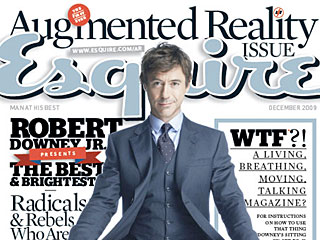
This month, Esquire announced their upcoming “augmented reality” issue. On some of the pages, you will find garish, barcode-looking elements that, when shown to a webcam-enabled application (yeah, you have to actual download and install stand-alone software) available on the Esquire website, will display on your computer screen a kind of “living” overlay of that page, with full-motion video. If that sounds gimmicky, it’s because it is. If it sounds glitchy, it’s because it very much is. Check out the demo at http://www.esquire.com/ar. Even the official demonstration video shows some serious latency that will frustrate you before you even get to try it out yourself.

I actually still have faith in Esquire’s original content. I am a subscriber. But what does it say to the casual reader when you’ve been reduced to taking whichever emerging technology that is currently the most buzzworthy, then completely and totally misusing it in order to sell magazines? What more idiotic ideas do Esquire readers have to suffer through? The “240hz Issue” maybe? Or, the “Cloud Computing Issue,” wherein a subscriber might be required to enter a new URL in their browser to read each print page? Those jokes are about as useless and cheeky as this “augmented reality” issue, and I am continually putting that name in quotes because I fail to see where exactly “reality” makes it’s debut? This is not “augmented reality,” this is Augmented Me-sitting-at-my-desk-showing-my-webcam-a-piece-of-paper-like-a-moron.

Gimmicks like this are the print-equivelent to television sitcom “stunt-casting”. Esquire’s antics can be reduced down to simply one word: novel. And I use the word “novel” here as a negative. “Novel,” like, completely superfluous and worthy of no preservation. “Novel,” as in the total opposite of “important.”

(Originally published on The Post-Modern Yuppie.)


Thomas Smith
Member, FWD:labs


Artist/designer and technologist Josh Nimoy and VFX artist Matt Motal are rock stars. Working at Motion Theory, Nimoy, a regular contractor since 2005, and Motal, in-house at sister company 1.1 VFX, didn’t work together, but were both part of the post-production team for the hit Black Eyed Peas music video, “Boom Boom Pow.”

The video is visually stunning due in part to the complexity of the post. “A programmer is generating things that Maya and Adobe After Effects cannot do,” Nimoy explains, who previously worked on the Nike “One” commercial, where “generative diagrams and graphics swirl around and hover over the people’s heads.” (The spot won a Type Director’s award.) “We find that these things are dealing with large amounts of data, custom particle behavior, physics simulation, footage and image analysis, 3D model processing, randomness and chaos in magnitude, and everything in between.” Motal, a master at Autodesk Flame, elaborates that “the coders [are] creating elements for the compers to integrate into the shot, but there’s a lot of overlap and back and forth.”

Rather than adjusting small details one by one, Nimoy’s toolset includes “slider bars, key controls, and data files. A big part of this is that when you are writing programs to generate an outcome — even if the outcome looks as though someone could have done it by hand — the art direction process was totally different. We are dealing with a greater diversity of creative options by writing software-art, and we are choosing from these options much more rapidly. It’s both exotic and efficient.”

Watch the final product:

https://www.youtube.com/watch?v=3vKesiFYGMQ
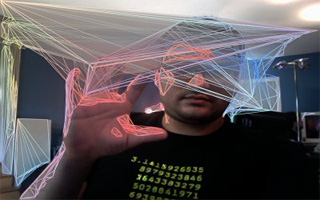
Josh Nimoy testing some of the work going into 'Boom Boom Pow.'

Josh Nimoy testing some of the work going into 'Boom Boom Pow.' Read more on his site. Screenshot by Keith Pasko.

How did you interpret the programming needed from the original treatment? How early in the production were you involved in the video’s visual style?

Josh Nimoy I was there fairly early, maybe coming in right after they collected desired imagery from the web and did basic concept. I worked on some of the aesthetic research — a lot of which actually did not make it into the final cut. We were doing a lot of footage-to-particle systems. Keith was deforming 3D models based on music input and doing camera-vision processing to track shapes as they moved. We had a lot of options to choose from in the end. That’s usually the case with these projects. You create a lot of options.

Matt Motal The Flame needs are usually determined by a consensus from our directors, producers, art directors, and Flame department. We try to use the department for the strengths the system offers: onlining the edit, building and maintaining the conform, breakouts, realtime viewing, color, high end comping, finishing, client sessions and layoffs.

What challenges arose? Any happy accidents?

MM When you’re developing a high end video like “Boom Boom Pow,” there are lots of great ideas coming from a lot of brilliant people. You have to be able to adapt the edit and individual shots to keep pace with the latest vision. There are a lot of changes that happen all the way up to the last minute.

Anytime you’re pushing the envelope on new design and VFX, there are going to be looks and techniques that you stuble upon that end up being successful.

JN The biggest challenge is looking at the initial design ideas and trying to adapt them or take them further using programming. Another challenge is having a kind of foresight and wisdom about what the art direction is going to ask for, when they see your basic application. Like what new features will they request? Sometimes a modification is not so easy to add in given the way you originally coded something. Other times, I can just change a number or two and hit recompile.

Some of the visuals in the video appear tied to colors and edges, while others overlay with live-action movement and CG renderings. Can you describe some of your specific contributions? How much is generated from code versus frame-by-frame animation?

JN That’s computer-vision. The specific library we used is called OpenCV. This was all generated from code, and no rotoscope was done. That’s code that Keith Pasko wrote, not me. However, I do know about computer vision as I am the author of JMyron, another CV library for Processing.

MM My contribution on this video was a little different than my typical role on most. Usually, my major role is comping shots, but for “Boom Boom Pow,” I spent most of my time onlining and breaking out all the shots, updating the edit via EDL’s from our Final Cut editor, building and mainting the master conform, and running daily review sessions. Due to there being something like 300+ shots that needed updating everyday, it warranted having an artist dedicated fulltime. I did pitch in to comp a few shots, but my focus was the conform.

Sometimes VFX artists use their own code or open source actions to speed up or hack the application. Did you use any open source code or is it all custom for the job?

MM With Flame, our tricks aren’t necessarily custom code, more along the lines of different techniques for the different tools. The Flame artist community is comprised of a small group of artists that each have really amazing techniques you’ll never find in a book or on the internet. It’s one reason I look forward to freelancers coming in because I always learn powerful new ways to work. For example, Danny Yoon and I use certain techniques from Chris Moore so much that we give them names like “The Moore Track” or “The Moore Deform.”

JN All of my jobs incorporate open source from my past projects. Often times, the only proprietary part of the code is the stuff at the highest level that glues it all together to make the final app. The rest of it is a bunch of “engines” or “toolkits” that I wrote in the past, or were provided by other people. 3 big toolkits we’ve used across several production companies have been Processing, jttoolkit (my own C++ rapid devkit) and OpenFrameworks. Lately I’ve also been incorporating wxWidgets to provide a lot more GUI than normal software art tends to have.

How did you work with your team, Keith Pasko and Ryan Alexander?

JN Keith Pasko, Ryan Alexander, me, and even people beyond that project are part of a network of colleagues (“Ooh_Shiny”) which communicates every day about general techniques (without discussing specifics about what’s under NDA). By hiring one or a few of us, the client is buying into this “scene.” The coders on the same project are always sharing code, techniques, advice, and personal/political counselling, but for the most part, we each have our own relationships with a shared art director, or a shared group of art directors.

MM Danny Yoon, Chris Moore, and Rob Winfield are all great guys and amazing artists. It’s really important to be organized because we overlap on so many things that, by the time a shot or task gets completed, a few different artists have worked on it. You have to be flexible to changes so it’s imperative to be on the same page and be able to prioritize effectively. Similar to coding, you need to leave your work in a way that’s easy for the next artist to pick up and continue.

What was your favorite part of the project, be it in the production process or final product?

MM My favorite part would have to be getting to see the entire video progress as one unit through the project. Usually, I’ll only be seeing my individual shots and only see the spot as a whole near the end when it’s time to do the finishing. With this project, I was able to watch the video evolve everyday.

JN My favorite part of the project was listening to the music and enjoying really getting to know it — also knowing I was contributing to mainstream pop music culture made me very happy.

Where do you think music video and live event visuals can go next?

MM Since music videos have, for the most part, moved from MTV to the web, I think interactivity is the next step. Rather than watching the same video over and over, I think there could be dynamic elements that customize the viewing experience. Think about if you were watching a video and your Facebook photo or latest Google search was utilized in some way to provide a more personal/interactive experience. There’s an almost unlimited supply of data to be mined and utilized by code.

JN People are beginning to introduce interactive elements both in immediate space and at home through networks. I think we’re going to see a wider diversity of VJing styles: stuff that responds to the music better and stuff that does more computer vision. Personally, I think music videos should spend bigger budgets than they currently do — people should be hiring Industrial Light + Magic, Pixar, and Dreamworks to be making very serious and important pieces of motion picture for music videos. And that is the case with a select few — but I don’t think the industry needs all that. All one seems to need for a music video these days is bitches and bling. And a YouTube account. I just think there’s so much more opportunity for creative expression and we’re not taking it.


Author

Aaron Proctor
Founder, FWD:labs
Director of Photography site
Contact