FWD:labs

Blog


Part of a series of posts about great film, web, or design artists and their work abuzz online and in-person.

video-on-instagram

  • Google published some data this month quantifying movie searches with box office success as a zeitgeist for online behavior predicting offline action; also see Buzzfeed comparing this data to past false-positives (e.g. Twitter) whose marketing claims were debunked
  • The last two films by Hillman Curtis, the late film/web/design artisan known for spearheading short films for the web before everyone else, have just been shared by the editor, Gabriel Deurioste; also see our post on him in 2008
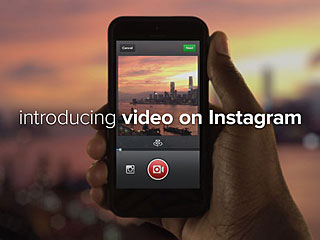
  • Instagram’s addition of video is called the “death of fantasy” by The New York Times: “Instagram isn’t about reality – it’s about a well-crafted fantasy, a highlights reel of your life that shows off versions of yourself that you want to remember and put on display in a glass case for other people to admire and browse through.”
  • Filmmaker Jesse Warren, who created and wrote “The Bannen Way” in 2010, pits the dash versus the ellipsis in screenplay formatting, looking at their usage in communicating the “cut off” and the “trail off” in dialogue
  • Fast Company discusses how Google Ventures illuminates the merits of storyboards for the web — very quickly on 8.5″ x 11″ paper

Author

Aaron Proctor
Founder, FWD:labs
Director of Photography site
Contact


Sundance Institute

OK, you want to finance your latest and greatest film project, you say? I’m sure you’ve thought of the basics… ask your rich benefactors, call your family, start a Kickstarter, encourage your friends to ask their friends, did into your savings account, post and re-post on social media, et cetera.

But what else? Grant funding. This can be a viable way to get the money you need for your next project.  And what’s more, you can easily re-apply for each new project you do — without the fear that you’ve exhausted the amount of times you can ask for funding from a single source.

This kind of funding requires some additional work.  But with the right tools and a can-do attitude, you’ll find the work is not so different than a thought-out pitch to your network, your family, and your social media. Most importantly, it can help nail down why your project is worth supporting.  Below are some simple steps to get you started:

  1. Know your project

    This seems simple enough.  But often times, an evolving idea may lack the kind of specificity needed to make your case.  Funders want to know that if they give you money, they will see something great in return.  Don’t be discouraged, though.  This doesn’t mean you need to know all the ins and outs of the project and have things locked down, but it does mean you have to be confident and sure of what you’re doing and where you intend to go. Before you start searching for a good fit for your project, ask yourself the following questions:

    • What is my film really about?
    • What is my plan for the next few steps of production?
    • How much money do I really need?

    If you can answer the above questions, you are ready to look for funding.

  2. Identify funders who want to fund people like you

    One of the simplest mistakes you can make when applying for a grant is to apply for one you don’t really qualify for.  While nothing “bad” will happen if you make this mistake, you will have put in hours of work and gained nothing.  Be confident that you have picked the right money to apply for and then go for it.  Databases exist to help you identify funders (sometimes for a subscription cost like Foundation Directory), and a sampling of funders can be found later in this article. Often times, a foundation’s website will provide all the information and guidelines you need to apply.

  3. Read all guidelines carefully

    Not all proposals are created equally.  Some funders may want you to be short, sweet, and to the point.  Others may want to see comprehensive plans and detailed budgets.  Either way, you want to make sure you are prepared and able to give them everything they want.  Hundreds of people may be applying for the same funding, and you want to stand out.  Not fully read directions does just the opposite of that.

    True anedoctal story: I once worked for a branch of city government that provided arts funding.  We literally got close to 50 proposals (each 60+ pages) for a pot of money totaling $15K.  After reading through the first 10, we were tired, grumpy, and our patience was thin.  At this point, we were EXTREMELY in tune with the proposals that were missing key pieces of information, and thus unfit to pass on to our peer review pannel.  Our eyes = those of a hawk.  Don’t let the focus of a professional reviewer ruin your chances of getting money.

    Note: many Foundations require individuals to have a fiscal sponsor in order to obtain funding.  If you run into this, DO NOT PANIC.  All this means is that they filter the money through a middle man (a non-profit organization) so that the gift is charitable and tax deductible.  Their are many local organizations who act as a fiscal sponsor, but if you’re stuck, Fractured Atlas is a great national fiscal sponsor.

  4. Just because you really think Kung-Fu is cool, that doesn’t mean you should be talking about it

    In the fundraising world, we sometimes refer to this as “knowing your audience.” Chances are that you’ve got a super cool, elaborate story that will give the next Michael Bay film a run for its money.  But just because you find that cool doesn’t mean the funder wants to hear all about it.  Is the money funding projects that are technically innovative? If so, perhaps it would be more efficient to focus on describing the great special effects tricks your art department has come up with, rather than taking 12 pages to give a play-by-play of the nail-bitting fight choreography in the climax of your Bruce Lee-esque kung-fu epic.

  5. Be honest

    Funders are good at reading when you’re bluffing. After all, they read proposals for a living. If they sense something awry, they won’t be keen on giving you the money. So what’s the harm in a little white lie? Well, if you get the money, the foundation might require you to give them a report when you’re project is done outlining what you spent the money on and the final result.  If you lie, you risk jeopardizing the money you got.  And no one wants to be told they’re not getting the money they were expecting.

  6. Double-check for professionalism

    Remember, your main job is to convince these foundations that they should hand over their money so you can see your project through to fruition.  Make sure your work is top-notch, spell checked, organized, and 100% complete.  Put your best foot forward, and you improve your chances of catching their eye.

Below, I’ve compiled a short list of some of my favorite film funders.  Of course, there are many, many more; if you’re willing to put in the time, there’s plenty of funding to be found out there.


Author

Courtney Robertson
Non-Profit Arts Administrator
@quartersmarie


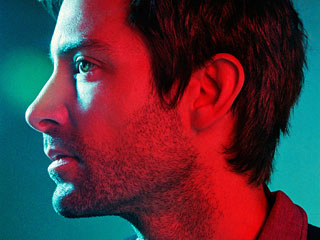
Director/actor Shane Carruth. Photo by Pari Dukovic for Wired.

Director/actor Shane Carruth. Photo by Pari Dukovic for Wired.

Two weeks ago, while christening the new Interactive Media Building at USC School of Cinematic Arts, Steven Spielberg and George Lucas spoke to students about the future of the film business. The Hollywood Reporter cited their concerns over price variances and film exhibition models, respectively, summarizing that it’s inevitable for the business to implode. This may be hard to believe, as both Spielberg and Lucas have been tent-pole successes, building their careers on the back of an old model that celebrates blockbuster releases.

Meanwhile, yesterday The Washington Post ran a story of Sony and Disney testing a simultaneous release of films for the theater and home — in South Korea. This model, experimented with thus far by short filmmakers delivering VOD and Steven Soderbergh with his 2006 feature “Bubble,” is a rare occurrence since major chains like Regal and AMC require that films wait as long as 90-days after leaving the big screen before they are released on video. This archaic model highlights the lack of evolution within the theater, where higher prices have hardly meant a superior user experience. Perhaps Regal and AMC should be working on their own home theater delivery models.

And then there’s Shane Carruths, director of “Primer” and now “Upstream Color,” which is currently in theaters and — after an initial, exclusive month in art houses — also on iTunes, Amazon Instant Video, and various other digital platforms. The Verge noted the following challenge as a win-win:

That sounds simple, the kind of thing you’d expect to be able to do in 2013, but in the past 10 years, simultaneous release has become a kind of holy grail for the film industry, both inevitable and impossible depending on where you sit. Unifying digital and theatrical releases could help fight back many of the studio’s biggest problems — heading off piracy, replacing dwindling DVD sales, and tapping into millions of customers who simply don’t like going to movie theaters. But theater owners have taken every proposal so far as a death sentence, and every time it’s been proposed, it’s gone down in flames.

Verge goes on to cite an CNET article from 2010, recalling a studio-backed plan to release video on demand sooner, which was balked at by theaters.

The lesson here goes beyond the merits of VOD and selling digital goods in addition to round discs of your fabulous video content. It’s about the timing and changes afoot, where you can wrangle online distributors and paywalls to better profit from your work. Filmmakers like Carruths are doing what needs to be done as our heroes call attention to the changing model. May we all follow suit, rather than echo the complaint that the end is near.


Author

Aaron Proctor
Founder, FWD:labs
Director of Photography site
Contact


  • Published in Film + Web

david-lynch-vine

Vine, Twitter’s take on six seconds of animated video in a square frame, has a brand new member.

Who’s already on board and what are they doing? Writer/actor Adam Goldberg was called out by New York Magazine as the king of Vine when it first began, coming up with many short-shorts right off the bat. When director James Mangold posted his new “The Wolverine” movie trailer looped in a square for six seconds, he called it a “tweaser.”

Director David Lynch is now giving it a try, posting this piece, “Another Mystery.” (The embed does not auto-play, so clicking is required to start it.)

Even the prestigious Tribeca Film Festival is recognizing notable work on Vine. They curated a Vine-sponsored contest back in April, picking their favorites:

Why six seconds? It could be that five seconds is already taken for years – by the wildly successful team at 5 Second Films, based in Los Angeles. (The team is now Kickstarting a feature film for $200,000 — and well on their way to making the goal.) The 5SF team helped judge the Tribeca/Vine contest.

Whatever your opinion on mobile and square cinema, you cannot deny it’s becoming more mainstream. But why is it still relegated to online only? Super short films with creative chops would make a great addition to pre-feature entertainment, elevator installations, and public transit stations.


Author

Aaron Proctor
Founder, FWD:labs
Director of Photography site
Contact


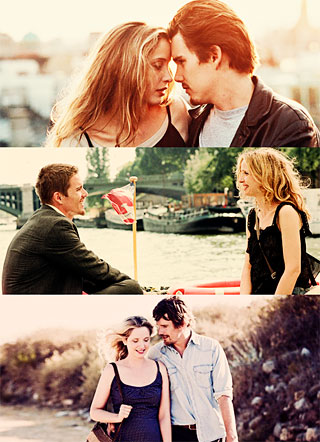
"Before Sunrise" (1995), "Before Sunset" (2004), and "Before Midnight" (2013)

“Before Sunrise” (1995), “Before Sunset” (2004), and “Before Midnight” (2013)

Salon.com has a heartfelt story of Richard Linklater’s actual life before the 1995 film production of “Before Sunrise,” which now has a third film, “Before Midnight,” currently in theaters.

Even in the midst of that romantic night, the filmmaker in Linklater couldn’t help but consider its cinematic possibilities. In a 2004 interview with the New York Times, he remembered “walking around [thinking], ‘If I could just capture this feeling I’m having right now,’ instead of actually having that feeling.” On a recent episode of the podcast The Q&A with Jeff Goldsmith, he recalled mentioning the movie idea to Lehrhaupt that night:

Even as that experience was going on … I was like, “I’m gonna make a film about this.” And she was like, “What ‘this’? What’re you talking about?” And I was like, “Just this. This feeling. This thing that’s going on between us.”

Linklater, famous for avant-garde and realistic films that are often set within a single day, was lucky enough to capture that feeling and making a trilogy from a single night’s adventure.


Author

Aaron Proctor
Founder, FWD:labs
Director of Photography site
Contact


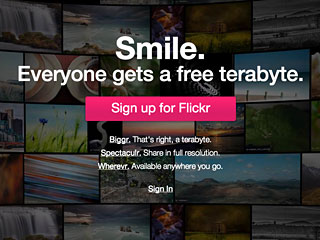
The new Flickr landing page trades in a featured photo for a giant freebie.

The new Flickr landing page trades in a featured photo for a giant freebie: 1TB.

What’s happening over at Flickr? They’re sporting a new look and giant storage limits, but many are questioning whether they’re really helping to push forward the photography industry. Their new CEO is saying “there’s really no such thing as professional photographers anymore,” just different skill levels, she’s clarified.

Well, that’s one way to run one of the largest photography social networks in the world.

In the same day parent company Yahoo announced their $1billion acquisition of Tumblr, the company unveiled the new Flickr, which prompted some to claim the company proved themselves to be “awesome again.”

What was once Flickr Pro is now a not so "spectacular" change.

What was once Flickr Pro is now a not so “spectacular” change.

Flickr “Pro” is now gone. Feedback on the updates from the pro subscribers who were paying $25/year appears to be universally negative. Missing from the new service is one of the key benefits of an upgraded plan: stats. Unlocking data is one facet of business models for web apps, including ours.

Now, according to Flickr, paying $50/year just removes ads, which previously was part of a $24/year plan. Paying $500/year gives you two terabytes, when that same $24/year bought you “unlimited” space. (Tip: 1TB external drives sell for $100 nowadays.) Gone are other nuances like the little “pro” badge, which gamified the tiers of service. You wanted to be “pro” — but now on Flickr nobody is.

Not everyone is disgruntled with the changes. USA Today praises the update. PC Pro Blog points out some pros to the updates, including the fact that the “old 300MB-per-month upload restriction has gone for free accounts, and you can also upload Full HD video clips of up to three minutes in length.”

However, for old and new “pro” users alike, PetaPixel.com points out that Flickr grandfathers some accounts over to the ad-free plan at a reduced rate.

These changes may have done more harm than good to Flickr’s business model. On the official Flickr forum, there are over 17,000 posts on this change up, which are mostly from long-term, paying customers who feel cheated.

Why so many big changes to Flickr all of the sudden? According to Techcrunch, CEO Marissa Mayer was most interested in no longer offering “degraded” images. That said, web files are 72dpi and JPG is very much a compression of RAW. So is it really accurate to say they’re not degraded? The photo canvas is now just massive and embraces a responsive web design approach, scaling for screens large and small.

With this reboot, which marks the first major change since the 2005 acquisition of Flickr by Yahoo, they’re reinvigorated some competitive metrics like the storage space, but relegated paying for a premium service to two extremes: no ads and double the space. Both of those features used to cost $25 per year and, in an age where data costs less, now they’re $50 and $500, respectively. Not very slick, Flick.

(See our prior article, “Why Did Final Cut Drop Pro?,” for more about dramatic changes to business models for web services.)


Author

Aaron Proctor
Founder, FWD:labs
Director of Photography site
Contact


Part of a series of posts about great film, web, or design artists and their work abuzz online and in-person.

dumb-ways-to-die


Author

Aaron Proctor
Founder, FWD:labs
Director of Photography site
Contact


CC Photo by peasap / Flickr

CC Photo by peasap / Flickr

Lately, it seems that everyone has something to say about the rise of celebrity funding on Kickstarter. And these opinions seem to sway in one of two directions: between sheer excitement at another Veronica Mars or Garden State and eagerness to “be a part,” or disgust at the audacity of well-to-do movie stars riding on the backs of middle-class American citizens to save themselves a buck.

But what is perhaps a more interesting question than “which emotion overtakes you when you think of this growing trend,” is how will this affect the Kickstarter fundraising model as a whole, and what happens to that not-quite-so-well-known artist trying to promote his idea amongst the likes of media giants.

Four years ago, Kickstarter was founded after beginning as an idea in 2002 from a frustrated young man who had been attempting to put on a concert that never materialized. A fundraising idea born from the frustrations of someone unable to finance their own project.

As stated on their website, Kickstarter’s mission is to “help bring creative projects to life.” According to co-founder Perry Chen, it’s also to encourage a sense of community around art.

So let’s look at what happens when multi-million dollar projects from movie stars and movie studios look for “help” on a crowdsourcing platform. After the project is funded, and if our most recent history is to be believed they most always are, the public funders walk away with their trinket (a signed poster or voicemail from a movie’s creator), while the profits go… back to the people who invested? Not so much. Studios and producers, who for years had to put money in to get money back, find themselves in a situation where they reap the profits of a production’s success while seeing no initial investment in the project.

Do I believe for a second that Warner Brothers will suddenly triple the size and scope of the Veronica Mars movie to attempt to close the gap between the $2 million in budgeted costs and almost $6 million raised? Absolutely not. And what’s more, they have almost guaranteed some sort of audience at the box office as the 91,000 backers are sure to make sure they support “their film.”

In the world of Zach Braff, while his intentions are noble (who doesn’t respect a guy who wants to avoid the creative constraints of a studio?), I’m not sure he really needed the money of his adoring fans with his ongoing career success. In terms of building community, I’m sure the thousands upon thousands of Scrubs fans form a pretty strong community already.

This is all stuff that’s been blogged about since Mr. Braff’s announcement last week. What is disconcerting is the shift in the thinking of the Kickstarter supporter. Kickstarter’s platform encourages the funding of the unknown; of the random; of the project of a stranger. Just log in and you’re inundated with the staff’s pick project and those in your area.

Statistically, approximately 10-20% of a funded projects money comes from the random donor, who I like to refer to as the Kickstarter voyeur. While that may not sound like a lot, on a project with a $5,000 funding goal, that is the equivalent of $500 to $1,000, which is significant to say the least.

What happens to those random funders when they are presented with the choice between funding the recording of an album for a local indie artists with a non-traditional sound and the next Garden State? People want security and to know that their money has made a difference. The flashy guaranteed success of large-budget star-studded features surely offers a more comforting, safe way to spend ones money. And if the statistic can be applied across the board, a shift of even 10% of annual funding away from smaller projects could have devastating effects. In 2012, 10% of the 119 million successfully raised would mean a whopping 11.9 million less in funding.

Suddenly, this tool, that from the beginning was meant to help the little guy overcome the barrier of funding in the interest of the creation of art, has become a barrier in of itself, as once again funding for the big guys pours in — sometimes, in under 2 days, as in the case of Mr. Braff — while everyone else is left working twice as hard to be seen and begging for the change.

How many small projects suffer as Kickstarter shifts towards a tool for the grand artistic escapade? With it’s proven success, and benefit to both studios, stars, and Kickstarter itself (with its 5% cut, that’s close to $300,000 in revenue from the Veronica Mars project alone), there is no indication that this trend will stop anytime soon. A business built on profits will inevitably shift towards whatever model will reap it the most money.

Until we know the answer, perhaps it’s up to the smaller artists to continue to work a little bit harder to bring it back to the original mission and intention Kickstarter: give people a reason to believe in your work, give you help a helping hand, and join your community. After all, it’s a quite a lot easier to get to know your supporters and make them feel like a part of your project when you aren’t serving 91,000 of them.


Author

Courtney Robertson
Non-Profit Arts Administrator
@quartersmarie


  • Published in Film + Web

CC Photo by Paul Townsend / Flickr.

CC Photo by Paul Townsend / Flickr

My TV can play YouTube so YouTube is now TV. At the same time, Vimeo, Netflix, and Amazon are competing alongside tiers of cable channels like HBO and Showtime, where advertisers and/or subscribers help dictate budgets — and profits — for content.

As online television continues to mimic cable providers in content and pricing structure, once free and easily accessible entertainment begins to become less and less attainable to the segments of the population it once appealed to most: the college student subsiding on ramen who wants something to distract him from his latest paper; the office worker ready to take a quick break from the monotony of filing to catch up on the latest episode of her favorite web series; and the high school graduate, raised in a culture of free media and information overload.

As the models shift and growing companies look to capitalize on their library of content, new questions are raised. What value do we get when we subscribe to something? Which “walled gardens” feel worthwhile — and does the lowest price-point have the best content? Which “free content” will thrive with paid subscriptions? Which ones are growing more subscribers? And does paying for the content make it better, or does creativity thrive with the constraints of demand/advertisers?

Online content is starting to move away from a cheap, free thrill, and towards well made, cost incurring content that demands revenue from the user to continue. Who knows who will come out ahead in the world of Netflix, Hulu, HBO, YouTube until these services start falling apart (read: Blockbuster, Google Video). In the future, coax cables will become a thing of the past — it will be straight ethernet installation for even basic cable.

Here’s our breakdown of the new media front-runners and just what they can offer for your hard-earned dollar:

  • Paying a Flat Subscription for “Walled Garden” Content (No Kick-Backs to Content Creators)
    • Netflix
      • Original content like “House of Cards”
      • Ebbs and flows in availability of major and timely licensed content, but offers a route for independent filmmakers to get a shot (see our post “Making ‘Girlfriend'”)
      • Now touts more subscribers than HBO (source: forbes.com)
      • Costs $8 for online, $8 for discs (generally new releases), and $12 for a new multi-user family plan
    • HBO GO
      • Record-setting 6.7 million subscribers watch “Game of Thrones”
      • Consistent with quality, long-running “Original Series” programming, along with less popular movie releases
      • Sets a record for quantity of pirated bootlegs online (source: latimes.com) and plenty of people clearly share HBO Go accounts (source: nytimes.com)
      • Not at the mercy of advertisers, but they do need subscribers to validate producing lavish original content
      • Costs between $12 to $20 per month for broadcast access in addition to a cable subscription, with no a la carte option except HBO Go (source: hbowatch.com)
    • Showtime Anytime
      • Streams their content for free, but requires a regular subscription and certain providers
      • Like HBO, there’s the after-market option of disc releases of their shows
    • Hulu Plus
      • Began charging for access to additional content in 2010 (see our post “Problems with Hulu’s New Monthly Subscription”)
      • Now for sale ($500 million) with no quick buyers, which suggests it’s not doing something right
      • Still runs ads even to subscribers — up to 5 minutes of commercials for their free plan
      • Costs $10 per month (new content plus back inventory)
    • Amazon Instant Video
      • Comparable content to Netflix, except no exclusive content, even from indie experiment Amazon Studios (for now)
      • Bundled with Amazon Prime, the free 2-day shipping for the rest of Amazon.com — an enticing fringe benefit
      • Costs $79 per year ($6.50 per month)
    • Warner Bros. Archive Instant
      • Niche focus on rare Warner Bros., MGM, RKO, and Allied Artist classics
      • Works with Roku
      • Costs $10 per month
    • IndieFlix
      • Niche focus on film festival work
      • Provides royalties to filmmakers based on their subscription preferences, along with a relatively painless submission process
      • Works with Roku and xBox for now
      • Costs $7 per month
    • Cable Providers
      • Raising costs, losing subscribers (source: timewarnercable.com)
      • Struggling to compete, using DVR rentals and additional channels as leverage, such as gating off HBO and others
      • Weary to go pay-per-channel, but it’s been talked about since as early as 2011 (source: time.com)
      • Costs $20 to $200 per month depending on quantity of content and related equipment
    • Others with Subscription Offerings (vs. Singular Downloads)
      • U-verse Screen Pack from AT&T ($5/month), Redbox Instant from Verizon ($6/month), and Xfinity Streampix from Comcast ($5/month) each provide near-equal or lesser value, we’ve found, to the above players
      • Vudu competes proudly with no monthly subscription, but does stream content available the same day as disc releases, which is “28 days to 7 years” faster than Netflix (source: vudu.com), utilizing many different devices (Roku and Xbox 360, Playstation 3, HDTV, Roku, desktop, and mobile platforms)
      • Blockbuster On Demand is also subscription-free, but streams for $3 to $5 per movie
  • Paying a Variable Subscription for “Free / Used-to-be-free” Content (Varied Kick-Backs to Content Creators)
    • YouTube
      • New for Spring 2013, paid subscription channels will begin with a select 25 channels
      • Likely between $1 and $5 month
      • Likely a 45/55 revenue split, plus option to run ads on content for another split (source: adage.com)
    • Vimeo
      • Beat YouTube to offering 720p HD standard uploads for free accounts
      • Recently added a “tip jar” feature for their $10/month and above plans (Pro and Plus), which goes along with their “video on demand” (source: vimeo.com)
      • “Tipping” providing a revenue split (amount TBD) for giving back something to the content creator beyond a “like” or “share;” “video on demand” offers as much as a 90/10 split, but there are many more alternatives here (e.g. iTunes, PayPal, etc.)

Any favorites or notes to add? Please comment.

On the horizon, we see TV companies prepare to release more accessible 4K TVs — catching up with the mileau of 4K capture devices on the market. Cable companies are preparing to broadcast 4K, too. But where’s the content, notes Ars Technica, where content served up online is just now delivering 2K content? Who might be at the next forefront to deliver?

(Thanks to broadcaster Eric Szyszka and writer Courtney Robertson for contributing to this post.)


Author

Aaron Proctor
Founder, FWD:labs
Director of Photography site
Contact


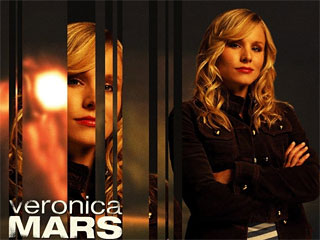
veronica-mars

“Veronica Mars: The Movie,” a star-studded revival venture on Kickstarter, decided to raise $2,000,000 within 30 days. It found fans that same day who gave it more, a record-setting for such crowd-funding. Now with 13 days remaining, it’s raised over $4,165,000 with the backing of 62,395 fans and counting. What does this mean for the future of studio-backed ventures into film and television either on hiatus or too risky to fund through normal avenues?

Pros

  • Putting your money where your mouth is. With “Veronica Mars: The Movie,” a major studio (Warner Bros.) is experimenting with production fundraising, rather than shelving a project they find risky.
  • Involving fans in something they like. While other fans of cancelled shows sent letters hoping to rekindle content (e.g. Arrested Development, Firefly, plus many other live action TV shows “screwed by the network,” notes tvtropes.org), here’s an opportunity to try something new.

Neutral

  • Paying to play. Incentivicing high ticket rewards tailored to actors bypasses the casting process.
  • Contributing 9% to Kickstarter. In trade for going with the name brand of crowd-funding, the web company takes a hefty portion of the pot, well over the cost of expenses. Writing Warner Bros. a check would have raised the production more money.
  • Delivering audiences exactly what they want might be great for pocketbooks, but it seems creativity can be stifled. The filmmakers might not be as adventurous because they’ve crowd-sourced a specifice idea with pre-established expectations.

Cons

  • Setting a bad precedent. On Kickstarter’s own blog post, one commenter nailed it perfectly: “Warner Bros could have easily funded this the traditional way. Instead, they get the fans to cover the budget, get free PR from the fans’ actions, keep the distribution rights and get nothing but sweet profit with a home video release where they can easily get fans, who paid $35 for a digital download, to double dip. I hope you all enjoy the future of billion dollar corporations passing all the risk off onto the people while keeping all of the $$$ benefits of doing business.”
  • Now creating investors who only get a signed poster or the like. If the project does really well, the investors get nary a financial gain. THR has an article on the dangers this $4-million-plus effort has created.

What are your thoughts on this all?


Author

Aaron Proctor
Founder, FWD:labs
Director of Photography site
Contact


the-wolverine

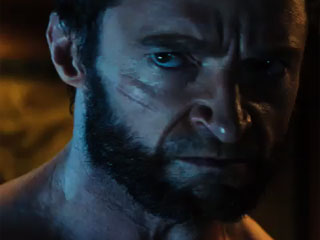
  • Looking for new ways to share your trailer or showreel? Take a look at how James Mangold, director of “The Wolverine” coming July 2013, dropped a square-shaped trailer through Vine, the still-figuring-itself-out Twitter companion. DigiDay has their two cents on the “tweaser” and GIF craze — or, in Vine’s case, the MP4.
  • Converting video for offline iOS playback? Apple.com clarifies it best on their giant page of podcast specs (although ArsTechnica has more fun explaining), when it explains that the generation of phone and/or tablet makes of breaks the 1080p, 720p, and 480p MP4/MOV/M4V playback options that all play nice via an iTunes sync.
  • Writer’s block? The original “Mad Men,” David Ogilvy, wrote 10 tips in 1982, found in a rare book called “Unpublished David Ogilvy.” They’re still applicable today beyond the ad agency world and BrainPickings.org tells all. Side note: I’ve heard a lot of ad people talk about “disruption.” I’d like to point out Ogilvy notes in #4, “Never use jargon words.”
  • Got an idea for a TV pilot? Australian screenwriter Mike Jones breaks down the merits of a series bible, which can be great for financiers, collaborators, and others to take you seriously.
  • You don’t give a damn about yourself? Hello Giggles blogged Dave Grohl’s SXSW keynote, “the top 5 ways to a better life.”

Got something to add or a whole new tip entirely? Post it in the comments below.


Author

Aaron Proctor
Founder, FWD:labs
Director of Photography site
Contact


Part of a series of posts about great film, web, or design artists and their work abuzz online and in-person.

pixar

  • “Pixar’s 22 Rules of Storytelling” by Emma Coates, Pixar’s Story Artist (via Aerogramme Studio)
    “#6. What is your character good at, comfortable with? Throw the polar opposite at them. Challenge them. How do they deal?”
  • Open Source Ultra Bright LED Light Pad with Wi-Fi (via Kickstarter, funded)
    “With the Lumapad’s open-source design, you can write custom software to generate many different effects. Fire, lighting or a strobe light are just a few of the visual effects that come to mind.”
  • “Head-tracking” Mobile Phone by Jakob Nielsen, Nielsen Norman Group
    “The new Samsung Galaxy S 4 includes a ‘head-tracking’ feature that will pause videos when users turn away from the phone. It’s also possible to use tilt gestures for scrolling as long as the camera senses that the user is looking at the phone. (So it won’t scroll if you move the phone while looking away.)”
  • “Premature Burial for 35mm Film” by Leonard Maltin (via Indiewire)
    “This is the eternal tug-of-war between art and commerce, and it isn’t hard to guess which side will ultimately win. But it’s encouraging to know that some people are still fighting the good fight.”

Author

Aaron Proctor
Founder, FWD:labs
Director of Photography site
Contact