Part of a series of posts about great film, web, or design artists and their work abuzz online and in-person.
Branded content is reaching new industries, ones where the client wants video to reach an audience with ease and a budget that needs to last for a while. Here, it’s a luxury hotel, high-end chocolate maker, kitchen appliance company, and lingerie boutique that are embracing quality, creative video content for the web.
Parker Palm Springs
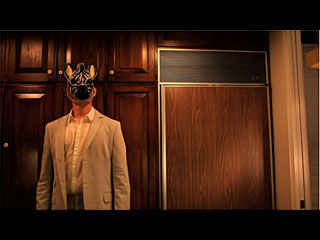
Instead of showcasing their rooms or pools as-is, each video from Parker Palm Springs — used throughout their website — has a perspective and plays out like a vignette from a feature film. On the “Play” area of the site, the video follows a man who plays a losing game of tennis catches the eye of a woman. She lures him through the property to share a lemonade. Another — for the Gene Autry suite — watches a masked man enter a room of other masked couples and, en route through the suite and its kitchen, finds a single masked woman who takes his hand.
The campaign’s creative was done in-house, with the film production hired out. The videos are only available on the website, although they’re hosted privately on Vimeo.
Mast Brothers Chocolate
The Scout produced a short documentary about this New York-based chocolate company. Although the film is missing from their official site, the work by director Brennan Stasiewicz and DP Ed David plays like a well-told company overview.
The video is part of a series for the magazine, reminiscent of Pentagram video by Hillman Curtis, who is one of the forerunners in making short films for the web.
[vimeo]https://vimeo.com/13664547[/vimeo]
AEG | Electrolux
The design studio Department of the 4th Dimension (DDDD), helmed by one of the filmmakers who authored the visions in Spielberg’s “Minority Report” (see our past post, “Building Relationships with Online Audiences”), recently followed up to their Intelligentsia coffee profiles. For AEG | Electrolux, specifically with chef Jack O’Shea as a series on the Perfunkt.com portal, which was created by video producer HUGE Inc., DDDD shot a handful of videos showcasing the culinary artisan going through his process.
No stranger to a web video strategy, where one intimate ad wrangled 45 million hits over three years, Agent Provocateur teamed with director Johan Renck and producer RSA for the “Private Tapes” campaign, which launched this month. The press release describes the 25-second videos as a “seductively voyeuristic experience, though the viewer is in no doubt that the woman is empowered and entirely in control of the recording.” The home-video look highlights the parallels to the rise in point-of-view experiences brought on by webcams, cell phones, and consumer cameras. See all the “Private Tapes” or below for “Gangster Slip,” one of the ads:
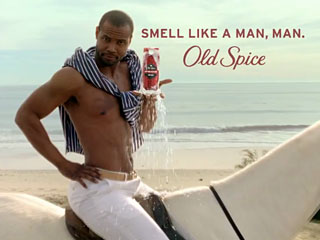
Mustafa, my man! You and your pecs are all over all my pixel-producing products.
You and your client, Old Spice, and your agency buddies at Wieden + Kennedy have grasped the online golden ring–created yet another in a long and continuing line of viral videos full of sound and fury that signifies…not nothing, of course, since we’re all talking about it. And for six months every other goddamn product sold to men is going to be accompanied by a magnificently muscled, superbly scented half-naked black man (subtlety is not a hallmark of digital communications) viral video component.
And naturally, given the ingenious nature of the ploy–Mustafa and Wieden holed up in the great Northwest mass-producing custom videos for people–squeals of a marketing revolution echo throughout the blogosphere.
Nothing makes me happier than to see you kids get all tingly about something you think breaks the rules. Except this doesn’t.
The Old Spice campaign is clever, no doubt about it. Well executed. (It’s Wieden, after all.) And tonally spot on (sardonic, ironic and solipsistic, just what the digital doctor ordered). But new?
Um, no.
Here’s the good news and the bad news about the digital ecosystem: you can do more things than you used to in marketing communications, and you have more options every day (the good). But there are such things as communications truisms, and if you don’t have those locked in at the strategic level, no amount of tactical wizardry is going to result in success (the bad).
Don’t let the pixilated pixie dust blind you. The Old Spice campaign is successful–as an awareness and brand-building tool–not because it uses viral videos and interacts with users. Those are just newish tools.
It is successful–as an awareness and brand-building tool–because it is a by-the-book multimedia promotion that honors communications basics in both concept and activation. Take on the ancient marketplace ventures we called sweepstakes and contests.
The proof, as always, is in the profit. You do remember sales, right? The bottom line? The actual reason any company does this stuff? Ad Age ran a story today that found the Old Spice viral effort bumped the sales needle only a tiny bit. But its competitors also saw sales rise in the same period. Why? Not because of any viral video but because all of them recently offered…really good coupons.
Oops. There goes the revolution.
Still, by all means, linger lovingly over that manly chest. Fire up the webcam and post your own dumbass version (you know you want to). Just remember one thing about Old Spice’s viral victory: it was old-school strategy, not new-world wizardry, that made this campaign fly.
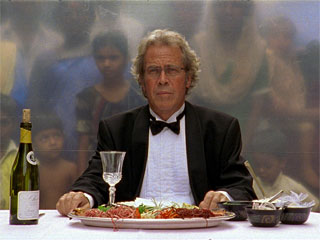
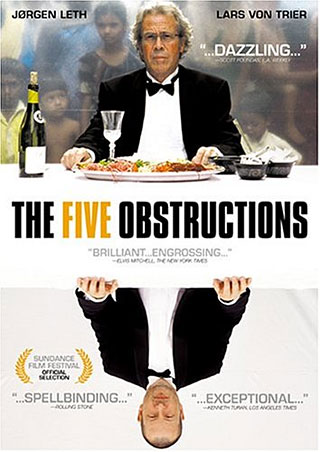
In Lars von Trier’s excellent documentary The Five Obstructions (2003), von Trier challenges his mentor and veteran filmmaker Jorgen Leth to remake Leth’s own highly-regarded short film, “The Perfect Human” (1967), five different times. Acting as a creative trickster, von Trier requires that Leth be subject to a different set of substantial limitations on each of the five remakes. Two themes relevant to the lives of creative professionals are explored within this setup: creativity through limitation and the mentor/mentee relationship.
1. Creativity Through Limitation
How many times does a filmmaker wish he or she had unlimited funds and complete creative freedom? In The Five Obstructions, the student attempts to trip up the teacher by doing the opposite: limiting the creator’s freedom. Without judging him negatively, Von Trier deems Leth to be detached and overly affected as an artist. Von Trier jokes with Leth, but his obstructions are meant to go to Leth’s heart—to rattle him. Leth plays along, but, at first, he is somewhat lethargic. One guesses before von Trier mentions it that Leth is going through a creative stagnation. The first challenge appears daunting to an older filmmaker like Leth (particularly the maximum of 12-frames-per-shot rule), but it is really a softball to get Leth warmed up. Next, von Trier directs Leth to shoot a remake in close proximity to real human suffering, and then, perhaps more challenging, in the next remake, given no limitations at all. As the challenges go on, one can see Leth start to enjoy the process. In fact, the fiercer von Trier’s obstructions, the more Leth is engaged.
What is demonstrated is that conscious (in the sense that the limitations are from Leth’s friend and devotee) limitation firmly imposed can inspire. This begs the question: How can creative fire be found in limitation that seems arbitrary, such as a client’s unrealistic demand or unforeseen inclement weather? This may be overly metaphysical for this blogspace, but perhaps investigation into what one considers to be the nature of conscious action could be a direction for exploration.
2. The Mentor/Mentee Relationship
Professionals in the entertainment industry often benefit greatly from formal and informal mentor/mentee relationships. In these liaisons, there is the sense that the master must be firmly in control at all times. Annakin Skywalker is chastised for challenging his masters, and it is a short, slippery Mustafarian slope from there to the dark side. Von Trier turns this dynamic on its head in The Five Obstructions. Here master willingly and (mostly) eagerly allows the apprentice to challenge him. Sensing Leth’s funk, von Trier leads and prods Leth in the first two remakes. Leth regains his feet in the third remake (where he is given absolute freedom) and then knocks it out of the park in the fourth remake. By the fifth remake, von Trier is ready to admit that his obstructions and efforts were actually thwarted (obstructed) by the mastery of Leth. Von Trier relinquishes the mantle he temporarily possessed and declares that Leth has earned its return.
What von Trier and Leth explore is the dance of the mentor/mentee relationship. The push and pull; the yin and yang. The master usually will lead simply through his or her superior skill, and great deference must be given to the master during the moments when his or her control cannot be maintained. However, the apprentice must also be willing to take initiative, to push back (for example, the classic movie beat in which the black belt asks the adept to throw a punch and the adept, no matter how tough, usually ends up on his back), to challenge the master, to know the master, and to give energy to the master when he or she has slipped. At the same time, the master must be willing to accept the challenge and not seek, so to speak, to eat the young in response to their natural impudence.
For the limitations of each obstruction see Wikipedia. For a short movie review, visit AllMovie.
[UPDATE: Video at https://www.youtube.com/watch?v=IYrNwO7-AVI no longer available.]
Note the next FWD:labs Salon is next Saturday, July 24th. It will include an exploration of what near-unlimited funds and near-complete creative freedom looks like.
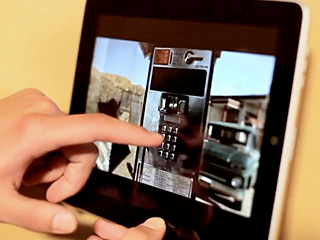
“Touching Stories” is a four-film experiment in short interactive filmmaking for the iPad, which got attention at this year’s Cannes Lions festival. Tool of North America had five directors working in collaboration with Domani Studios to make the project, now available on iTunes.
One of the shorts is shot in first-person. “You get to dial a pay phone, retrieve keys from a woman lounging in a pool, even shake the iPad back and forth as you’re running in order to put some serious distance between you and your would-be attackers,” notes the review in Fast Company magazine. “[The iPad] brings storytelling to a completely new level because you’re completely in control of the experience,” adds director Jason Zada, who co-wrote “All Ends, Ends All” with writer Tim Immordino:
How did you get involved with “Touching Stories?”
Tim Immordino Jason Zada (co-director of “All Ends, Ends All” with Erich Joiner) and I have been collaborating on various projects for a couple of years now. He asked me to come in and write with him, and bring my particular spice to the concept.
What’s it like to collaborate again with director Jason Zada?
TI It’s great. We’ve worked on several things since We All Float On, our web series, and at this point there’s a level of comfort, understanding, and brutal honesty that serves us well. Of course, he’s a visionary when it comes to new media, he’s a huge mentor to me in this space.
With co-writing “All Ends, Ends All,” what’s different structurally? How do you go about writing for interactive, “choose your own adventure” stories?
TI Storytelling is storytelling, you need a beginning, a middle, and an end, and it needs to be character-driven, etc. Obviously we couldn’t have a million choices for each action, so basically, there’s one correct answer which beings you to the next event / part of the story, but in taking the other paths (for example, when you dial numbers on the pay phone trying to find the right one) the world this character is living in becomes more fleshed out. You hear other characters and learn bits of their stories, its suggested he’s in a complete and seamless world. That said, the one thing you want to make sure of is that these false solutions pay off in some way, they don’t last forever and squander the beat. Its still a film, after all, so we can’t hang out between beats forever. In other words, it may take three or four calls to get the right answer in the example above, but the story arc is the same, and all those false solutions serve the story.
What were some of the challenges to overcome in terms of leading the user’s navigation and the usefulness itself of the interactivity?
TI There were all the usual challenges of production – we were losing light, etc, – but when you’re shooting video for interactive, things also have to read in a way that the user is drawn to interact with them. Its easy enough to give hints on the screen, lead people along, but the ideal is to find elegant ways of doing things which feel organic for the user. Jason is a master at this, and the iPad itself helped a lot with its large, visual interface.
In terms of its usefulness, interactivity works really well to tell some stories, not as well with others. You can make an experience richer, but its also easy to just get in the way and have roadblocks to the audience’s immersion, which in theory is the exact opposite of why we use interactivity in the first place. The litmus test, in my opinion, is somewhat similar to what we ask ourselves when writing for traditional media. That is, does what we’re doing enrich the experience, help us to be engaged, suspend disbelief (i.e. does it serve the story)?
The allure of the alternate ending. Especially with the inclusion of hints and easter eggs, this gives new meaning to watching again. How did repeat viewing factor into the writing process?
TI That’s a good question. Jason actually had the very cool idea of not changing the ending, but instead allowing the user to switch perspectives near the end, and on the fly. As the tension mounts, suddenly the user is allowed to see both sides, from the POV of both the hunter and the hunted. When you take a minute to think about how in the traditional narratives, strong storytelling usually involves building some degree of empathy for the antagonist as well as the protagonist, allowing the viewer’s actual POV to straddle that line can be very compelling.
With interactive content, what’s the one thing that everyone should do?
TI User experience is so important. I think taking it into account when thinking about the beats, how this thing will play out with timing, tension, etc is key. There are not a lot of hard and fast rules, but UX is one of the things that should guide you.
The iPad is one of the latest distribution platforms for film. With the iPhone and its GPS, we had location-sensing experiments like GPS Film. Regardless of platform, what interactive stories in the past do you admire and why?
TI Off the top of my head, in the traditional (if we could call it that) stories told in the interactive space one of the coolest things I’ve seen in the last couple of years was a site called Hotel 626. It was produced by interactive producer extraordinaire Maggie O’Brien, who also worked for Jason at EVB back in the day. I thought it really delivered on its promise of immersion, it sucked the user in and there were surprises around every corner. Of course we could also talk about video games like Red Dead Redemption, etc.
What has me excited now is the possibility of mixing interactive storytelling with real-world interaction, somewhat like the link you share above. There have been a lot of web 2.0 stunts like the Livestrong Chalkbot, and Amazing Race-type things, but I’m particularly excited right now about the possibility of creating fictional narratives which live alongside us in the real world.
Where do you think interactive cinema is headed?
TI I have no idea. Maybe more non-linear storytelling, or allowing the audience to live within a film or show, explore that world in real (film) time as the story moves forward around them, play with time, replaying events from different points of view, etc. I think there are a lot of different directions it will go in. Or maybe “movies” will live in our reality, and vice versa, per my last answer. It’s obviously still in its infancy, but I’m excited about the possibilities.
—
Related, Fast Company also posted a making-of video for the series:
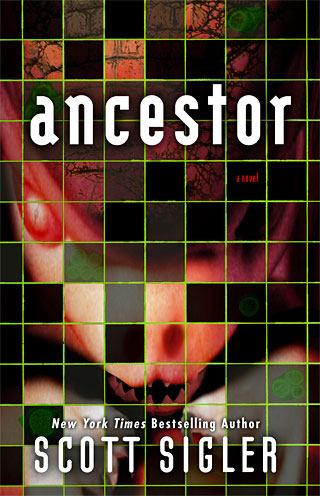
Today, the book “Ancestor” by Scott Sigler is available in stores from Crown Publishing. But that’s not enough. This author, a New York Times best-seller and pioneer of the podcast novel, is always on his toes for reaching new audiences, regardless of what publicity his publisher garners.
Pre-sales and first-week sales add to his count for climbing up the NYT best-seller charts, where moving up one rung to the next means quite a lot. The “Ancestor” blitz began months ago by building up anticipation. It’s finally available in hardback — after being a free podcast, mind you — but people have been talking and tweeting about this book for months.
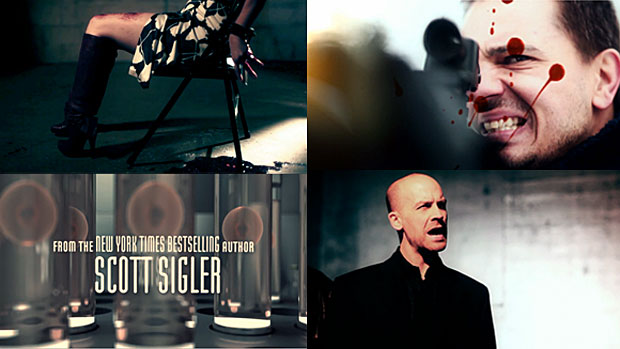
One of several buzz generators that Sigler figured out with other books was the “Ancestor” book trailer, which I directed and FWD:labs produced. As publicist Areille Ford wrote in the article “Why Make a Book Trailer? Do They Work?,” a book trailer is “designed to get the buzz going.” Here is some of the feedback that the trailer received, amid all the buzz about the book itself:
io9: “Book trailers are always a bit like low-budget short films, but this trailer for Scott Sigler’s bio-horror film Ancestor relishes its exploitation movie cred. It’s flesh-rippingly awesome, and more than enough to get you primed for mad-science nastiness.”
The Creative Penn: “Scott has also created an awesome book trailer that is just like a movie trailer. Trailers are a great way to get attention from readers but also can be a way to attract a movie deal itself. Visual culture and YouTube is so ingrained in culture that a book trailer can convert people who might not go to bookstores into buyers. Trailers are also ‘evergreen’ marketing and get views daily. This is so much better than print advertising so it is worth spending time and effort on.”
David Moody: “There are book trailers and there are book trailers. This is a bloody excellent book trailer.”
Noel Tanti: “I admit I have never heard of Scott Sigler, however this trailer for Ancestor, his latest book, is awesome.”
Dread Central: “On June 22nd best selling author Scott Sigler’s new novel Ancestor hits store shelves from Crown Publishing, and to show off the cinematic, horror movie quality of the book, he’s created a trailer with blood, guns, guys, girls, and monsters! What more could you ask for?”
>Mark Yoshimoto Nemcoff (link no longer available): “I’ve seen book trailers before but this one is ridiculous! It looks like a movie already.”
Related, this is another growing opportunity for writers and screenwriters to work with sound and images to find new audiences online. Video can boost interest and draw attention for a literary or movie agent, if not a deal itself.
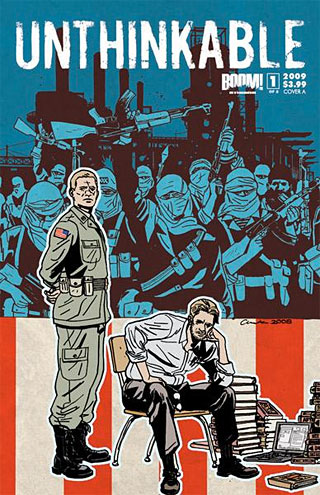
When “Unthinkable,” a new film by Gregor Jordan which stars Samuel L. Jackson and Carrie-Anne Moss, became available online — for free and in pristine quality — it wasn’t intentional. The film based on a comic by Mark Sable and Julian Totino Tedesco was bootlegged, only officially coming out Tuesday from Sony Home Video. The film’s producer, Cotty Chubb, spoke with Patrick Goldstein at the Los Angeles Times about the vibrant discussion and reviews on IMDb’s message boards of the film that’s not supposed to be out yet:
“It’s tremendous to go on IMDB and see that our user rating is 7.3, which is the highest rating of any movies in the current Top 10 there — you have to go down to ‘Iron Man 2’ to find a higher rating. But on the other hand, while everyone is debating all these important moral questions, I want to ask them another important question — hey, guys, what about the morality of watching this movie on the Internet for free?”
…
Meanwhile, Chubb has engaged the people who’ve been buzzing about the movie by steering the discussion to a vital economic issue, or at least a vital one for anyone who thinks there has to be a new economic model for film releases. Here’s a condensed version of what he wrote on the IMDB message board:
“I’ve heard a lot of reasons why streaming or downloading movies is a good idea, why everyone concerned should be happy with the attention (and in fact I am grateful for it), and how it’s the new real world, but I haven’t heard how the folks that paid for the picture are supposed to make their money back. So here’s one question, expressed a couple of different ways: Is there a fair price, fair in YOUR eyes, that you would pay for a download? ‘Hey, take a chance, it’s only a buck?’ ‘People tell me it’s great, I’ll drop two bucks?’ ‘Here’s three bucks, I can afford it and it’s only fair?’ What number seems right to you? ‘Or is it zero, screw it I don’t care?’ “
The responses have been fascinating, though I suspect they might also be profoundly disturbing to studio executives bent on protecting the windows model of releasing a film first in theaters and then on home video, all long before copies are available for downloading. Some viewers said they use downloading as a screening process to determine which movies they are willing to buy. Others suggested that studios embrace an iTunes model, with movies costing $2 or $3 to download. But everyone wanted the movies right away, not long after their theatrical release. And hardly anyone had any qualms about watching a pirated copy of the movie on the Web. It was certainly hard to find any enthusiastic supporters of the DVD model, since many consumers resent having to sit through the endless piracy warnings and trailer-ads that crowd the front of every new DVD.
While a similar situation happened with the Marvel Comics film “X-Men Origins: Wolverine,” which was leaked online prior to its May 2009 theatrical release, only independent films like “Children of Invention” have made strong headway by distributing concurrently with theater screenings.
One thing is certain: it’s great practice to build relationships with online audiences, like Chubb joining the message boards on IMDb, even if it’s not all sunshine and roses.
The New York Times just printed a gushing (one might even say jingoistic) report on how the military is using new technology to tap into Generation Y’s social networking skills to nail insurgents and protect American troops, all from thousands of miles away. Read the Times’ account, and you’d think this is mostly an exciting technology, which earnest, freckle-faced youths can use to scrub bad guys while they befriend their tougher colleagues on the ground, via chat rooms.
But as even that article acknowledges, the technology sometimes goes awry, like the time in February when Predator drones in Afghanistan snuffed out the lives of 23 innocent men, women and children — just one of many such incidents.
Well, here’s another perspective on what it means to turn the enemy (or those assumed to be) into pixelated blobs: Wikileaks’ video of a U.S. helicopter annihilating as many as 12 people in 2007 on a Baghdad street, including two Reuters journalists.
I’m not embedding the video on this site because it makes me feel physically sick to watch it, and there’s really no commentary I can give that will add to its value. You will note, however, how much the clip looks like a short segment of Grand Theft Auto. Right down to the dialogue: After the first round of shooting is finished, a voice says, “Oh, yeah, look at those dead bastards†and another begs a dying man to pick up a weapon, implying that he’d then have a license to kill.
In some sense, this is just a raw dispatch from war. I’ve never been in a war, and I can only assume that its dialogue has been and always will be full of the most unpleasant things imaginable.
There is a particular coldness to this killing, though, and I think the technology has something to do with it. I hardly think we should celebrate it. The military says that rules of engagement were followed. If that is true, that is an indictment of the technology.
To see a sanitized version of the Wikileaks video, take a look at this BBC report on the detention of a US military analyst, possibly for leaking the tape.
I’m not a gamer, so I wasn’t aware just how similar video games are to the video from Wikileaks. If you had the stomach to watch that clip (beware, it’s extremely violent and disturbing), you will probably be shocked to see just how similar the game Call of Duty is to the actual experience:
My point here is not so much to slam video games, but to suggest there is something remarkable — and awful — about this convergence of technologies. Entertainment, since its earliest forms, has always used war as inspiration. But until now it has been impossible to have a simulated experience that is so nearly exactly like the real one.
And it’s not that entertainment has chased war as much as some experiences of war — the remote ones — are becoming more like entertainment. Part of the appeal of entertainment that shows killing is that it removes all the nastier aspects of the experience — from the humanity of an enemy to the feeling of immediate vulnerability. Old west gunfights were probably nothing like those in High Plains Drifter. Saving Private Ryan might be uncomfortably real, but it certainly can’t be a substitute for participating in D-Day. The similarity between coordinating drone strikes, though, and playing Call of Duty seems unprecedented.
Does this influence how we as a country decide which wars to wage? It’s hard to say for sure, but there are certainly some interesting parallels between our foreign policy and the experience the technology helps create: god-like feelings of omnipotence, invulnerability, superiority, cold detachment from others’ suffering.
It is awe-inspiring technology, but it is also dangerous — not just for journalists carrying video cameras around the streets of Baghdad, but, I think, for the people pulling the trigger (or pushing the buttons). Or maybe I just think that way because my parents read me Lord of the Rings when I was 10.
— Eamon Kircher-Allen
Eamon Kircher-Allen has reported from the Middle East, Africa and the United States for outlets including Global Post, The Christian Science Monitor, Mother Jones, Lebanon's Daily Star and the Pulitzer Center. He blogs about media, politics and international affairs at The Long Gone Daddy.
Through the course of history, artists have often survived thanks to wealthy patrons who sponsored them. Today, finding someone with money to burn on your creative exploration can be quite hard, especially if that creative outburst is a film ($$). But why does the support have to come from one person? What if all your friends, family and fans could all chip in a tiny bit to make your dream explosion time happen? What if it was actually fun for them to do so and they didn’t just feel like you were begging? Kickstarter makes this possible.
Kickstarter is a site that allows artists to raise money for creative projects in a safe and fun environment for investors (using Amazon Marketplace). The site can be used to benefit film, art, music, design, fashion, food, journalism, games, and “other projects that spring from the imagination” to quote Kickstarter. The best part is that it is 100% patronage, not lending or investment and as a result the artists keep all the rights and ownership to content that they create. When you create a project on Kickstarter you decide what amounts people have the option to pledge at and what unique and fun rewards they will receive for doing so. Sometimes a reward is a handmade postcard, a special thanks in credits of a film or book, a food reward, or sometimes in the case of some of the photobook projects it is the inclusion of a photo that you have taken as part of the collection and a copy of the resulting book.
I discovered the fun of the Kickstarter community when a friend of mine was trying to get funding for her film. I often give money to street musicians and feeling like this was the online version but better (as she was my friend) I agreed to give her $25. But that wasn’t the end of my Kickstarter experience. I spent the next half hour backing interesting projects that strangers were doing as I trolled around and fell in love with the site.
The projects were really inspiring and different and I felt great knowing that I was direclty making it possible for a bunch of creative people to make things. I didn’t always give a lot, sometimes a dollar or five dollars, other times I gave thirty or fifty. I supported a girl who is making a poem and print book in an MFA program in Minnesota, an undergraduate band making an EP in LA, a nation wide community sketchbook project, a couple of short films, a feature film, a former Google Map Street View imagery producer who is image mapping the Grand Canyon, the list goes on and on. I discovered that Kickstarter is a great place to raise funds but it is also a great place to become part of a community and make contact with people all over who are making projects. I met a really cool cinematographer who was raising money for VFX for an awesome sci-fi film he shot. It was very cool to have direct access to this brave individual putting himself out there. I continue to back a lot of projects on Kickstarter and now I have decided to launch my own there as well.
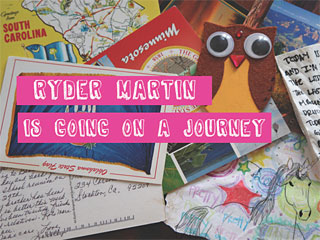
The Highs and Lows of Ryder Martin (working title) is an indie feature film that is going to shoot in July. We’ve raised funds, taken out loans and sold a car, but we still need a little more $$ so we are turning to my love Kickstarter.com. I, Dagmar Weaver-Madsen, am the cinematographer on the project and fellow UCLA MFA classmates are involved: Hazel Meeks is directing and Alex DeMille is editing. The script was written by UCLA Theater alumna Lauren Oppelt. The film is a love story with guts, hitch-hiking and rock-n-roll.
“In an endless stream of parties, hook-ups, and drinking; postcards bring together two dreamers and teach them to stop being too cool to care.”
If you are interested in Kickstarter.com for a project of yours jump on over to our site and see how the whole thing works in action. Who knows? You might find yourself with an extra $5 in your pocket and a need to help out a fellow filmmaker — you might also just want to get some of our sweet rewards!
Thank you and please tweet, blog or wallpost about us — it means a lot and we can’t thank you enough!
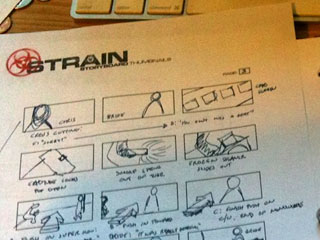
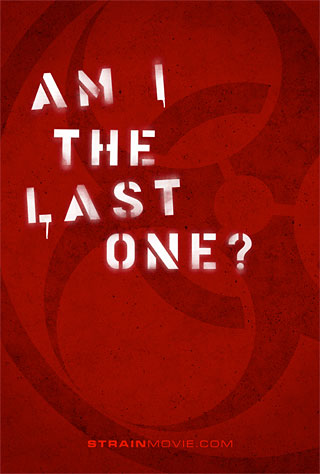
Director Reynier Molenaar is knee-deep in making his most involved film yet. STRAIN follows two survivors of the zombie apocalypse who must travel across ground zero — an abandoned Los Angeles — to deliver important biological samples. According to Molenaar, “it takes an emotionally realistic view of a genre classic. Basically, if you were to breed an action sci-fi with an indie drama, STRAIN would be its spawn.” Check out his visual treatment for more.
What’s been your approach for building support, be it growing your team or fund-raising your budget?
Reynier Molenaar The very first thing I do when I start prepping a new script, is create a visual treatment. I find that people are more likely to look at my project if they see some exciting visuals. Every treatment I do is totally different from my last and I always try to inspire the reader to imagine “the feel” of the film. In designing my visual treatment for STRAIN, I made lots of sketches, gathered reference photos, designed a title-treatment, chose my color palette and made key art. So by the time I got into full-on preproduction, I was able to use all those assets to create marketing and fundraising materials, such as posters, fliers and the website. The website is the hub for all things STRAIN.
How did the teaser poster campaign come to be? How has its response been for this grassroots fundraiser?
RM I think it’s really hard to get people to part with their cash, especially for a short film — and ESPECIALLY during a recession! So I knew I had to get creative! I came up with the idea of selling signed, limited edition posters on the STRAIN website. This way, supporters are actually buying something cool instead of just giving away their hard-earned cash. And depending on how much they spend, supporters can even get credit in the film — like Executive Producer. It’s been a great way for me to get people interested in the production, but ultimately, fundraising is always hard work and requires tenacity. I’m just hoping one day these posters will be worth something on eBay and all my supporters can cash in!
What are your other marketing and outreach strategies for STRAIN, either before or during production?
RM Everybody involved with the project has been blogging at http://strainmovie.com. So basically, the site is a multi-person account of the making of STRAIN. We keep it honest and intimate so that aspiring filmmakers and fans can get a REAL idea of what goes into making an indie short film, warts and all.
Along those lines, I’ve also been shooting and editing a short video series called, “Behind The STRAIN.” Each episodes showcases the cast and crew as we attempt to make this ambitious (and sometimes overwhelming) short film. The videos are usually pretty simple, with me just hand-holding the camera and talking right into the lens, but it’s a good way to let people into our creative process.
After the film is completed, my plan is to launch the 2nd version of the film’s website, with a new look. The new STRAIN site will feature the completed short film, as well as a lot of behind-the-scenes photos/video and interactive elements. But first things first! Anybody want to buy a poster? No, seriously, anybody…?
What’s your plan with the upcoming STRAIN party? What do you hope will come from the event?
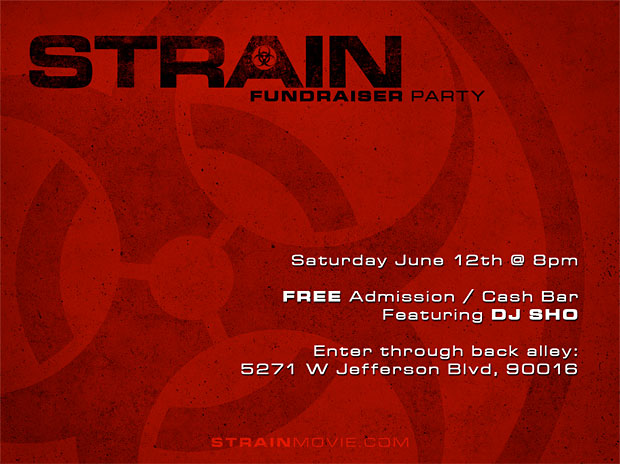
RM On Saturday, June 12th, 2010, we’re throwing a FREE party for STRAIN and it’s open to the public. The concept is really simple: I want people to dance and have a good time. I think a lot of people who work in showbusiness are tired of mixers where you hand out business cards and talk shop all night long. This will be a REAL party with a really awesome DJ and cash bar. Hopefully, we can get some people to donate a little something for STRAIN and participate in our raffle — but that’s up to them. I’m just really excited to party with some new people and celebrate indie filmmaking!
So bring your friends and come ready to PARTY!
STRAIN Fundraiser Party
Saturday June 12th @ 8pm
FREE Admission / Cash Bar
Featuring DJ SHO
Where do you think film fundraising is headed next?
RM I’ve always believed that your best fundraising tool is your body of work. If you can wow or inspire a financier with your last film, then they will be willing to hear the pitch for your next project. And with new digital cameras and desktop post-production available to every filmmaker, there’re no more excuses! It really comes down to your drive and passion for storytelling. So every day I wake up and ask myself, “what can I do to be a better filmmaker?” And my hope is that financiers will take notice. That, and I play the Lotto every week!
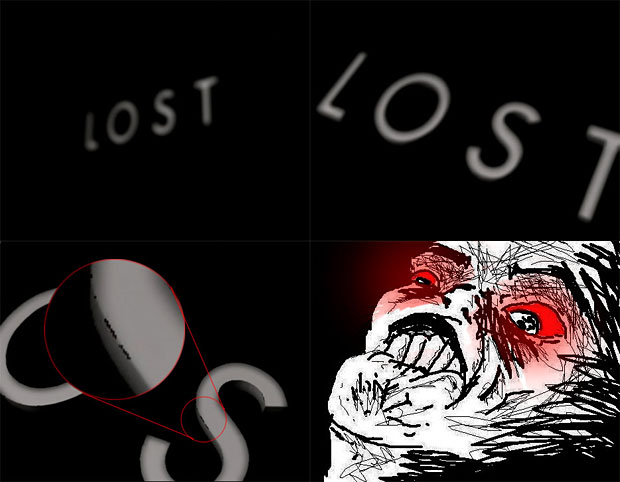
Namaste, LOST watchers. The final episode airs this Sunday, and soon we will have to bid Aloha to our favorite headache-inducing show of questions and no answers. Before this whole thing comes to The End, however, there is one mysterious visual element worth discussing that I find more confusing than the island itself. This:
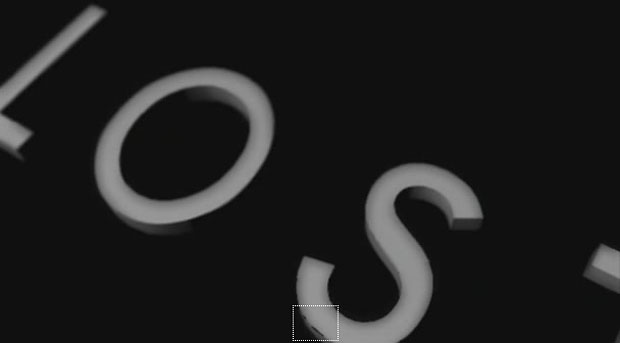
The LOST opening titles, and their simplicity. Now, there is certainly something to be said about the minimalist quality of the titles being a fitting intro to a show whose hook is all about mystery, and often completely devoid of answers. It provides little visual information, giving us nothing to read into, and further just lets the viewer fill in the many blanks that the show has created over time. The rudimentary nature of the titles I don’t have a problem with, but the rudimentary execution is what is boggling. The titles are just the word “LOST” rendered dimensionally, tumbling towards us in space through a very tight focal plane, meaning it appears out of focus as it approaches, and for a brief second comes into view before going soft again. Yet in this moment, we catch a glimpse of a horribly aliased, confusingly shaded amateur-grade graphic complete with artifacted edges. Most viewers probably don’t even notice, but there is no doubt a large enough population of baffled fans, enough to prompt internet commentary such as this:
Honestly, how does a show that has become the most popular serial series on television have a title that looks like it was the result of some student graphics class tutorial. A few ideas come to mind, but my primary theory is the fact that J.J Abrams has a history of giving a personal DIY touch to the titles of his shows. Before LOST, Abrams had created two other series, Felicity and Alias, both of which he decided to compose the title theme music himself, and in both cases it stuck straight through until the series completion. LOST is no exception, Abrams having composed the title theme again which remains the same today. It’s possible that he thought it might be fun to go one step farther in this case and actually design and animate the opening graphics to accompany his music.
It’s also possible that Abrams has little experience with graphics software, or was struggling to achieve the appropriate look he wanted. If the 3D titles were done in a comp software with a non-native plug-in of some sort, Abrams probably was attempting to tweak the raw output of the extension, to get something closer to his vision. However, the wrong mix of sharpening, minimize/maximize operations, and ramping blur animation will result in edge-artifacting very similar to the moment we see in the titles. The aliasing of the words, the odd soft-edges of the letter shading, and of course the artifacts themselves, make me think this was likely the case. Of course it is also possible that they just hired a lowest-bidding title company to slam out a quick rendition of the titles for approval, and somehow those made it to air, but for a pilot that cost between 10 and 14 million to make, it seems likely they would spring the extra cash to get a quality title.
The frustrating LOST title is likely the consequence of a tradition that Abrams, and perhaps many series creators and show runners, has adhered to. I’m sure there is a bit of fun and excitement for any series creator or creative head to place their personal mark on their baby before sending it out into the world, even if it means the sacrifice of quality and polish. His tradition continues in Fringe, to which he once again composed the title theme. Yet maybe after his LOST title debacle, he’s decided to get out of the pro-hobbyist graphic design business.
UPDATE: Art of the Title Sequence had an article about this subject, and confirmed that it was indeed made by Abrams himself on a laptop and After Effects.
We recently conducted a survey with users of FWDlabs.com and thought you might like to hear what we found out.
Many of our users say they’re action-oriented creatives, hardworking and excited about their upcoming features and collaborations. They love that FWD:labs helps with networking, builds community, is “powered by creative energy,” and they also like our design and ease of use.
What didn’t they like so much? Our users are concerned about online identity, technical support, and basic self-promotion. They want FWD:labs to be more distinct from its competition. They’re looking for features to customize further, to collaborate with testimonials and jobs, and they’d get behind upgrades to the speed and simplicity of the service.
So here’s what we’re doing:
Currently Available:
Our latest features allow for quick and pro customization, for free and for hire respectively
We continue to be a real community, with meet-ups all over the city, not just online
FWD:labs pro accounts allow for more pages, which can include testimonials
Adding a News blog to your profile is now easier than ever to setup
PDF uploads per project are now supported — great for all the writers in the house
RSS feeds for everyone and every project
Currently in Beta:
Projects will soon allow for job listings
Our new Jobs Board is in beta, which users can begin testing
Embedding video from YouTube and Vimeo, plus control over your own Amazon S3 buckets, are in beta
Control the basic design of your profile is now in beta, with pro account features to control the CSS, JavaScript and other UI
Behind-the-Scenes and Contact pages will soon be available for all project sites
We’re smoothing out the kinks and clutter on a regular basis, sharing new features and bug fixes with our members, and we’re also speeding up cleaner code and dedicated servers. Hope you like the improvements. Tell us what you think.
You just got picked for SHOOT’s New Directors Showcase, specifically with the spec commercial, Levi’s “True Love.” What are you most proud of and what do you want to do next?
Ezra J. Stanley I’m most proud the team of family and friends who helped me get to this place. This aligns with what I’ve wanted to developed: overcoming fears. It’s been sometimes hard. I’m proud of sticking with it. I can’t believe it.
Next I would like to do another spec, but I’d like a production company or agency to realize it. It’ll be bigger than the last two.
With whom and how do you collaborate with best?
EJS As AboveGrey Pictures, I’ve been working with DP Alejandro Wilkins. We went to film school years ago. We developed a working relationship at school. I really enjoy directing. He really enjoys the camera. I barely touch camera. I need that relationship with my DP.
I look for people who are fun and get out there. Those are the people who end up on my set. They even want to work for free. That’s the collaboration I want. I have this passion and I want my actors to be just as engaged, high-achievers. I don’t settle for anyone with any half-ass working with me on set. That may become a problem, but all-or-nothing seems to work for me.
I’m very single minded. I’m never co-directing. I dream it and write it on my own. I pitch it to Alejandro or whomever wants to produce something. I think having a vision that is complete and whole, that’s where the word director comes in. I don’t even like that word. I prefer “lead collaborator.” That’s how I deal with the whole filmmaking system.
I hug everybody on set. We’re skipping, dancing. It’s my world and I really enjoy the world.
What’s the goal for doing spec, long-form commercials?
EJS They call it branded content. All along, I’ve been doing this to entertain. I was trained to be a classic filmmaker and now bringing that training to the commercial world. Long-form really entertains people, which is what I enjoy the most. When people are laughing from the beginning to end frames, that’s what I want. It’s important that the consciousness of the viewer is fully involved. I’m always developing that. I don’t think there are any rules. We rely on some rules about ads. But I want to be the guy to screw the rules, to play with them drastically.
Also, the spec work has helped for TV and film directing for hire.
You used the YouTube response video strategy with your earlier spot to gather up extra views. Can you tell me about that approach?
EJS That’s how you do it. We first look into other commercials. Then we link it to our own. “Post Mortem” was really popular, so we chained the commercials together. We link the videos together. You gotta do whatever you can do.
What has acting and computer science taught you about directing content?
EJS I started in high school with a lot of programming, late nights making video games. The same thing happens when I write. It’s a formula of structures, arrays, and sub-structures. When it’s done, it’s a perfect function. But my passion wasn’t computer science.
What real or imaginary technology in emerging media would you want to explore and why?
EJS 3D and stereoscopic design. Recent film festival I’ve been to have had a lot of 3D artists. I still want to do gallery installations with my work. I want to use the 3D world and make new appreciation, like at the MOMA.
ESPN is already in 3D. We have another few years before our technology is perfect. It’s not the best 3D. But I’m really interested in working with stereoscopic designers. I don’t like relying on cool mediums like 3D technology to make something cool. I like starting with story first. Going into the 3D world, my work has got to leave me to see the other dimension. Do we really need it? With “Avatar,” maybe yes. “Oh my gosh, this is cool.” Audiences saw an angle they weren’t used to.
I want to use it when the technology is right. I’m taking meetings with 3D designers.
Some of your regular influences for creative ideas?
EJS My dream world, I can remember all my dreams since birth. I remember my first nightmares. I have a very strong photographic memory. A lot of those flash to me in my waking life. I have like two other lives I’m living in my dream world. People, spiritual goals in my dream world. My waking life, I’m always contending with reality, like Dostoevsky. In middle school, I lucid dream every night. I had to develop pinch tests, really hard. My conscious mind would kick in, I’d sleep through alarms. Jumping off stairs, breaking my neck. I’m still in that place of playing with collective consciousness and the dreamworld nice.
And also my environment. I’m super sensitive to the energy of people, the sounds, and other dimensions of “reality.” A lot of this stuff plays out in my head, takes over me, like an eureka situation. Maybe it’s walking through a park at night or risky activities like motorcycling on highway 5 from San Francisco to Los Angeles, doing 100MPH with nothing else going on. Surfing also opens up a channel. Meditating. I’ll do a hell of a lot of meditation. Indian breathing exercises. Music, of course. At the end of it all, the way my head works, the music punctuates and gives me visions.
Meditating. High-risk activities. Dreams. I pull from everywhere.
An archive of our collective blog on creatives and their work in film, web, and design.
Browse our topics or explore the archive of 385 articles since 2007–2020.