FWD:labs

Blog


paradise-regained_1

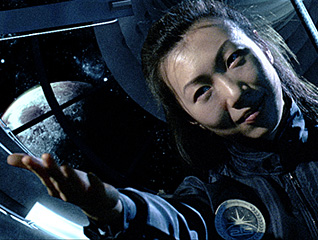
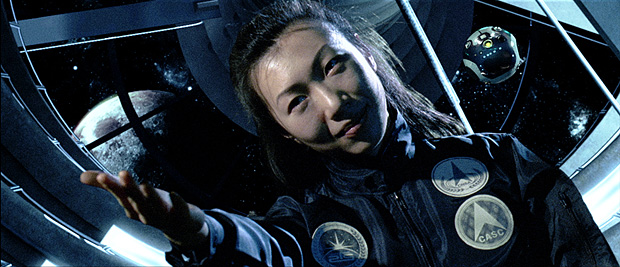
“Paradise Regained,” a 15-minute thesis film written, produced and directed by Jaraad Virani, is about two strangers who must band together to discover why they were involuntarily sent into space. The short stars Michael De Nola, Jo Mei, and Norm Golden.

How did you come up with “Paradise Regained?”

Jaraad Virani Strangely, I never set out to make “Paradise Regained.” It’s something that just kind of happened by chance. I began prepping my senior thesis towards the end of my junior year at NYU film school, which at the time was a different project all together: an adaptation of Ambrose Bierce’s seminal short story “An Occurrence at Owl Creek Bridge.” It’s fairly well known and has been filmed before, most successfully as the original Oscar-winning 1962 black and white short film. I fell in love with the story when I first read it in high school and it captivated my imagination so thoroughly that I couldn’t fathom directing any other project while in school. I felt I had a particular vision for telling the story that would help it to feel fresh and exciting despite the fact that others had shot similar projects decades ago. I researched a ton, wrote draft upon draft, prepared a pitch, even created an animated storyboard sequence set to music to sell my vision, and shot VFX tests in the summer leading up to my senior year.

As classes began and I weighed my final decision, something that had been nagging me for a long time about the project finally became a painful and unavoidable truth: it wasn’t original. In fact, another young filmmaker wrote and directed an adaptation of the same short story just a year or two prior with mixed results. Did I really want to be a “me-too” filmmaker? Although I held the utmost confidence in my particular interpretation of the story, I knew no matter what it would just be another adaptation covering familiar ground. One of the hardest decisions I ever had to make was to abandon the project.

Consequently I needed a new story to build my thesis around … fast. Daniel Robinson, a very talented screenwriter and colleague, had been putting together a story for a really compelling sci-fi piece about a man and woman mysteriously marooned in space. It was a dark and very intense story, one that was far too rich for a 10 to 15 minute short film, but I enjoyed the premise and saw a lot of potential in the set up for a short film, not to mention how much I relished the technical and dramatic challenges of the sci-fi genre. Best of all: it was original. So I switched gears, asked Daniel if I could create a bit of backstory that would dovetail into his story and that would be more appropriate for the short film format, and the end result was “Paradise Regained.”
paradise-regained_2

What was one of the greatest joys of directing?

JV By far the greatest joy was collaborating with the actors. No other aspect of directing is quite as rewarding, challenging, daunting, and inspiring as bringing characters to life. I was very fortunate to find two sensational actors — Michael DeNola and Jo Mei — who committed very strongly to the project despite it’s technical challenges and, as far as I’m concerned, more than rose to the occasion.

What was a highlight of production?

JV For a variety of reasons we fell behind in our pre-production to the point where, the night before our first day of shooting, our sets were no where near ready. Panicked, grief-stricken, and running on fumes — staying awake for 72 hours straight while overseeing construction — I called my AD very early in the morning on the day we were supposed to start and explained the situation to him. We agreed no shooting could happen that day.

I was so consumed by fear that the entire crew would mutiny and leave the project as a result of this unfortunate circumstance. But, instead, everyone showed up at their designated call times and banded together to help finish building the sets to the best of our ability. Cast and crew alike put aside their respective roles and became grips, painters, assistant art directors, you name it, in a wonderful display of unity and sacrifice. Even though we lost a day of shooting, we more than made up for it and even ended up wrapping a little early, all because of my wonderful colleagues; I could not be more proud of, or more indebted to them.

Jump ahead four years. You’ve just completed the last leg of the
film. What step are you most proud of? What step did you underestimate?

JV I’m most proud of just finishing the damn thing. Post-production was such a time-, money-, and energy-intensive process; far moreso than I had anticipated during production.

While it’s true it did take 4 years all together to conceive of, pre-produce, produce, and post “Paradise Regained,” the timeline is considerably misleading. There was a lot of dead time during post where I had to wait for the VFX artist’s schedules to open up so they could do pro-bono and/or paid work, or when I had to pause work on the film to raise more money to keep it going.

Though it was a short film, the entire filmmaking process truly was more of a marathon than a sprint. It took such a tremendous amount of time and effort to get to the end and I’d be lying if I didn’t admit that at times things looked bleak if not downright impossible. But perseverance is an essential skill in filmmaking — if not life — and it’s what saw all of us through to the final product.

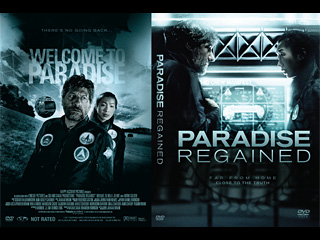
You also have experience as a graphic designer. I’ve already seen the poster. Any thoughts for self-marketing it? What design objects do you have in mind, be it DVD packaging or otherwise?

JV My background in graphic design proved to be an incredible boon to the production of “Paradise Regained” in a myriad of ways. Even in pre-production I put my skills to use by creating animatics to help convey my vision for the project to teachers, classmates, donors, and potential cast and crew. Additionally I leveraged my experience with print layout and design to create a compelling fundraising prospectus that captured the spirit of the film and helped elevate banalities such as fundraising letters and cast-and-crew breakdowns into a slick, well-produced, and story-integrated package.

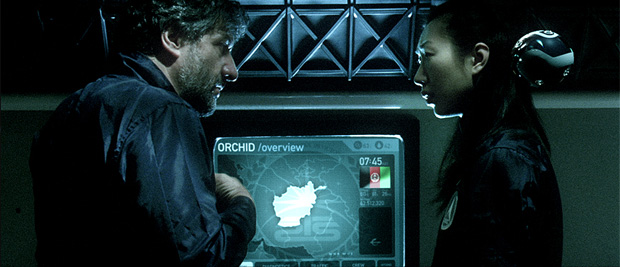
During production I helped design a lot of the logos used on the character’s costumes and on a variety of collateral used in the production design, and in post my skills came in handy when designing the GUIs [graphical user interfaces] for the computer screens in the film as well as performing some light visual effect work such as matte paintings, rotoscoping, etc…
paradise-regained_3

Lastly I also was able to generate key art, DVD packaging, such as posters and lobby cards to help market the film. And if time and budget allow I hope to be able to delve further into digital and printed collateral to help entice people to check out the film.

What are your thoughts on 35mm film being displayed online, be it
an iPhone, YouTube/Vimeo, or hi-def VOD?

JV I feel that even though we have access to more and more content in our personal devices, portable or otherwise, nothing beats watching a movie the way its meant to be seen: on a huge screen in the company of friends and strangers. It’s tough to balance accessibility of content via online and on demand distribution methods with the proper presentation of films, but unfortunately the two go hand-in-hand with each other today. The key I think is to make sure to create a project worth that big-screen, darkened-theater presentation that compels people to put down the iPhone or the laptop and go have a true cinematic experience.

What types of projects would you like to do next?

JV Considering how intense the post-production on this project was due to the CG characters and environments, I’m looking forward to doing a very short and simple project next that’s completely character driven, has no special effects in it whatsoever, and is something I could ideally shoot and edit and enjoy the fruits of in just a couple weeks’ time. It’ll be a wonderful change of pace to not have to wait years before enjoying the fruits of my labor so I look forward to working on something that can give me more immediate satisfaction as an artist.

Any other tips to share?

JV I’m a huge proponent of making your movie in pre-production, but what I would encourage people to remember is to not just visualize and plan the production of your film before you lens, but also make sure to prepare for your post-production as well. I ran into so many excruciating technical problems in post, many of which could have been avoided had I known to research more thoroughly and plan my post-workflow far more specifically. If you can spare yourself the hell of codecs, pull-down, color space, frame rates, resolution, YUV vs. RGB, pixel aspect ratios, blah blah blah, please do it. All the complexities of digital post production can become a video – and audio-engineering labyrinth that stymies your creativity and delays you from reaching your main goal: finishing the film. It’s important to remember that your post producer, supervisors, editors, composers, color graders, sound designers, mixers, et al, are all an integral part of the whole filmmaking process and the sooner you can bring them into the fold the better off your final product will be.

To know about the Los Angeles premiere and the online premiere for “Paradise Regained,” contact Jaraad Virani or stay tuned to the FWD:labs mailing list and Twitter.

Author

Aaron Proctor
Founder, FWD:labs
Director of Photography site
Contact


  • Published in General

Diablo Cody at the 2009 Toronto International Film Festival. Photo by Josh Jensen / Creative Commons.

Diablo Cody at the 2009 Toronto International Film Festival. Photo by Josh Jensen / Creative Commons.

With possible expectation upon her to one-up her success with “Juno,” which won her a first-time nomination and an Oscar for screenwriting the same night, Diablo Cody spoke with Time Out New York on the pressure she’s felt to follow up:

None. … How could I possibly? The experience that I had with Juno is something I could never replicate, ever. First of all, you never have your first baby again. Second, the whole production was really charmed from start to finish. … And then it culminated in Oscar nominations [a]nd a win for moi. It doesn’t get any better than that. I’m so fortunate that I got to have that experience. Now I almost feel this great calm coming over me. I’d be feeling a lot more pressure if I was still striving for that goal.

Read the entire interview at TimeOut.com. Her latest work, “Jennifer’s Body,” is now in theaters and her television series, “United States of Tara,” is on the air. Upcoming projects with her involvement include “Girly Style,” “Breathers: A Zombie’s Lament,” and “Sweet Valley High.”

Bestselling author Seth Godin added, “[s]ometimes, the work is the work and the goal isn’t to top what you did yesterday. Doing justice to the work is your task, not setting a world record.”

(via Seth’s Blog)


Author

Aaron Proctor
Founder, FWD:labs
Director of Photography site
Contact


  • Published in Film + Web

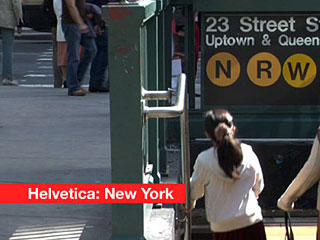
Gary Hustwit's 'Helvetica' has sold very well online

Gary Hustwit's 'Helvetica' has sold very well online

Updated – 10/13 with Dan Carew’s commentary

We need to take a lesson from the playbook of New York Times best-selling author, Scott Sigler, whom I met doing “Bring Your Own Big Wheel.” He’s a pioneer of distributing his book online for free as a podcast. His fan base is huge, many subscribing via iTunes. But when it comes time for talking to hardcopy distributors — he’s always dropping new books — Sigler leverages his subscriber numbers, ensures that he can continue delivering the audiobook version for free, and tells his fans to buy the hardcopy all at once. It works.

In this weekend’s Variety, Scott Kirsner, author of Fans, Friends & Followers, opens with the success story of Gary Hustwit’s “Helvetica.” Kirsner focuses on distribution options online for independent filmmakers, be it with the leaders (Netflix and iTunes) or the followers like Hulu, SnagFilms, and The Auteurs.

One thing the Internet has clearly changed, observes distribution consultant Adam Chapnick, is access to an audience. “But having easy access to the global audience doesn’t get anyone to see your movie,” he says. A solid marketing strategy, whether traditional or digital, is still essential.

Producer Ted Hope (“Adventureland,” “The Savages”) anticipates independent filmmakers who are willing to tinker with traditional release windows “absolutely could gain an advantage” in the online world. “I think we’ll start to see more folks coming out of Sundance and other festivals trying new models, to make their films available in different digital formats when they’re at the height of their media attention, rather than nine or 10 months later,” he says.

Director Cory McAbee, who is showing his sci-fi Western “Stingray Sam” at festivals and limited-run engagements, says he hasn’t felt resistance from festivals or other venues, despite the fact he is simultaneously selling the film in digital form on his website.

Stingray Sam

'Stingray Sam' is sold online without a separate distributor

On Kirsner’s blog, CinemaTech, he adds to the article. Gary Hustwit’s pre-sale of “Objectified” is on fire, even on a limited-run USB drive. McAbee’s musical space western, “Stingray Sam,” packs in a t-shirt, photobook, soundtrack CD, and two digital downloads along with the DVD. And Eric Lemasters of E1 Entertainment (“New Moon”) notes the companies chasing the success of iTunes and Netflix: Hulu, EZTakes, Amazon, Blockbuster/Movielink, and CinemaNow.

Read the entire post for it’s numbers on indie distribution on iTunes and subscribe to his posts; they’re always informative and thought-provoking.

Related, DirectorsNotes has an interview with Kirsner, along with a 35-page preview of his book.


Updated 10/13: Also check out Dan Carew’s commentary at indie2zero.com. He proposes a single platform available via your television to immediately and legally download a film, while leveraging social feedback. He’s guessing three years it’ll happen; meanwhile, he’ll keep making film.


Author

Aaron Proctor
Founder, FWD:labs
Director of Photography site
Contact


  • Published in Film + Web

Jude Law as celebrity model, Minx, in the film 'Rage.'

Jude Law as celebrity model, Minx, in the film 'Rage.'

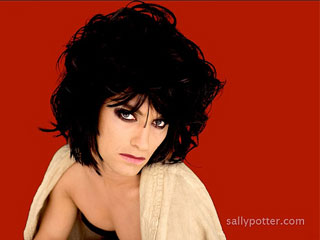
Accomplished writer/director Sally Potter on giving away her new film, “Rage” (via Babelgum.com plus DVD sales and NetFlix), while trying to confront piracy head-on:

The decision to ‘give away’ the film for free on people’s mobile phones and on the internet was, we hoped, (in addition to being refreshingly forward thinking and in the spirit of the story), also a way of being one step ahead of the pirates. Instead of needing to steal it by illegally downloading it, people could experience it – above board – as a gift from the filmmakers. Those who could not afford to buy a cinema ticket or DVD would not miss out on the experience if they wanted to have it.

And just as food for the body costs money to grow and distribute, so do films. A DVD can cost much less than a night out in the pub, another new Tshirt, or many of the other so-called essentials that people do not think twice about laying out their hard-earned cash for.

Also of note: Potter’s film premiered exclusively on the iPhone using the Babelgum app (download on iTunes).


Author

Aaron Proctor
Founder, FWD:labs
Director of Photography site
Contact


Adobe Story

New and free: Adobe Story

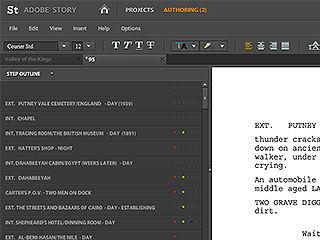
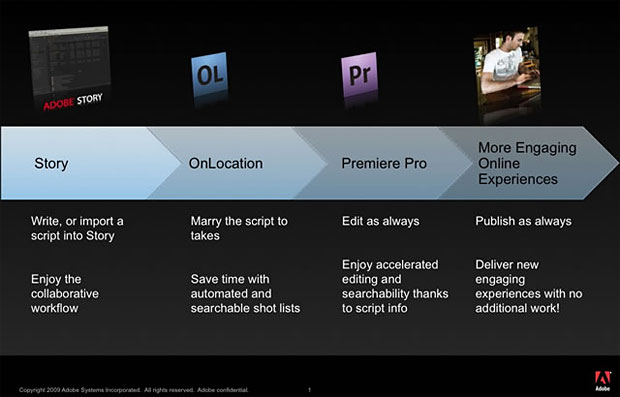
Adobe has released Story, a free screenwriting tool using online collaboration and offline coordination that (of course) comes full circle with Adobe’s other film production software.

Metadata is tag-like information below the surface that should remain a constant throughout a project. In a press preview earlier this month, according to Adobe’s Director of Flash Content Creation and Distribution, Jennifer Taylor, “[v]ideo creators understand that the key to workflow optimization is metadata. … It’s best to capture metadata as early in the process as possible.” Examples in the preview include “character biographies, links as reference points, and fashion synopses.”

Collaborative film production software isn’t new. Celtx (free), EP Scheduling, Gorilla Pro and Showbiz Scheduling are common tools of the trade. But one thing unique to Adobe Story and its proposed workflow is an engaging step into online distribution. Again, from the press preview:

When the video production is ready for online distribution, the metadata can also help viewers discover and search through content to find favorite characters, episodes, or scenes, making the viewing experience more interactive.

adobe-story-workflow

Earlier this year, competitor Apple filed a patent for a storyboarding app that used metadata to help with workflows to Final Cut Pro.

(Thanks to @carlothebarlo for the link.)


Author

Aaron Proctor
Founder, FWD:labs
Director of Photography site
Contact


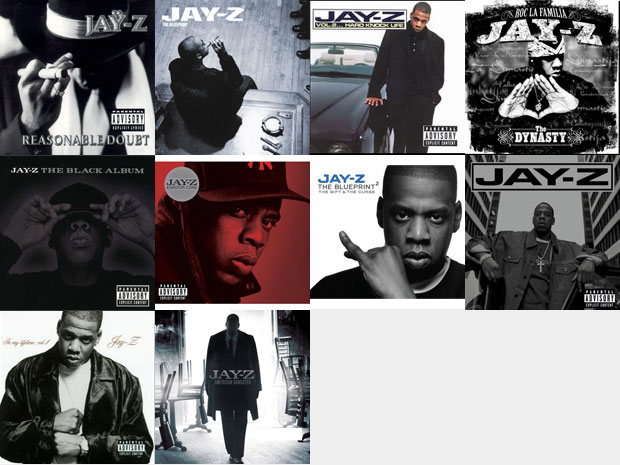
As rap artist Jay-Z passes a new milestone, originally held by Elvis Presley with 10 American number one albums on the Billboard 200, you may have seen him in a commercial for Rhapsody, a music download site from RealNetworks. The ad recreates ten of his album covers.

In order of appearance, here are the albums being shot in a seemingly-seamless edit:

jay-z

Campaign: Droga5, New York
Directed: Anthony Mandler via Les Enfants Terrible (LET)
Director of Photography: Jonathan Sela
Executive producer Ciarra Pardo
Post Production: Ghost Town Media
Editor: Ryan Treese Bartley
VFX: Brandon Parvini
Post Producer: Matthew Primm
Audio Post Production: Nylon Studios, New York

Thanks to filmmaker Jaemin Yi for the link.


Author

Aaron Proctor
Founder, FWD:labs
Director of Photography site
Contact


  • Published in Film

Cover of The New York Times Magazine. Photo by Dan Winters for The New York Times.

Cover of The New York Times Magazine. Photo by Dan Winters for The New York Times.

In a new interview from The New York Times Magazine, journalist Saki Knafo speaks with director Spike Jonze (“Where the Wild Things Are”) on the authenticity of his new film and its dialogue for a 9-year-old:

Most kids’ movies crackle with one-liners; in “Where the Wild Things Are,” the characters talk over one another and spend a lot of time stumbling over their own words as they try to articulate their feelings. Jonze told me that one of his models for the dialogue was the work of John Cassavetes, which may be exciting news if you’re a fan of avant-garde cinema, but might not sound quite as good if you’re the president of Warner Brothers.

“We wanted it all to feel true to a 9-year-old and not have some big movie speech where a 9-year-old is suddenly reciting the wisdom of the sage.” He hadn’t set out to make a children’s movie, he said, so much as to accurately depict childhood. “Everything we did, all the decisions that we made, were to try to capture the feeling of what it is to be 9.”


Read the full article.

Thanks to director Jaraad Virani for the link.


Author

Aaron Proctor
Founder, FWD:labs
Director of Photography site
Contact


Part of a series of posts about free resources from the FWD:labs collective.
Hitchcock

Hitchcock

Everyone in this industry seems to have one. But which iPhone apps can help get a job done a little better or a little faster than before? FWDlabs.com has a new resource that helps you find the best ones out there.

After much interest in our blog post about iPhone apps for filmmakers, we’ve put together a broader list to track ’em. We call it Apps for Cinema Artists.

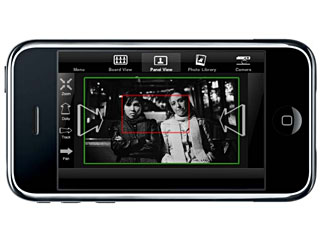
Our latest addition is Hitchcock (iTunes link), a paid app for “mobile storyboard and pre-visualization” composition on the iPhone/iPod. Perfect for a two-way win with your location scouting. Check out their video overview:

[vimeo]http://vimeo.com/6030115[/vimeo]

Know something great we’re missing? Let us know and we’ll quickly add it to our collective resource.

Thanks to filmmaker Jaraad Virani for the tip.


Author

Aaron Proctor
Founder, FWD:labs
Director of Photography site
Contact


  • Published in Film

Part of a series of posts about great film, web, or design artists and their work abuzz online and in-person.

Coldplay's new music video

We’re seeing a lot of these lately. Coldplay just released an awe-inspiring one. Oren Lavie’s is still blowing up. Fortunately for audiences and filmmakers alike, the videos are quite good. So good, they spurn a lot of knock-offs. Especially in the ad industry. (To quote Charles Caleb Colton, and my father, “imitation is the sincerest form of flattery.”)

There’s a few varieties of animation in music videos. We’ve got crisp CG animation with Flogging Molly, traditional animation with Pearl Jam, and then classic stop-motion animation with The White Stripes, even going back 25 years to Alan Parsons Project. Finally, there’s something from a book publisher that makes you smile as the pages come alive.

Without further ado, here are 14 favorites from the last 25 years by some great animators:

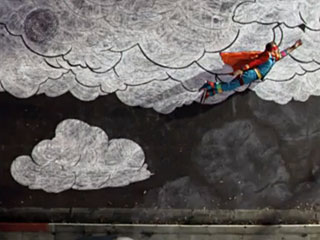
Chalk is huge right now:

Coldplay “Strawberry Swing” by Shynola (2009)

https://www.youtube.com/watch?v=BYtk1Z0UUuE

Bonus: Shynola also did Queens of the Stone Age “Go with the Flow” (2007) rotoscoped to look straight out of Sin City. They also did Junior Senior “Move Your Feet” (2003) which was animated in 256 colors using Deluxe Paint.

The Fray “Heartless” by Hiro Murai

[vimeo]https://vimeo.com/6059825[/vimeo]

The overhead, 2D perspective blew up with the recent popularity of Oren Lavie’s video:

Oren Lavie “Her Morning Elegance” by Oren Lavie, Yuval and Merav Nathan (2009; link no longer available)

(See our post on Tomas Mankovsky’s “Sorry I’m Late,” which used the same technique.)

We’ve also seen some other techniques, possibly as a result of DSLR camera use:

We Have Band “You Came Out” by David Wilson / W+K (2009)

More commonly, but just as labor-intensive, it’s CG framed up on photo plates or, in the case of Pearl Jam, straight up animation:

Flogging Molly “Float” by Karni & Saul (2009)

Minilogue “Animals” by Kristofer Ström (2008)

[vimeo]https://www.vimeo.com/1781230[/vimeo]

Pearl Jam “Do the Evolution” by Todd McFarlane (1998)

https://www.youtube.com/watch?v=copOYXvEsRs

But let’s not forgot, we’ve had some really stunning ones in recent years:

The White Stripes “Fell in Love With A Girl” by Michel Gondry (2002)

Trivia: this video took 2 months to animate.

Sia “Breathe Me” by Daniel Askill and Sia (2007)

https://www.youtube.com/watch?v=U6PGrub3jUc

Peter Gabriel “Sledgehammer” by Stephen R. Johnson (1986)

https://www.youtube.com/watch?v=hqyc37aOqT0

aHa “Take on Me” by Steve Barron (1985)

https://www.youtube.com/watch?v=qFAycZQsEMQ

Alan Parsons Project “Don’t Answer Me” (1984)

https://www.youtube.com/watch?v=ALC7kt6iUHY

Finally, making another exception here — more book promo than music video per se — for a 4th Estate’s 25th anniversary in book publishing:

4th Estate “This is Where We Live” by Asylum Films / Apt Studio
[vimeo]http://vimeo.com/2295261[/vimeo]

What’s next?

(via Jaraad Virani, @joshto, FastHack.com, CampCreativeGroup.com, Motionographer.com)


Author

Aaron Proctor
Founder, FWD:labs
Director of Photography site
Contact


  • Published in General

Photo by Barbara L. Salisbury for The Washington Times

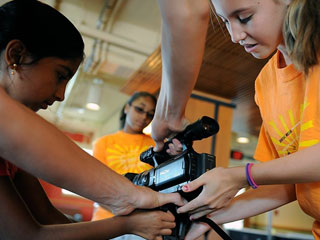
Girls at a digital media camp. Photo by Barbara L. Salisbury for The Washington Times

In response to The Washington Times article, “Girls encouraged to enter technology field”:

I’ve been a female in in primarily male dominant male industries for almost 10 years now. The only thing I can really say is that the stigma of “boys only” really doesn’t apply anymore.

Male versus female occupations seem like they are becoming a thing of the past these days. Just last week, this sentiment was equally shared at Mole-Richardson on a panel of about 12 — 5 of which were women. One young female student asked, “as a woman, do you find it difficult to find work in a male dominated industry?” Her answer, “5 years ago, I had seen some horrible discrimination on set — these days it almost seems like sometimes you get the job because you are a woman. It can go either way these days.”

These days, our mothers burning their bras did indeed pay off.


Author

Nadia Kovacs
Guest Writer, Filmmaker


Part of a series of posts about up-and-coming artists, projects or movements across film, web, or design in cinema that go the extra mile for their audience.
500 Days of Summer

Music video for (500) Days of Summer

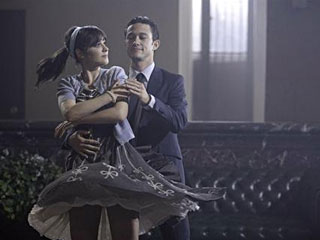
Commonplace in ad campaigns but less so in film and television campaigns, the bonus of consistency and authenticity feels refreshing. I think it’s a great strategy to work with the same people to produce supplemental content that continue the feeling of the film.

“(500) Days of Summer” director Marc Webb — no stranger to the music video industry — directs stars Zooey Deschanel and Joseph Gordon-Levitt again for this music video. The work also features Deschanel’s own, “Why Do You Let Me Stay Here?,” a song from her duo with collaborator M. Ward, “She & Him.”

https://www.youtube.com/watch?v=17KUOQOlt8E

In the middle of the feature film, Gordon-Levitt celebrates his good mood with a dance number. It’s nice to see Deschanel getting an opportunity to shine too, working with the film’s choreographer Michael Rooney. In an interview with USA Today, the actress on the joy of teaming up for more:

“I think it’s great to have continuous collaborators,” Deschanel says. “It’s a shortcut that makes it so much more fun. The job is much easier when you can go to set and be like, ‘Ah, Joe!'”

That’s not all. At MovieWeb.com, there’s also a “Sid & Nancy” video — a reference to dialogue in the feature film — which stars Deschanel and Gordon-Levitt as Sid and Nancy, respectively.


Author

Aaron Proctor
Founder, FWD:labs
Director of Photography site
Contact


  • Published in Film

District 9

District 9

Updated 8/13: Watch more of Blomkamp’s earlier work in a YouTube playlist of 14 works, compiled by Kevin Broome. (via Coudal.com)

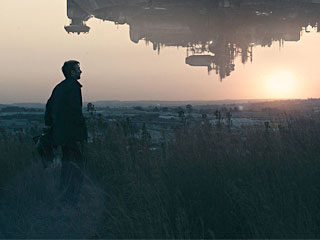
From the Los Angeles Times’ interview, Neill Blomkamp (director, “District 9”), once knee-deep in pre-production to direct the now-shelved “Halo” film, seized the opportunity to turn a short film of his into “District 9” with the help of Peter Jackson, keeping everyone on board:

Blomkamp said he plans to follow up “District 9” with another sci-fi project he describes as “seriously kick-ass.” But also in the offing is another project the writer-director plans to self-finance with whatever revenue he reaps from his feature debut — a self-preservation measure you could attribute to his hard-learned lessons on “Halo.”

“It’s really out there. I have to set it up with my own cash,” said Blomkamp, grinning at the thought. “It won’t take tens of millions of dollars to make it work. I just have to be in control of it so it can be as ridiculous as it needs to be.”

Watch “Alive in Joburg,” Blomkamp’s short that has become “District 9,” on SpyFilms.com.


Author

Aaron Proctor
Founder, FWD:labs
Director of Photography site
Contact