FWD:labs

Blog

  • Published in General

CC Photo (c) photologue_np, Flickr

Fundraising is an essential part of all projects — and it’s tough. How do you make it easier?

The answer is simpler than you might think. Fundraising is as much about research and asking the right group of people as it is about understanding basic human psychology. What are the reasons that drive a person to give money to a project that hasn’t yet been started? How do you entice people to give what they can, without the pressure of having to give “too much”?

Working in development, I am exposed to countless successful campaigns on daily basis; campaigns that solicit long-term investors in an organization or type of work, and some that look for one time gifts to support specific projects/purposes. In each instance, it takes knowing what you’re selling, and remembering one simple, and often underrated, tactic that entices people to give to a wide variety of projects: incentivizing.

As much as we may wish it were otherwise, people rarely, if ever, give something for nothing. Instead, it seems that people give for one of three reasons:

  1. They fear losing or never seeing something they love (for example, they fear a radio station will go away because they don’t donate, or they give to a film project because they fear never being able to see the movie).
  2. They want to avoid what will take the place of the current norm if they don’t give (for example, they give to a presidential candidate because they want to avoid the consequences of what will happen if the other teams loses).
  3. They give because they’re getting something in return. Exclusive content, an insider benefit, a chance to be part of a team (for example, people give to arts organizations not because there aren’t any others or the competition is scary, but because they get benefits that bring them closer to the work when they do).

Unless you’re providing a life-altering good or service, you’re going to want to entice people by giving something in return. In most situations, there is no eminent threat to people not involved in the finance side of a project of the service’s dissolution. There are constantly new forms of entertainment, education, and public services to choose from. Potential supporters aren’t going to give because what you’re creating is the only option in town (ESPECIALLY when they’re being asked by countless people to fund a slew of new projects). They’re going to want something back. Even if all you have to offer is the chance to hang out with the director, or tour a facility, or get special insider info.

Incentivizing tends to be scary because it means more up-front costs. If you don’t even have the money for your project, you can’t possibly come up with money for an investor return, right? Wrong. Access to exclusive behind-the-scenes footage of daily shoots, a chance to grab a drink with cast members at an “exclusive party,” and many other low-cost options can entice and encourage people to give.

Most of the time, people ask their family and friends for money first because they have a relationship with them. They’re already connected and want to help, already understand the project, or like being the “insider” when it comes to something up and coming. So why not expand that circle of friends? Create opportunities to build relationships through incentives, and your one-time on-the-fence supporter may become a new friend who shows back up to help again and again.

The more time you invest in a person, the more time you take to get to know them, the more likely they are to give that same time and attention back. Spend some time crafting a compelling, heartfelt pitch. Spend time creating an invitation to an event whose quality shows the event is worth something. Find a “thank you” gift that is both relevant to the project, and worth something to the supporter. You, as the organizer, should remember the old adage: give unto others what you would have them give unto you.

In the simplest of terms, you’ve got to get people to care. To show you care. To invite them to small things without donations, and then work them up. In the theatre, we call these kickbacks donor benefits. In other spheres, you may call them gifts, incentives, or thank you’s.

In the end, ask yourself: how much is a person’s support worth to you? How much is it worth to ensure that it’s recurring? Because if you aren’t willing to invest in them, how can you expect them to invest in you.


Author

Courtney Robertson
Non-Profit Arts Administrator
@quartersmarie


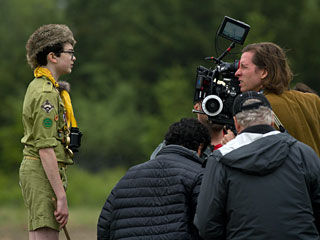
'Moonrise Kingdom' actor Jared Gilman with director Wes Anderson

Andrew Weisblum, ACE, editor of Wes Anderson’s “Moonrise Kingdom,” was recently asked by Bryant Frazer at StudioDaily about some unique approaches to the workflow. In addition to shooting 16mm, handling a short schedule, downloading dailies nightly, and cutting on set with his laptop, Weisblum had this note about cutting lines together:

One trick that helped make the most out of the kids’ performances was having them record their dialogue multiple times, both on set and also in a separate studio. A lot of those line readings ended up being intermixed with the production recordings, giving Weisblum and Anderson added flexibility to shape the performances in the cutting room. In fact, that kind of detail work has become increasingly commonplace over the three films Weisblum has cut for Anderson. “There isn’t a scene where you don’t end up substituting dialogue and/or words of every line from other takes and other performances,” he says. “If we had a scene that played out in a master shot with whip pans designed as cut points, he might do 20 takes of that and we would stack all the dialogue together, pick the best readings, and sync those with the one take we’re using. One sentence of Mr. Fox could be from 12 different takes, and that’s the kind of construction we started doing on Moonrise â€” not because the performances needed so much work, but because it was possible to make them that much more special.”

Weisblum’s meticulous work is yet another way to save time in a production where the collaborative vision for the film allows for shortcuts and the final product becomes all the more distinct.


Author

Aaron Proctor
Founder, FWD:labs
Director of Photography site
Contact


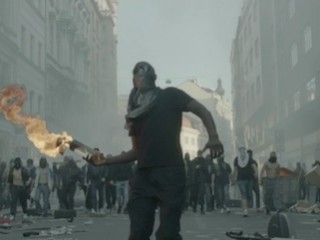
The parallels to socio-political uprising — Greece, Vancouver, Occupy, and others — are welcome in pop music multimedia, but it’s woefully ironic in Jay Z & Kanye West “No Church In The Wild.” As one-percenters themselves, the video touts glorified, staged violence mirroring recent global headlines. Nevertheless, director Romain Gavras’ visuals are captivating and evocative, balancing symbols of power and melodrama. And, during a frame here and a frame there, it looks so close to what we see in the news that it’s suddenly frightening because it’s a reminder of the here and now.

Molly Lambert at Grantland critiques the video:

[W]e get a video that nudgingly promotes the idea of violent social revolution without specifying what we are revolting against or toward. Is it a commentary on Trayvon Martin? The riots in England last year? Arab Spring? The 20th anniversary of the L.A. riots? Or is it just pure fiction, a spectacle of masculine aggression or a continuation of the postapocalyptic narrative from “Run This Town”? It’s all very somber verging on silly, and then there is an elephant at the end to stomp on your head with “Welcome to the Jungle” (you’re gonna die) subtext. How does that compute with private listening parties at the Natural History Museum and attendance at the Met Ball? Are you the 1 percent or not? The video is beautiful, and the flaming cop car crashing is a particularly gorgeous image. Any larger points about police states or profiling are blurred into dumb awe at expensive special effects. The riot is glamorized, and you’re obviously not rooting for the cops. You can’t occupy Wall Street in a Rolls-Royce Corniche with the coke-white interior. HUH?

Kia Makarechi at Huffington Post points out the irony of capitalizing on Occupy:

The Occupy Wall St. parallels seem almost too obvious to mention, though they are of interest because Jay was caught in a public relations scandal when it became known that the “Occupy All Streets” t-shirts his clothing company were selling did not benefit the movement.

Zach Dionne at Vulture notes the lyrical disconnect:

Things become extra odd once Kanye starts vibing about infidelity, throwing cocaine on a female acquaintance’s skin, and the availability of taxis at 5 a.m.

All in all, Jessica Sager at Popcrush sees the ebb-and-flow of the action and its entertainment:

The violence continues to escalate as the song goes on, with protestors gaining some temporary advantage as they flip cars and destroy storefronts, but they’re soon quashed by more police violence. No one has a clear upper hand in the video, not even at its dramatic albiet anti-climactic conclusion. The motif is a mix of Occupy Wall Street, the London riots, and perhaps a bit of Shakespeare’s adage that “Evil begets itself.”

“No Church In The Wild” is a timely, controversial video that Gavras and his collaborators have skillfully designed. Does documenting these moments in history in this way belittle the act? It seems that for this to be an effective statement, viewers should walk away with less of a polemic visual and more of a concrete opinion. Jay-Z and Kanye West, who don’t appear at all in this video, regularly tackle such questions but this treatment feels forced and intentionally ironic. At the end of the day, it’s important to weigh lyrical relevance for music videos while considering the source value. Here, the track has themes of fighting for yourself with no one to save you but yourself. But, by rooting cinematographic stories in real life, we separate ourselves from that real issue and “game-ify” it, distancing ourselves from a real and important issue to question. After all, what are these riots all about and what are we fighting for?

Jay Z & Kanye West “No Church In The Wild”
Director: Romain Gavras
Producer: Mourad Belkeddar
Line Producer: Charlotte Marmion
DP: Mattias Montero
Production Designer: Jan Houllevigue
Storyboard Artist: Simon Duric
Editor: Walter Mauriot
Stylist: Hannah Edwards
Telecine: Simon Bourne at Framestore
Production Company: Iconoclast
Facilitating Production Company: Unit & Sofa Prague
UK Representation: Somesuch & Co.


Author

Aaron Proctor
Founder, FWD:labs
Director of Photography site
Contact


Part of a series of posts about great film, web, or design artists and their work abuzz online and in-person.

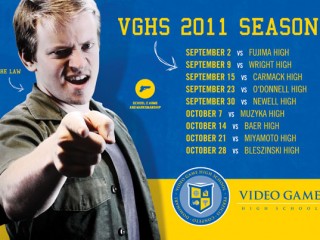
  • The Danger Brain designed an extensive graphic identity for the Freddie Wong web series, “Video Game High School,” which coincidentally was post-mixed by Point of Blue Studios and stars Brian Firenzi from 5secondfilms
  • Les Telecreateurs Design did twenty-five rebranding spots called “Let X Equal X” for French 5 television, directed by duo Alphabetical Order® and from branding agency Les Télécréateurs; you can download seven at the production company’s site, Aspekt
  • “Comedy Bang Bang!,” the audio podcast from writer Scott Aukerman (of HBO’s “Mr. Show” fame), is now being developed as a TV show for IFC, says AV Club

Author

Aaron Proctor
Founder, FWD:labs
Director of Photography site
Contact


  • Published in Film + Web

Geoffrey Pope

Geoffrey Pope

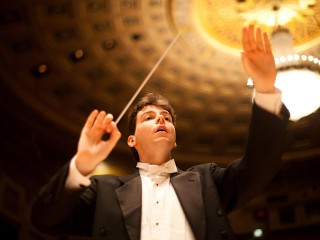
I appreciate film composers. My go-to guy, composer and conductor Geoffrey Pope, gives me above-and-beyond work, quickly and painlessly to my picture-locked commercial work.

“Simply put,” Pope notes, “music written for a particular purpose can convey things that stock music can’t. Most people aren’t actively aware of this, but there is a powerful subliminal component to every musical choice we make–whether it’s in the melody, harmony, timbre or equalization. Good composers know this, and their original music serves their clients’ purposes in unique ways.”

Nevertheless, sometimes a client or project needs something different for half the price without delay. What are the options? Below is a short list of some options for your next project:

  • Audio Network
    • Registration: immediate
    • Cost: fairly inexpensive depending on usage scale ($1.25 for temp/personal, tiers up to $495 for cinema)
    • Quality: overall pretty good
    • Search: keyword plus browsing by “style,” “mood/emotion,” “instrument,” “genre,” “album,” and “composer”
  • iStock Music
    • Registration: immediate
    • Cost: reeeal cheap ($1.67/”credit” or about $10 total)
    • Quality: mixed, with a few gems
    • Searching: keyword plus “lightboxes” — kinda sucks
  • Extreme Music
    • Registration: human-verified and not immediate
    • Cost: varies
    • Quality: good
    • Searching: clunky Flash kiosk plus keyword and playlists
  • First Com is one of the industry standards
    • Registration: immediate, but human-verified delay for download
    • Cost: pricey
    • Quality: great overall
    • Searching: keyword plus libraries and playlists
  • Video Helper is another industry standard
    • Registration: human-verified and not immediate
    • Cost: varies ($100 for local TV, $200 flat for internet, tiers up to $1,125 for all media rights worldwide)
    • Searching: clunky Flash kiosk, plus keyword and “genre,” “scenario,” “instrument,” “moods,” “tempo,” and “composer” browsing
  • Vimeo Music Store
    • Registration: immediate
    • Cost: inexpensive ($1.99 for temp/personal, $98 for indie)
    • Searching: keyword plus “genres,” “tempos,” “themes,” “moods,” and “instruments” browsing via mouseover

Thoughts on these or others? Please add a comment below.

(Some recommendations provided by FWD:labs member and pro editor, Jeremy Troy.)


Author

Aaron Proctor
Founder, FWD:labs
Director of Photography site
Contact


5/12/2012 Update: David Driver reached and exceeded the goal one day before the deadline!

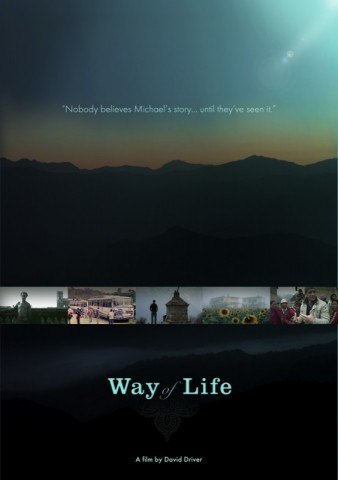
There’s less than a week left in David Driver’s Indiegogo drive to raise $20,000 for his feature, “Way of Life.” It’s close — really close. I asked the filmmaker, and personal long-time mentor, what it take to get this far, how does it compare with other fundraising choices, and what’s involved in wrapping it up to ensure a strong finish.

Describe your overall experience of continuing to complete this long-standing project over 8 years. Any key moments, highlights, or turning points?

David Driver There are a lot of turning points. Nothing terribly dramatic, but you are always pursuing elements of a story hoping they will pay off. This particular film took a long time to materialize. There were a lot of false roads to go down before I came to a final idea about how the film would work.

One key moment I had was working with a legendary film artist/doc fixer on another unrelated project. I was working with Nathaniel Dorsky cutting a completely different film. Nick is totally old school. Now in his late 60s, he grew up using flatbeds and rewinds. His films are all shot on 16mm and all silent. So when he is called in to do some fixing he has to work with another editor to run the software. He sits back and dictates how things will be. And dictates is the keyword here; he is incredibly insistent on how things will be. At the time I was working with him, there were a lot of discussions as to why material was cut and what was changing in that particular film, but Nick always won out in the end — for a good reason. There was a clarity of style and keen idea as to identify story elements that he applied to the process.

I’ve cut hundreds and hundreds of pieces but the experience totally affected me. It is like one of those situations where you are learning something simply by engaging in this process with someone who is really good at what they do. It’s like it rubs off on you. I gained another layer of editorial perception during that process.

After that, it started to become clear to me how my film would look and feel. “Way of Life” is a slow moving meditative piece that works on a deeply inspirational level. It is one of the most difficult types of film to construct because it is easy to go off the deep end in any direction.

I’m thankful for my time working with a genius like Dorsky and for gaining so much knowledge from that experience. After that, I started to construct the final version of “Way of Life” and present it to peers, audiences and of course my long-time mentor, Ronald Chase. I finally had a clear inspiration for what I wanted the film to be after working with Dorsky but it would still take many months to fashion it into the film it is now. If it were an issue driven piece or a journalistic piece it would have been simpler and faster.

How is this experience with Indiegogo different than other fundraising efforts — online or offline — whether it’s the San Francisco Film Council or people just writing checks?

DD Fundraising is always tons of work. It is never easy. (Grant writing and wooing donors are both a different story.) For “fundraising,” I am saying something that will definitely bring in money; the question is “how much.” Normal fundraising tends to revolve around an event — say a screening or a party or something like that. You go through a lot of effort to get people to a venue, set it up, serve food and drinks, you show your piece and you make a pitch. Sounds simple enough. Then you factor in the idea that 40% of the people you send invites to will answer, and maybe another 40-50% of those who answer will actually show up. There are probably real statistics for this stuff. I’m just talking anecdotally now. At any rate, your event happens and let’s say your event is even “a success.” You get some money and then you start to measure that against the work it took to do the screening and process the checks. You start thinking, “is there an easier way?”

With a crowd-sourcing platform like Indiegogo, you have clear format set up so you can show people what your are doing on an ongoing basis. I can’t say that it is any easier. There is a lot of work to do to set up the campaign and a lot of strategizing. I did a spreadsheet that factored in all the fees and the cost of all the perks for each level of participation. Then I started plugging in numbers for each contribution level and seeing what it would take to reach our goal.

I had the basic idea that 400 people contributing $50 bucks for a limited edition DVD would equal $20,000. I thought I probably had to get the campaign in front of 10 times that many people. Then we really tried to set up a incentive structure that would encourage people to reach beyond the DVD level without burdening people with too many choices. To a certain extent, we got it right.

Once the campaign starts, it is a long grueling process. Your job is to try to keep people talking about the campaign for its entire lifespan. You track the data and the views on Indiegogo/Kickstarter and on Facebook, Twitter and your video platform. Then you keep trying to post things that people will respond positively towards. You want to keep people talking about things without turning people off. It is not an easy task and it takes a lot of work to maintain.

I was very encouraged from the beginning with the level of support we were getting. I have always tried to help people out — in the business wherever I could — and it seemed like that attitude was being reflected in the generosity I was seeing. Plus, the main character, Michael Daube, is a great guy who does a lot of good for people so there are folks who really wanted to see his story get out to more people. I also think that the overall incentive structure seemed to allow people to jump in at a higher level.

What’s the biggest surprise you’ve come across in the final leg of this film?

DD It was really heartwarming to see the generosity of so many people. In the end, if we reach our goal, we will probably do it with half the number of people we originally thought.

What’s your next step with this film, and your career?

DD We are looking forward to playing at a few festivals and then getting it out to people to see, probably through a mix of DIY distribution platforms.

How can people help right now — and after this pledge drive ends?

DD The deadline for this drive is this week, May 12th. So take a minute and check out the campaign. If you like what you see, join us, make a contribution, it’s a great story to be part of.

When we wrap the Indiegogo campaign, you will no longer be able to get your name in the credits. You will still be able to make a charitable contribution to our fiscal sponsor, The San Francisco Film Society, and we will give you a DVD or a T-Shirt or USB jump drive.

As for me, I’ll start looking for a new project. There are opportunities I have been looking at. But it’s really all to be determined. For the most part, I’ll just keep at my day job which is, for the most part, shooting and editing.


Author

Aaron Proctor
Founder, FWD:labs
Director of Photography site
Contact


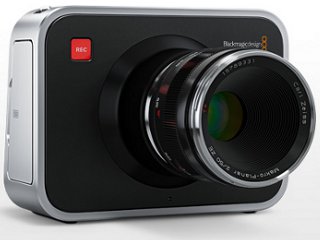
The marketplace for digital camera bodies for filmmaking is gaining some momentum. ARRI’s ALEXA is “thriving,” RED’s Epic and Scarlet is “upgrading,” and Canon is getting a run for its money from Sony and Nikon. Now, this last Monday at NAB, from the color grading company Blackmagic Design is a new 2.5k-resolution camera, starting at $3,000 and shipping in July.

To sweeten the deal, all of this is included in the pricetag: RAW / ProRes422 right out of the can (ala ALEXA), color timing software (ala RED), and a 13.5-stop / 12-bit image. The depth and range in color and exposure makes this camera look more like 16mm/35mm film, less like a DSLR.

EOSHD.com calls this news the “downfall of the big guys,” especially given other improvements to the lower-end market like HD-SDI and Thunderbolt output. Comments at NoFilmSchool.com balks at first-generation hurdles: un-ergonomic design, an internal battery, and 1/4″ audio (although it’s two jacks and live headset monitoring, unlike most other DSLRs). DP John Brawley, who shot engineering tests for BlackMagic, notes on his blog the process, most notably the benefits of no compression and how tests with ALEXA and RED compare.

(via Jeremy Troy via NoFilmSchool.com)


Author

Aaron Proctor
Founder, FWD:labs
Director of Photography site
Contact


  • Published in Film + Web

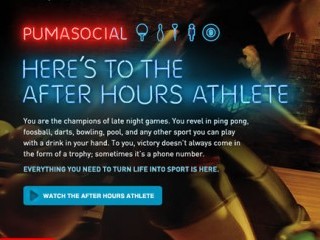
  • Puma “Social” champions a million views, but the short film/ad “focuses on the benefits of living life by going out and hanging out with friends rather than watching reality TV on the couch” and tracked well over social media shares (via Mediapost)
  • Aside from whether a movie is shot on film or not, what’s pushing projection away from film? “Today, the driving force isn’t so much a single movie as it is the studios’ bottom line — they no longer want to pay to physically print and ship movies. It costs about $1,500 to print one copy of a movie on 35 mm film and ship it to theaters in its heavy metal canister. Multiply that by 4,000 copies — one for each movie on each screen in each multiplex around the country — and the numbers start to get ugly. By comparison, putting out a digital copy costs a mere $150.” LA Weekly (via Spencer Goodall)
  • Online viewership of content is doubling, while disc viewership is slowly decreasing, even though online doesn’t yet deliver the same content. “According to the study [in IHS Screen Digest], streaming viewing of movies will overtake disc viewing this year. IHS Screen Digest projects that there will be 3.4 billion online viewings of movies this year (and that’s just the paid, legal ones), more than double the 1.4 billion streams and downloads tracked in 2011. By contrast, disc views will number 2.4 billion, down a bit from 2.6 billion views last year.” (via Moviefone)
  • Trailer viewership online is way up. “‘We teased the teaser [for Ridley Scott’s “Promethius”],’ said Fox Chief Marketing Officer Oren Aviv. ‘And it was viewed 29.7 million times.’ … Yahoo, AOL and Apple’s iTunes battle to be the “exclusive” first home for a trailer online, often trading high-profile placement on a home page in exchange for the favor. In other cases, trailers are shared first with devoted fans via a Twitter feed or a Facebook game. Sometimes studios pay hundreds of thousands of dollars to companies that promise to help turn videos viral.” (via Los Angeles Times)
  • Web series are still trendy. “53% [of a 2012 Digitas study] said that if their favorite celebrity announced that they were starring in or launching an online video or web series, they would check it out. That last finding is not surprising, but it also underscores a key learning that brands increasingly have gotten hip to over the last year. This may seem obvious but few adhere to it — if you can land a familiar face for your branded video, DO IT.” (via Mediapost)

Author

Aaron Proctor
Founder, FWD:labs
Director of Photography site
Contact


  • Published in Film + Web

Part of a series of posts about active artists with the tenacity to take their project to completion.
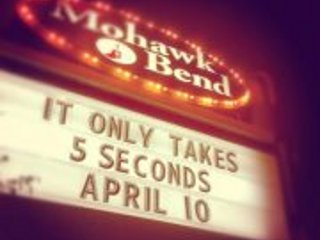
  • Photo by 5SF 5 Second Films will be screening an hour of their shorts at Mohawk Bend tonight in Los Angeles, along with a prequel and sequel screening with the sound off — come by to watch dozens back-to-back, meet their crew, and also some of the FWD:labs collective; the same event is also April 17 and 24
  • “Rear Window” Timelapse re-imagines the original footage into a giant re-positioned frame, from a film shot almost entirely from the same vantage point (via screenwriter Eric Szyszka)
  • “Battle Lizard” is a new short film coming soon from Keegan Wilcox that has successfully used a fast-paced fundraising video to help crowdfund via Kickstarter, which affords them post-production visual effects

Author

Aaron Proctor
Founder, FWD:labs
Director of Photography site
Contact


  • Published in Film + Web

[UPDATE: “The Surrogate” was re-billed “The Session,” which is nominated for the Academy Awards.]

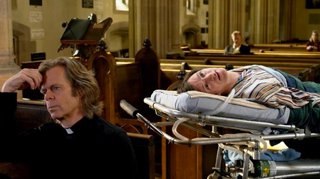
Producer Doug Blake’s most recent film, “The Surrogate” — which he co-produced and stars John Hawkes, Helen Hunt, and William H. Macy — premiered at this year’s Sundance Film Festival and took home an Audience Award and a Special Jury Prize for dramatic ensemble acting. I sat down with Doug to discuss the experience.

There was a bidding war at Sundance for “The Surrogate.” What was that like?

Doug Blake [The bidding war] was very interesting. The big thing of course was the overwhelming audience response during the screening and then the bidding war.

I was the designated producer who got sent to the party. So I’m the one who’s talking to the heads of all these studios, but all I can do is say, “well, I think you gotta go talk to the guys at CAA, if you’re interested in this.” So normally everybody kept saying how long this takes — “you should be calm” and “you shouldn’t rush” — but at the end of the day the film was sold about ten hours after it screened. I believe the papers were signed at 11:30 at night with Fox Searchlight. The deal was more or less made by 7:00. The whole day had a certain “surrealness” to it, [the deal] being the most interesting part of that “surreality.”

What was the highlight of your Sundance experience?

DB About halfway through the screening, I started to cry. No one had seen the film before, literally! The most was, I think, twenty-five to thirty-five people at a rough cut. Otherwise no one had seen the film.

We knew it must have been pretty good because it got into competition and CAA picked it up, but about halfway through the movie I realized that. I went to film school and wanted to make good movies and wanted to make films that made people feel and think and react. All of a sudden, I realized I had done it. I was one of the significant people that made something that meant something.

How did social media impact your film?

DB It sure impacted the rest of the week [after the reception]! Because everybody knew that [“The Surrogate”] was the big deal. When I got on a bus, all of a sudden I was the star of the bus. It was very peculiar. And I suspect that social media had something to do with that because everyone was texting and tweeting and facebooking everybody at the festival.

Anything you’d like to add to the speeches given when “The Surrogate” won the audience and ensemble awards?

DB It was a communal event. Everybody tried really hard on this movie knowing that because of the script and because of the subject matter, that this was like a soufflé, it had to be perfect or it was gonna be horrible. Because if you pitch the idea of “The Surrogate,” it doesn’t exactly sound like a hit movie or a movie that would win an audience award. But everybody chipped in. Everyone helped make this a special event.

What’s next for “The Surrogate” and yourself?

DB For “The Surrogate,” it will be out in October/November through Fox Searchlight and they’re certainly the right kind of company to put something like this out. They know how to deal with films with heart and I think this is a film with a huge amount of heart.

For me, the next week after Sundance I was in Thailand working on a movie, and now I’m working on yet another movie. So for me it’s just another movie, and we’ll see what the reception of “The Surrogate” is and whether that has any long term effects on my life.


Author

Chad Liffmann
Executive Producer, Film + Web + Design, FWD:labs


Part of a series of posts about great film, web, or design artists and their work abuzz online and in-person.

  • “Greyhound” music video for Absolut, the vodka company (care of TBWA\Chiat\Day), where they’re “creating cocktail worlds through the lens of music.” The ad-meets-music-video, featuring Swedish House Mafia and a “back to basics” drink with grapefruit juice, is also running abbreviated on television. Absolut is also known for creative content including a sponsored short film, “I’m Lost” by Spike Jonze. (via Fast Company)
  • “Bourdain’s TV Crew” is a product of online video advertising company Outrigger Media, creating sponsored content tagging along with Anthony Bourdain’s show (via MediaPost)
  • “Girl With The Dragon Tattoo” DVD design from Sony matches the look-and-feel of the film, which reminds director Matt Checkowski of “how Fincher thought similar for Fight Club: used all the negative critic reviews on the box.” (via Checkowski)

Author

Aaron Proctor
Founder, FWD:labs
Director of Photography site
Contact