FWD:labs

Blog

  • Published in Design

apple-storyboard_tn

You can never be too prepared, right? Whether it’s pen illustration, 3D animatics, or stuck in the director’s head, a film’s pre-production documentation helps ground ideas to communicate efficiently. Sequence storyboards, shooting schedules, and location breakdowns all stem from figuring out the shots to cover a script. Already, there are plenty of niche applications to learn and use for each step of the way.

But last week Apple filed a patent to enter the pre-production market with its own storyboard app. Think for a moment about how iTunes organized our music. Maybe this move could further organize, simplify and exchange pre-production information.
apple-storyboard_1

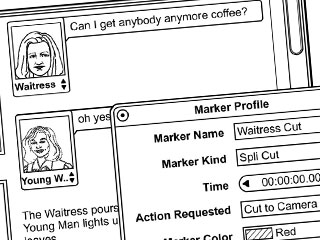
The patent describes some of the tools. “In one general sense, a storyboard presentation for a motion picture production is generated by launching a scene design tool that includes a camera placement tool and an actor placement tool.”

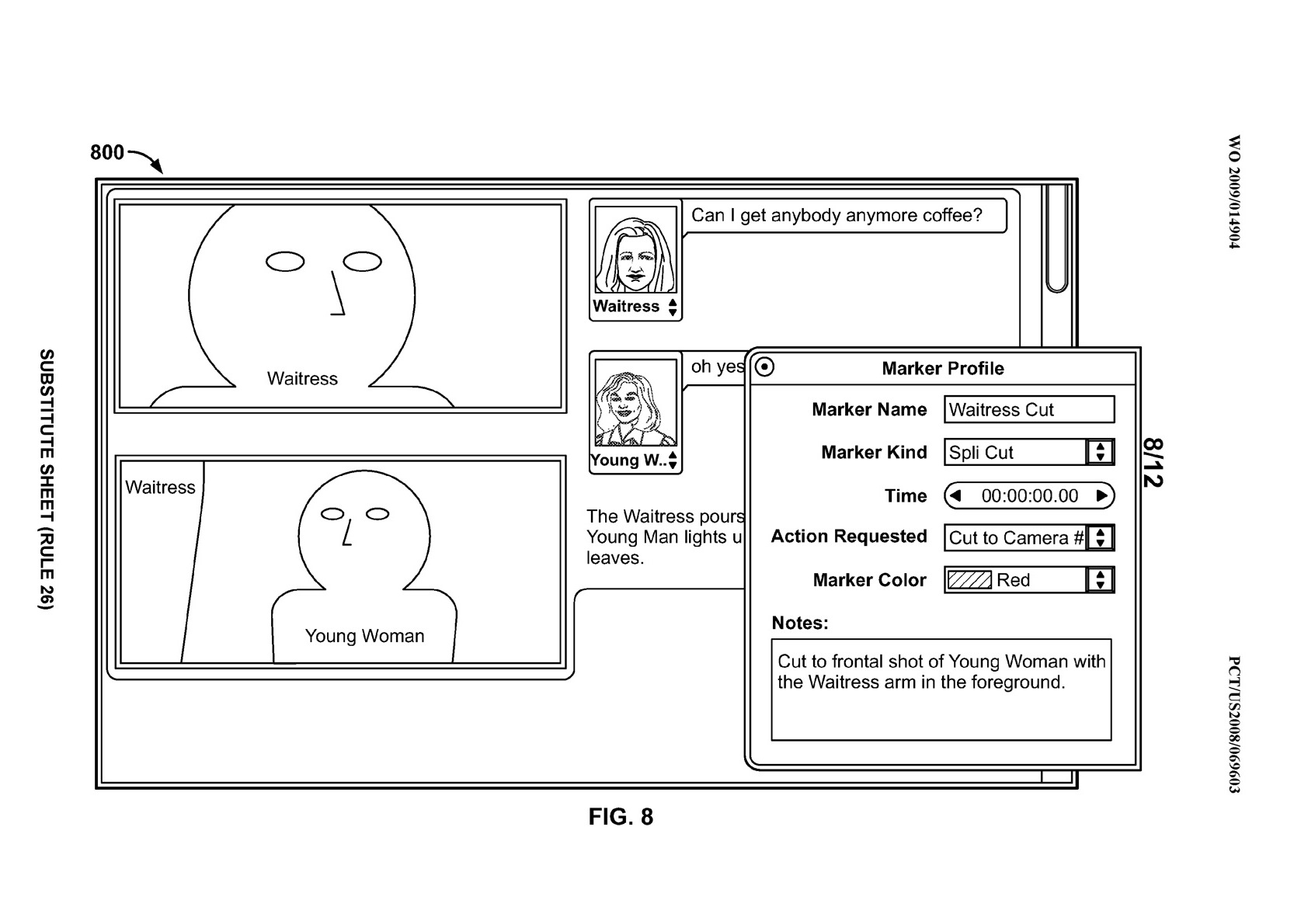
Another tool is for scene design. “Based on the location and orientation of the first actor icon and the first camera icon, the scene design tool then generates a first projection of the scene featuring the first actor as seen from the first camera. For example, the scene design tool may generate a storyboard that gives a viewer a sense of how the shot would appear based on the present locations and configurations (e.g., focal length) of the camera relative to the location and orientation of the actors. The storyboard is integrated with a script so that a viewer may perceive the dialog in association with a particular shot. The storyboard then may be distributed to actors and crew in advance of production to aid in preparation.”

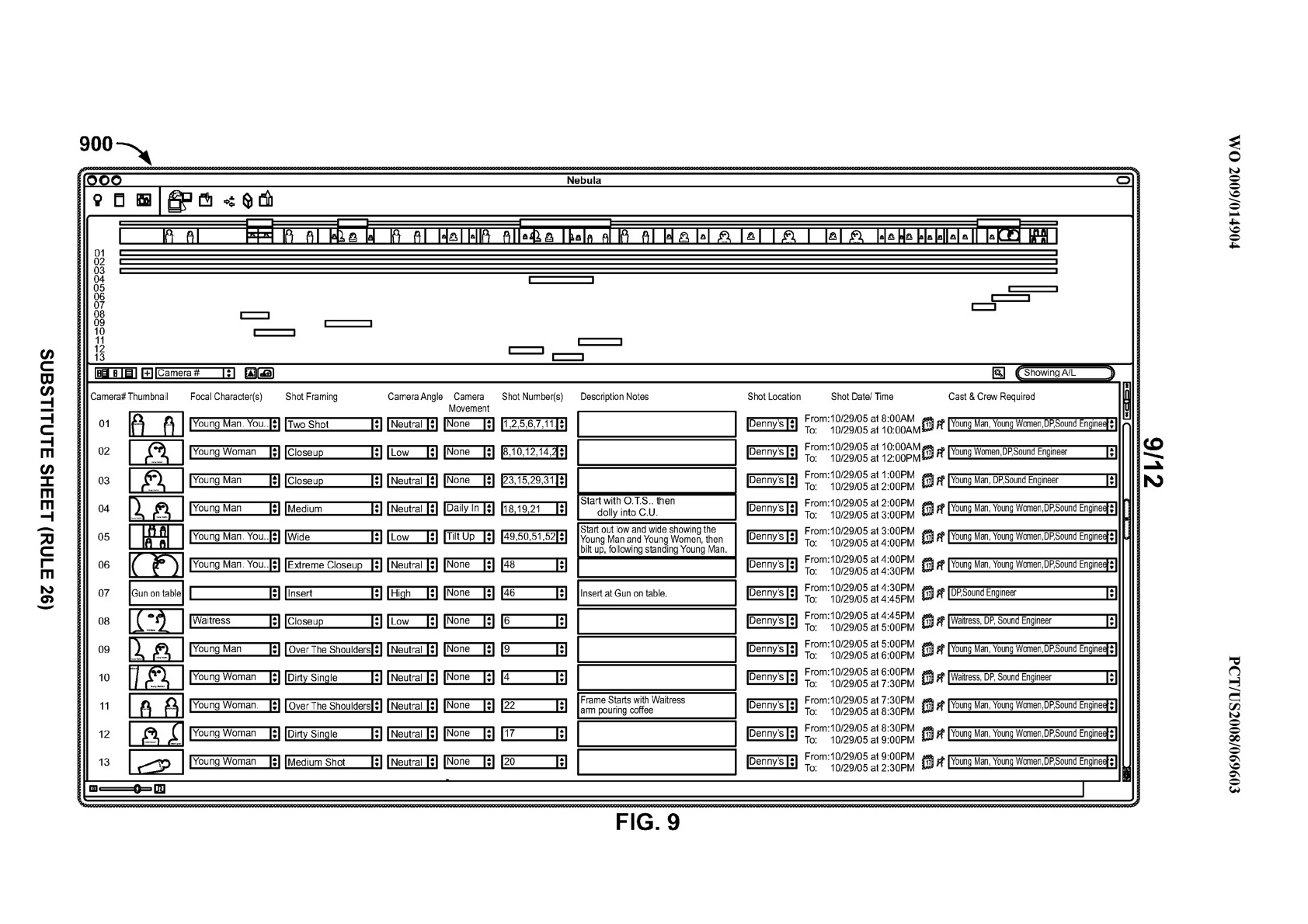
Beyond just storyboards themselves is a plan for further script- and production-integration. “A production guide is generated, the production guide displaying, for each of segments within the designated time period, a location, a segment projection, a list of actors required by the segment at the location, a list of required cameras at the location, a list of shots within the segment at the location, and an allocated time window.”
apple-storyboard_2

In the supporting illustrations on the patent, the proposed GUI has a similar appearance to Apple’s Address Book for talent, Apple’s iChat for scripted dialog with avatar icons, and Apple’s Final Cut for viewing a project’s proposed timeline.

InformationWeek found that the patent lists Gregory Lindley as one of the inventors of “Script-Integrated Storyboards.” According to his web site, he has worked at Apple since 2005 as a product designer, specifically for Final Cut Express.

In 2008, Apple.com published a Pro article — “Beyond Print, Preparing to Enter the Motion Based World,” created by Glow Marketing — about using your Mac to dive in. “You can create storyboards in Pages, Illustrator, iMovie, Keynote, Toon Boom, Final Cut Pro, or another graphic-oriented program,” notes an Apple.com profile on storyboard art. “For (an) example, we are going to use StoryBoard Artist by PowerProduction Software.”

In 2009, may we expect something new. Until then, some additional pre-production software (in alphabetical order, list prices as of time of publication):

For more, see the initial reporting in InformationWeek and a break-down of the patent on MacBlogz.com.


Author

Aaron Proctor
Founder, FWD:labs
Director of Photography site
Contact


  • Published in Film + Web

ok-go

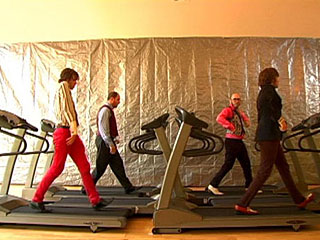
OK Go’s “Here It Goes Again” video from 2006. Watch on YouTube.com or MTV.com.

“Think Fellini on acid,” notes NPR’s art reporter Neda Ulaby. She’s watching the “I Write Sins Not Tragedies” video from the band Panic at the Disco, directed by Sean Drake.

“When I make a video, I just assume the majority of watchers are going to be on the Internet … IM-ing someone in a chat [while] … doing some other task on Word and checking their Facebook,” Drake told NPR for today’s Morning Edition program. The “Sins” video won Video of the Year at the 2006 MTV Video Music Awards.

As YouTube (and a dozen others) change the game MTV started, videos themselves are less about big edits, big sets and big cinematography. It’s the oft-simple concept that triumphs all.

Ulaby cites OK Go. “In 2006, the band was relatively unknown when it created a video viral sensation for the song ‘Here It Goes Again.’ The video shows the band members — center-framed and well-lit — on a simple set, dancing on moving treadmills. They glide past each other like ice skaters and slide through each others legs.”

To listen to the podcast, read a full transcript, and link up to more videos like Michael Jackson’s “Thriller” or Beyonce’s “Single Ladies (Put A Ring On It),” visit NPR.org.


Author

Aaron Proctor
Founder, FWD:labs
Director of Photography site
Contact


  • Published in Web

https://www.youtube.com/watch?v=zXos0ZQ3W-M

museo-del-prado

Watch the “making of” on YouTube (embedded above) or the Prado Museum’s web site.

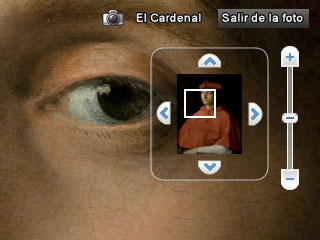
Madpixel, an interactive design and development company in Spain, toiled with pixels for months in collaboration with Google and the Museo Nacional del Prado. They photographed 14 classical paintings at gigapixel (one billion pixels *) resolution. Using new methodologies, but old technology — a Nikon D200, motion-control rig, and stitching software — the art is now “one hundred and thousand times greater than the one of a normal digital camera,” says the Madpixel blog (translated from Spanish by Babelfish). “This level of resolution allows us to deepen in enormous measurement in linen cloths, being able to get to appreciate even the subtlest details of the work.”

The museum’s press release notes that “[w]ith this high level resolution you are able to see fine details such as the tiny bee on a flower in The Three Graces by Rubens, delicate tears on the faces of the figures in The Descent from the Cross by Roger van der Weyden and complex figures in The Garden of Earthly Delights by Hieronymus Bosch.”

These works can now be seen online in unprecedented detail. You can view an image a day for the next two weeks via Google Maps or all 14 via Google Earth. (Google Earth.

Technology triumph aside, I personally prefer to experience paintings in person.

(via Gizmodo)

* Both Google and The Prado Museum refer to a gigapixel as “14,000 million pixels (14 gigapixels).” Madpixel and Wikipedia more clearly define gigapixels in terms of billions; in this case, 14 gigapixel is 13,950,842,452 pixels (about fourteen billion pixels.)


Author

Aaron Proctor
Founder, FWD:labs
Director of Photography site
Contact


  • Published in Film + Web

chris-milks-heartache

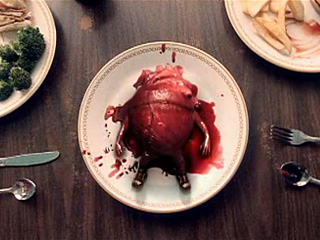
Gnarls Barkley: Who’s Gonna Save My Soul
Director: Chris Milk
Production Company: Radical Media

In comments on videos.antville.org, a critical consortium of anything-goes posts on music videos where the video was voted Best Narrative Video, Milk added some inspired feedback on present state of music videos:

I was going to write a quick simple acceptance, but something the Encyclopedia Pictura guys said is leading me to go further with this than I normally would, or probably should. And I’ve got time today as the video I was to do for my absolute favorite “all-I-want-to-do-is-a-video-for-this-band-before-I-die” band, died because 12k total was too much to spend on a music video at the end of 2008. So, in the dawn of this new year, and hopefully a new direction for our shattered war-mongering country, a word to my most beloved ville… If you work in music videos in this market, you are by definition a struggling artist. Respect. There is a lot of hate on this board. It’s fun to sling it, entertaining to read it, and most of the time, somewhat crushing to receive it. If you love music videos, realize we are all in this together now. No one is buying any houses in Malibu with video money, they do it for the love of the form. Pro co’s are closing, labels are laying off whole video divisions, reps are writing children’s books, directors are moving back in with their parents. And while I’m at it, on the topic of directors… I’m not aware of any other art form or medium where the artist, not just a director, but a writer as well, essentially create their works almost for free now, with multi-national corporate conglomerates as the clients, and while owning absolutely no rights or interests in their own art, which is being sold as content, for profit. Respect that, even if you don’t respect the work. Music video is a dying art. MTV, our birth mother, has abandoned us on the stairs of the internet like a shriveled up old man baby. Imagine if radio suddenly switched to all talk shows, all the time. That happened to us. The web is our last hope of survival, antville is one of its most visible outlets; instead of just lobbing stones at the art form you love behind a cloak of anonymity, try being positive and constructive, show some love for your fellow mv kind, cause right now no one else out there is.

Respect one and all, and to all a good night.

CM

Thanks to CJ Roy for forwarding the link.


Author

Aaron Proctor
Founder, FWD:labs
Director of Photography site
Contact


  • Published in Film

Part of a series of posts about great film, web, or design artists and their work abuzz online and in-person.
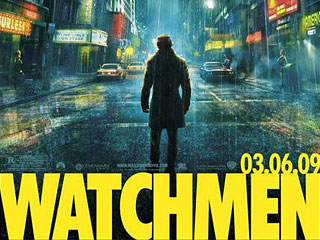
watchmen

Oscar Roundtable

The Hollywood Reporter brings together Oscar contender directors Clint Eastwood (“Gran Torino”), Ron Howard (“Frost/Nixon”), Danny Boyle (“Slumdog Millionaire”), Gus Van Sant (“Milk”), Darren Aronofsky (“The Wrestler”) and Ed Zwick (“Defiance”). But why Zwick instead of Christopher Nolan (“Batman Begins”), David Fincher (“Benjamin Button”) or Kimberly Peirce (“Stop-Loss”)? Maybe scheduling conflicts.

Q&A with the Oscar-winning screenwriter of “Valkyrie”

Creative Screenwriting senior editor Jeff Goldsmith interviews Christopher McQuarrie, who goes into some great stories, such as “The Usual Suspects” and how he started out in the industry. (It was a huge help that, as a kid, he knew Bryan Singer.) The podcast is over two hours, which is longer than the feature film. Also check out the audio interview with screenwriters Andrew Stanton (“Wall-e”), Alan Ball (“Towelhead”), and Jonathan Nolan (“The Dark Knight”).

“Watchmen” Trailer – Japanese Version

https://www.youtube.com/watch?v=3WNETpX2Jd0

This import has an added emphasis on the global political climate. But it also includes the things they leave out of American trailers: JFK, Castro, and Nixon’s third term. “Watchmen” is an alternate 1985 in which we won Vietnam and Nixon is still president.


Author

Aaron Proctor
Founder, FWD:labs
Director of Photography site
Contact


  • Published in FWD:labs

best-of-2008

Of the 53 posts this year, here is a selection of favorite subjects covered on this blog.

  1. “You don’t want to be making mediocre stuff”
    Lessons in quality control from NPR’s great Ira Glass
  2. How Filmmakers Use Basecamp
    Because project management is key to low-budget filmmaking, this collaborative tool is still a favorite for me to refer producers to
  3. My First Red Camera Experience
    The Red is the hottest camera of the year and, after a half dozen more Red shoots, something that I now know well
  4. Will you watch Strike.TV?
    Launched and lauded
  5. Can “Dr. Horrible’s Sing-a-long Blog” Change the Way We Watch?
    Guest post from long-time FWD:labs member, screenwriter Eric Szyszka, on the three episodes which were just now released online via CreateSpace, Amazon’s new DVD distribution
  6. Salon Gathering: First of many to come
    Thirteen meet-ups later, it’s still going strong
  7. Writing through the block
    Guest post from a new FWD:labs member, screenwriter James Granger, who is fresh on the success of finishing and hustling a feature screenplay
  8. Tenacity: “Slumdog Millionaire”
    Considered by many now as the best film of the year, “Slumdog” is inspiring to filmmakers and film lovers
  9. Jason Polan’s Criterion
    Research on a dedicated (and friendly) artist, who commented privately appreciating the post’s thoroughness
  10. User-Generated Spots for Super Tuesday, not Super Bowl
    Examples of the power of grassroots presidential politics and the success of related video content on YouTube

Other favorites not make the list? Browse the archive and comment below.


Author

Aaron Proctor
Founder, FWD:labs
Director of Photography site
Contact


  • Published in Film

linkin-park_faint

Still from the music video for Linkin Park “Faint,” directed by Mark Romanek, who posted his original treatment online.

With treatments, you’ve got a page or so to pitch forth your story. Whether it’s on spec or in development, there’s no formula for selling your idea of a music video, feature, or commercial. Creative descriptions, clear actions, quick communication, and multiple options lend themselves well to trying creative approaches.

Director Mark Romanek posted his one-page 2003 treatment for Linkin Park “Faint” on his web site:

we only see their backs — backs of heads, hands, torso, asses, feet. all the emotion is conveyed through the body language. we may catch slight glimpses of oblique profiles. but, they are just that — only glimpses. in the background of all these shots we see silhouettes of fans, creating waves of excited movement. we are teased for over two minutes with beautifully composed and dramatically back-lit images of the band — filmed from behind.

Braddon Mendelson talks from experience of writing hundreds of music video treatments in his post at Noisivision Studios:

As with any form of writing, the more you do it, the better you will get. Keep writing music videos, whether you are getting paid for it or not. Watch MTV. Study your favorite videos and then write what you imagine the treatment must have looked like. Study other treatments that have been written, and then come up with your own style. While there are no hard and fast rules about format, it is important that a treatment communicate its ideas in a clear, concise and creative manner.

Mark Albracht, screenwriter and writer (“Rules of Deception”), added some footnotes to Associated Content’s post, How to Write a Movie Treatment:

“Producers do not prefer treatments to spec scripts and neither do agents. The only reason a screenwriter should write a treatment is to help develop a script idea or because a production company or a studio asked them to. Otherwise it’s a waste of time.”

John August, notable screenwriter and web-savvy blogger (who provides the original one-page outline for “Big Fish” in his library), clears up the difference of spec, treatment and pitch:

An outline might be one page or might be ten; a treatment could be three pages or could be thirty. James Cameron is known for writing “scriptments” that are 70 pages or more. Ultimately, the length is less important than the function: hopefully, an outline or treatment will help a writer spot problems early on, so that the finished script will be better.

Tony Johns, a commercial and music video director, talks at length about the commercial process in Action Cut Print:

If the agencies are impressed with your treatment they may seriously consider you for their next campaign. Remember there are no set rules in the commercial world. No two agencies or creative teams are the same nor are production companies and directors.

Videomaker.com has an article on how to create and use video treatments, which brings up the value of having 3-4 options on hand:

[Y]ou can’t always anticipate the client’s or viewer’s taste. Frequently, clients pass up what appears to be the perfect treatment and go for the red herring. You’ll be glad you presented options.

Related, check out the podcast for “The Treatment”, hosted by film critic Elvis Mitchell on KCRW 89.9 FM:

A “treatment,” in Hollywood parlance, is a concise overview of a screenplay. On The Treatment, … Mitchell turns the tables and gives the “treatment” to some of the most influential and innovative forces creating movies and popular art and entertainment.


Author

Aaron Proctor
Founder, FWD:labs
Director of Photography site
Contact


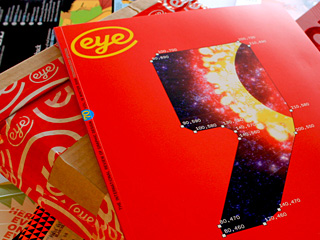
Eye Magazine #70

The latest Eye magazine, an seasonal review of international graphic design, conjoins a vibrant still of motion graphics with a pregnant pause of typography. Read about making the cover on their blog:

A high resolution still from [Robert] Hodgin’s music video [“Solar, with lyrics” featuring Goldfrapp], made using Processing (for an explanation of Robert’s methods, see his Flight 404 website) is framed by the outline of a (silent) character from the new typeface Replica, designed by Norm.

(via Netdiver)


Author

Aaron Proctor
Founder, FWD:labs
Director of Photography site
Contact


  • Published in Film

[vimeo]http://vimeo.com/2317118[/vimeo]

keith-loutit

Short film “Metal Heart” by Sydney-based photographer Keith Loutit.

“These photographs and short films were made in ordinary places, probably not too unlike where you live. Combining a variety of techniques including tilt-shift and time-lapse photography, I aim to present Sydney as the Model City, and help people take a second look at places that are very familiar to them.”

Some of Keith’s films are screening at the Gasteig Cultural Center in München, Germany from now until January 15, 2009.

You can see four other short films, including Beached, which uses the same tilt-shift lens and frame-rate on his Vimeo. Also check out his Mac.com site with photographs from Singapore.

(Music: “Robot High School” by My Robot Friend.)


Author

Aaron Proctor
Founder, FWD:labs
Director of Photography site
Contact


  • Published in General

Part of a series of posts about great film, web, or design artists and their work abuzz online and in-person.

Cover models

thomas-allen
  • Artist Thomas Allen made models out of book covers
  • Penguin Books blogs about covering James Bond

Pushing forward

Gaming YouTube


Author

Aaron Proctor
Founder, FWD:labs
Director of Photography site
Contact


  • Published in Film + Web

jason-polan

Jason Polan does Criterion Collection

David Hudson’s midnight post on GreenCine Daily, a DVD review blog from the online DVD rent-by-mail service, tipped me off to a new web site for the Criterion Collection.

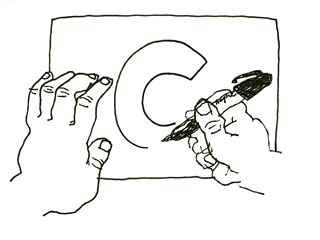
There on the home page, you’ll find a video introduction utilizing the handiwork of New York City artist Jason Polan. Noted most for his illustrations, he has two short films — How to Draw a Giraffe (watch below) and How to Draw an Apatosaurus — and a lot of other artwork like the self-published The Every Piece Of Art in The Museum Of Modern Art Book. (The book was originally a pitch to work at the museum — sporting an ITOYA 0.6 pen instead — as you can hear in the 30-minute podcast interview on Art a Go Go.)

Wholphin, a quarterly DVD magazine of unseen films, picked up a portion of Polan’s 2007 short, How to Draw a Giraffe, which you can watch online. He collaborated with Meredith Zielke. In the liner notes, he simply says “I like drawing giraffes and I wanted to share this experience with other people.”

With the thickness of the pen, you’re working with the constraint to create simple, recognizable iconography. 37signals, who prefers Sharpies for storyboarding web sites, also posted today with “Jason Polan explains with a sharpie.” They picked up on one of three videos for the State Bar of Texas. The Fire Ant Gazette of Midland, Texas has a longer interview about the videos.

Polan also has a daily illustration blog, Every Person in New York. In May, he told the New York Post about this challenge to himself. “I might never finish, but that’s OK. … I’m coming from the Midwest. It’s different living here. I’m trying to make [New York] more palatable, more welcoming.” For New Yorkers, Jason Kottke posted a note that “if you’d like to be drawn, drop him a line on where you’ll be, and he’ll show up and sketch you.” He’s got a sweet calling card.

It gets even more interactive. Amid his countless drawings and murals, he’s got One Hour of Art for sale. “I will make what I can in one hour and then I will send it to you.” If you haven’t seen his work in the New Yorker, you can catch his other blog — now archived — called The Drawing Project.

This on-the-fly animation has worked well for CommonCraft “Plain English” videos, from Social Media in Plain English to Zombies in Plain English. In 2007, there were a dozen UPS Whiteboard ads.


Author

Aaron Proctor
Founder, FWD:labs
Director of Photography site
Contact


  • Published in Film

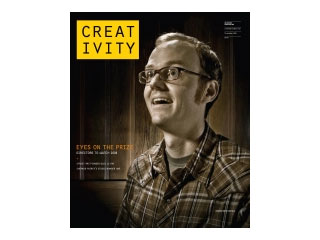
creativity-magazine

In the article “How to Build a Director”, Creativity Magazine rounds up 14 executive producers and directors from the likes of Anonymous Content, HSI, Hungry Man, O Positive, Prettybird, @radical.media, RSA Films, and Station Film.

Asked about the thought patterns of directors that make it with a ticket to the big time, Frank Scherma, president of @radical.media, cuts to the chase. Don’t be an asshole:

“I look for people who are passionate about what they do, for directors who are conceptual and are forward thinkers—they know a good idea and they know how to make any idea better. [They have] strong opinions about how they want to do it and enough common sense to understand how to collaborate. The day of the asshole is gone.”


Author

Aaron Proctor
Founder, FWD:labs
Director of Photography site
Contact