FWD:labs

Blog

  • Published in Film

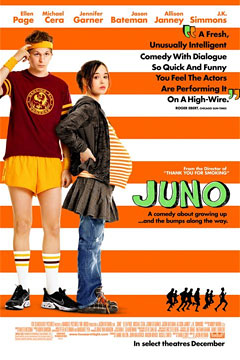
juno.jpgOverheard tonight after a packed screening of Juno, the little film that’s generating a lot of Oscar buzz for being a diamond in the rough, a throw-back to unpredictable and smart storytelling. Diablo Cody, ex-stripper and blogger from the Midwest, penned Juno, her first spec screenplay.

New York Times praises the script’s epicenter:

“The movie has all the hallmarks of an art-house film — endlessly quirky dialogue with a soundtrack to match — but contains an old-fashioned moral center. At a time when many films about teenagers are a mess of machinations and hookups, Juno ends in a very tender hug.”

Variety, back on November 1, explores Cody’s need to blog:

“It’s self-publishing. You don’t have to worry about some donkey in New York sending a letter: ‘This doesn’t serve our needs at this time.’ Instead you start getting fans, validation and the next thing you know, you have a book deal. I never received a rejection letter, never submitted anything in my life.”

Cody’s blog got noticed by a talent manager, who eventually got it to Jason Reitman (Thank You for Smoking), who directed Juno.

Los Angeles Times speaks to her goals to rock the strong roles:

“I have a responsibility to write strong female characters. I’m going to continue to do it.”


Author

Aaron Proctor
Founder, FWD:labs
Director of Photography site
Contact


  • Published in Film

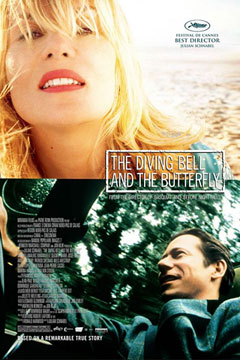
diving-bell-and-butterfly.jpgTonight, the local picture palace was packed for a preview screening of The Diving Bell and the Butterfly, care of Matt’s Movies, a subscriber-supported group from Santa Monica’s KCRW 89.9FM.

The film is based on the memoir of French Elle magazine editor Jean-Dominique Bauby, who was paralyzed at 42. Filmmaker Julian Schnabel, who won for his directing this year at Cannes (and before, with Before Night Falls), moves you within Bauby’s constraints. With the help of Janusz Kaminski (“Spielberg’s DP”), focus goes in and out, the perspective is limited, but the humanity is left to embrace: his memory and imagination are still free. It’s a noble purpose, that go with you after the credits rise.

The movie opens in select theaters Friday.

Poster by Indika.

https://youtube.com/watch?v=a-eELc1Ae48


Author

Aaron Proctor
Founder, FWD:labs
Director of Photography site
Contact


  • Published in FWD:labs

Part of a series of posts about the FWD:labs web platform for cinema artists and their work.

traffic-report_1.jpg

As any kind of artist, you want the general public to experience your best work and, by attribution, have the best impression of your professional ability. When it comes promoting or distributing online, there’s no “A” for effort to just fulfill today’s expectation that you have something up. Online, tracking public behavior is just like reporting traffic on the 405 freeway — you can count cars over time, where they are, and how they got there. You want people to stick with it, en route to their destination with you. The question is that the work you have online, is it engaging the public or is, literally, a one hit wonder?

It’s a pain to understand traffic online beyond the over-valued sense of “hits.” It’s a pain to fire up Google Analytics for each and every one of your projects. When you send an e-mail out to your friends (and your fan club) about your latest and greatest creative work, it’s a pain to know whether or not your effort was a shot in the dark.

FWD:labs feels that pain. You need a painless truth to your sense of YouTube plays and MySpace views. You need clear terms and intuitive graphics that can inform your next decision to make quick improvements. This latest feature of FWDlabs.com informs you about your audience engagement.

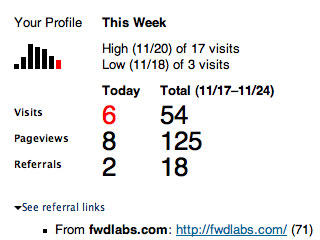
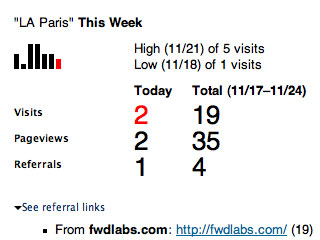
traffic-report_2.jpgWhen an artist signs in and adds a project, there is a traffic report for each one. Without any effort, the project is listed on the site, search engines find it, and your audience consumes it. With effort, you can tell if anyone click the link you added to Facebook. The goal is to clear up any thoughts that only a ringing phone or empty in-box mean you’re up or down. Knowing and adapting with the information might even increase your bottom line.

Before, if you ever wanted to know:

  • How popular is my profile and each individual project?
  • How is my site doing today?
  • What’s the highest traffic this week for my project last year?
  • Who linked to me or my work and how often?

Now, with traffic reports, you’ll know.

Engagement is not views racked up by browser reloads or geek-centric jargon. Engagement is founded by knowing that one Homo sapien visitor is one unique count, not ten pageviews or twenty “hits.” It’s knowing which link someone clicked to find you and checking out that link yourself. It’s knowing how you’re trending this week with a stock-line bar graph and your week’s high and low. It’s knowing you and your work are out there and about the people who seek it out: your audience.


Author

Aaron Proctor
Founder, FWD:labs
Director of Photography site
Contact


  • Published in FWD:labs

Part of a series of posts about the updates and upgrades of the quick iterations and new features at FWDlabs.com.

fwd_getting-real.jpgFWD:labs’ self-service web application kick-started in November 2006. You might not know it, but a lot has happened since. The quick iterations and new features have not been communicated as transparently, directly or clearly as I’d like. Time to get real about how it’s getting real.

I’d like to share the additions, fixes and efforts toward the web application and the discoveries, actions and receptions of self-starting a small, niche collective for creative artists in cinema.

Here is the behind-the-scenes activity in the last 3 months:

  • 11/17: E-mailed all artists who use FWDlabs.com
  • 11/13: Received feedback on 11/12’s goals from a FWD:labs member: “I just read it. It is good. Very nichey.”
  • 11/13: Received Q Collective’s e-mailer highlighting their business card. “Love the sticker concept.”
  • 11/13: Found camerajobs.net and thought, “Wow, this was painless. But will it be useful?”
  • 11/13: Heard about the ActorsAndCrew.com marketing e-mail via YouTube and spoke with a collective member about it: “Interesting approach (to highlight one member’s showreel). Good for one active user and maybe good prospective active users. Bad for everyone else?”
  • 11/13: FEATURE Added text only export of resume, easy for copy-and-paste to e-mails, other sites, etc.
  • 11/12: Revised a new PDF — big, bold words on FWD:labs’ goals, which needed re-aligning
  • 11/9: Sad but inspiring to find out about The Office in Santa Monica, a member’s only retreat for screenwriters, and its hit from the WGA strike
  • 11/4: FUNCTIONALITY Added e-mail privacy preferences — now database driven and self-service
  • 10/31: FEATURE Added database listing, grouped by role (standard titles) — now a way to show off every entry in the cast and crew database, across all projects
  • 10/30: Found a killer presentation (PDF): “No Time For Games: Playfulness in Interaction Design … Kevin Kearney, User Experience Director, Avenue A/Razorfish”
  • 10/28: FEATURE Added cast and crew database, complimenting the project database, with add/edit multiple with sorting, and mini-mailing list; updated project views, links, messages about cast/crew — now another reference and aggregate of collaborators
  • 10/27: FUNCTIONALITY Removed a middle step in updating a project; if it’s got errors, you’re back to the form with the usual highlighted note; if it’s problem-free, you’re congratulated back on your list of projects
  • 10/27: FUNCTIONALITY Added a visual calendar to select the date of a project, rather than typing in YYYY-MM-DD format.
  • 10/21: Revised the CSS style guide to re-align the clean image for FWD:labs
  • 10/21: FUNCTIONALITY Fixed the intranet profile page; think it’ll be best to put all modules into different PHP files, depending on their privacy issues (i.e. one for intranet, the rest pulled from the other side of the wall)
  • 10/21: FUNCTIONALITY Fixed the date from being year only (2007), to year/month/day (2007-10-21), for more intelligent sorting on the automated resume
  • 10/21: FUNCTIONALITY Fixed the hit counts from stopping at 127, a particular MySQL column limitation
  • 10/21: Added ThinkVitamin.com’s forms article to our Basecamp
  • 10/17: Found NPR’s This American Life – The Allure of Meanness
  • 10/13: Contacted a friend (print designer) about hiring interns: “You had some luck posting a job for an intern? I could use one myself. What was your ad like? Where did you post it? How’s the deal work — unpaid, hourly, or flat rates?”
  • 9/30: Found a traffic spike from Google result #26
  • 9/29: Re-evaluating the invite process w/ community developer
  • 9/23: Back to basics — shot “Scubaman” with a FWD:labs member
  • 9/21: Contacted a FWD:labs member about salon gathering venues: “IFC Center would be perfect but I believe the bar section is closed now… isn’t crazy loud music / dancing, you can sit, talk, drink and its off 6th Ave and easy to find.â€?
  • 9/17: Re-visited several chapters of “Getting Real,” from 37signals, to reinforce kicking butt

FWD:labs is alive and well, but it’s time to pick up the pace. I’ve held back from e-mailing our members and the consequences have meant sleepy users, missing out on what’s happened in the last 365 days.

Now, I’m ready to share the activity and evolution of the collective and energize the base to blossom and grow. I believe this web application solves real problems, exhibits well a handful of best practices in self-marketing, and lets members do extraordinary things for themselves care of FWD:labs.


Author

Aaron Proctor
Founder, FWD:labs
Director of Photography site
Contact


Part of a series of posts about up-and-coming artists, projects or movements across film, web, or design in cinema that go the extra mile for their audience.

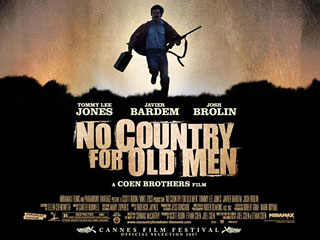
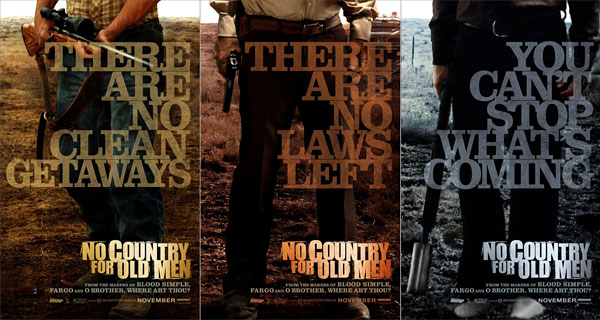
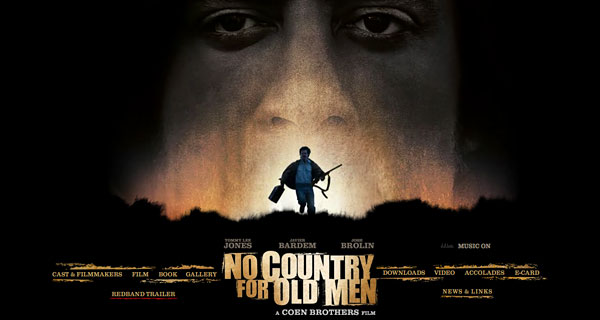
no-country-for-old-men.jpgI didn’t need to see the trailer, visit the web site, or notice the poster before I ordered a ticket last month during the New York Film Festival to see the new Coen Brothers film. It already got to me — word of mouth, because Roger Deakins shot it. But the film opens in limited release this November 9, and Miramax did its marketing some justice. The posters are strong, the trailers fierce, and the web-plus-Facebook presence well done.

Movie Marketing Madness explains how the convergence of images (and brand) impressed:

“Everything — the trailer, the posters, the website — has a similar look and feel. That strikes me as the work of a studio that cares about selling the movie to the RIGHT audience, one that’s going to be sucked into the movie’s world and so wants to use the campaign as the tool to draw them into engagement with the movie’s brand.”

Scope

  • Trailers, with different title cards and aims.
  • Poster, and a series of character posters. (Designed by BLT & Associates.)
  • Web Site, consistent with the poster and full-screen video transitions. (Site by Real Pie Media.)
    • Cast & Filmmakers
    • Film (Synopsis and Production Notes)
    • Book (Cormac McCarthy’s 2005 novel)
    • Gallery
    • Downloads
    • Video
    • Accolades
    • E-card
    • News & Links
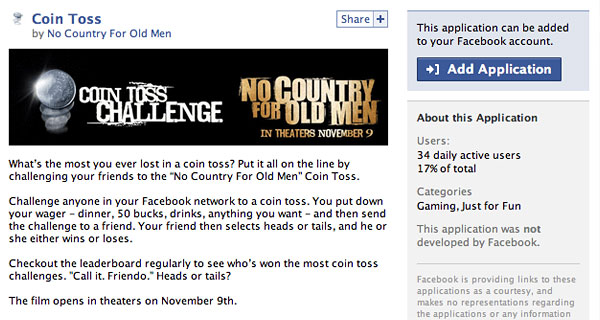
  • Facebook app, using a friend-based “coin toss” game

Surface

https://youtube.com/watch?v=2WqpMp4cQnQ

Trailer (“red band” version on official site)

no-country-for-old-men_post.jpg
Poster Series

no-country-for-old-men_site.jpg
Web Site

no-country-for-old-men_fb.jpg
Facebook game


Author

Aaron Proctor
Founder, FWD:labs
Director of Photography site
Contact


vimeo.jpg

  1. For taking on 1280×720 HD ahead of other social video networks and for reminding people about good video quality (as of this last week *)
  2. For blogging about the benefits and advantages when introducing new features, voiced best on their Staff blog and for not stopping there, shown — not just told — in quick-and-dirty videos
  3. For leading an already vibrant, friendly community with two community directors (“Hi, I’m dalas, and I want to make sure that you have a lot of fun here on Vimeo!” … “What dalas said. Use us!”) and for encouraging usage of the site’s less-obvious perks with a social “to-do” list (“Comment on five videos” … “Tag a video that isn’t yours”)
  4. For understanding privacy, like separating personal videos for family/friends from creative ones, and for showing off Activity, like showing what a user likes, tags and comments in real-time
  5. For giving filmmakers peace of mind with Statistics that sort views, likes and comments by day, and for highlighting referrals, which encourages more linking

[vimeo]http://vimeo.com/clip:323839[/vimeo]

* Sadly, embedding the higher-grad video, and losing the Canon ad, aren’t yet options.

On a related note, designer Andrew Sloat, whose video was shown at the AIGA Next Conference, chose to put a QuickTime video on his site and share on his Vimeo, too.

[vimeo]http://vimeo.com/clip:341055[/vimeo]

Curious about alternatives to YouTube? Compare Vimeo to other social video networks on our resource matrix.


Author

Aaron Proctor
Founder, FWD:labs
Director of Photography site
Contact


5-year-plan.jpgEvery freelance cinema artist is looking 5 years ahead. By 30, you’re here. 35, you’re there. 40, here, 45, there.

Now how about leveraging your real-world social network to get there?

Last week, over drinks and grub, I met up with a fellow filmmaker, on one “five year plan” ahead of me. I’ve worked with him twice now, but this meeting need not be about business. We were just kickin’ it. Just this month, he tells me about his work on Michael Mann’s new Nike Football commercial. I’d like to be where he is, at least, in five years time.

There seems to be a tendency to only use your gut feeling, or tried-and-true close-to-home methods (because they pay the bills). But try meeting up with people outside your own social network, and you can consider a few more options.

So, what’s required? Action. Trial and error. Think: what have I done this month?

My collaborator and I both come from very different backgrounds but both actively hustle in putting yourself out there. We both call and e-mail our regular leads, but he’s had luck with cold calling whereas I’ve had luck with show up with my portfolio. We’re both aligning ourselves to get ahead, a better-fit course for the next five years. It may never feel like enough, but that might be a curse of the creative.

6 social networking options for filmmakers, from easiest to hardest:

  • Calling or e-mailing everyone you know
    Pro: you and your friends hire one another and their direct recommendations
    Con: bounded group
  • Writing ads or responding to them
    Pro: plenty of options, like Craigslist, Mandy.com along with web and design gig/job boards
    Con: less-bounded social group, trust/credibility issues
  • Market yourself and your site or pay someone to
    Pro: control in defining yourself and plenty of options, like trade magazines and newspapers
    Con: wide net to be cast unless you’ve got a niche market in mind
  • Networking at gatherings or festivals
    Pro: like-minded individuals, either by profession or industry
    Con: not job-centric, but could lead there with perseverance or luck
  • Show up, with or without your portfolio
    Pro: boldness can impress, like offering to mop the floors, for free
    Con: vulnerable position, so don’t work for peanuts for too long
  • D.I.Y.
    Pro: you’re in charge
    Con: you’re in charge

Which methods do you use?


Author

Aaron Proctor
Founder, FWD:labs
Director of Photography site
Contact


Part of a series of posts about up-and-coming artists, projects or movements across film, web, or design in cinema that go the extra mile for their audience.

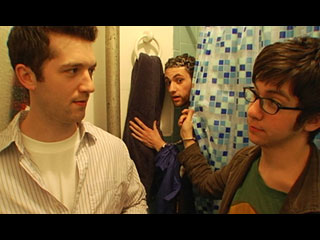
we-need-girlfriends_video.jpg“We Need Girlfriends” is one of the best shows online today. Good writing, regular programming, professional sensibilities and online commiserating bring this independent sitcom to the top of your inbox.

The series follows Tom (Patrick Cohen), Henry (Seth Kirschner) and Rod (Evan Bass): recent college graduates, all dumped by their college girlfriends, and living together in Astoria, New York.

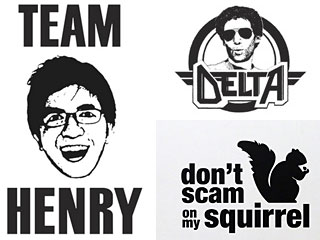
“We Need Girlfriends” embraces its limitations. The series is self-aware and thrives best in poking fun at its niche audience, who know all so well about Facebook feeds, MySpace photos, and the like. In embracing the platform, the filmmakers have not only done the pre-requisite — incorporating independent musicians into its soundtrack — but really engaged its online audience by responding to it. Special episodes include holiday wishes to fans, mid-season bloopers and a clever teaser when the season finale, which went online yesterday, was going to run a couple weeks late. Their official site and MySpace account do their jobs showing the big picture, where YouTube and other video syndications focus on what they do best. Their visual style makes cheap T-shirts look good.

we-need-girlfriends_design.jpgIt’s got all the ingredients for viral marketing done with the right intentions. Just knowing you can join “Team Henry,” friend “Rod” and “Tom,” or reply to each episode feels fun. WNG engages its community, who then evangelize it. This show, on its own qualities, feels like the kind of thing you immediately forward to friends (or future boy/girlfriends). They’ve taken what’s good on television and what’s unlike so much online: quality entertainment that delivers.

WNG is a project by filmmakers Steven Tsapelas, Angel Acevedo and Brian Amyot and their group, Ragtag Productions. Despite no mainsteam media attention, it’s still no surprise that they got signed recently with UTA (United Talent Agency) when some notable bloggers say things like this:

  • “It’s smart, it’s genuine — and, oh yeah, hilarious.” — Seattle Post-Intelligencer
  • “It’s a funny show. Characters get trapped in all kinds of modern dating problems: MySpace ex-stalking, abnormal parties where people are only allowed to wear blue… bizarre things that anyone in their 20s who lives in an American city has experienced to a certain extent. Funny and realistic. What’s better than that?” — Tilzy.TV
  • “The HBO of online video… Amazing.” — Media, Technology and Rebel Filmmaking
  • “[WNG] is an online web-series, in my opinion, better than anything on TV these days.” — Drive A Faster Car

With 11 episodes in its first 12 months, and each around 5 minutes, you should start from the beginning:


Author

Aaron Proctor
Founder, FWD:labs
Director of Photography site
Contact


cinema-manifesto_gathering.jpg

It was a real role reversal when Aaron first started talking to me about FWD:labs. To that point, our relationship had always been about the same: I bring him an insane and epic idea that can’t possibly be accomplished, and then we sit and talk about it until we figure out how to do it. And then we do it. But now here is Aaron bringing the insane and epic idea to the table.

Our mission is basic, but far from easy. We need to bring a community of the most talented, vibrant, and passionate creatives to FWD:labs.

The idea behind the FWD:labs collective is simple. We want to offer the very best filmmakers and designers a simple interface to collaborate and create by providing a showcase of their works, a sounding board for their ideas, and a pool of resources from which to draw upon to turn their fantasies into a reality.

And we don’t just want an online community, we want it to come offline as well. We plan to have a series of social events that will provide an opportunity for our community to meet face to face. Whether these events are in a coffee shop or bar, an art gallery or an burnt-out warehouse, we want to provide a unique environment for our community to network and brainstorm in a space that is filled with like-minds, creative co-conspirators, and most importantly, people that know how to have fun. Some of my best ideas have come out while I was three beers deep, listening to good music and laughing with fellow creatives.

But before we throw any killer, avant-garde, debaucherous parties, we need to establish a base community of FWD:labs users that understand and appreciate its vision. This is no egalitarian Facebook/Myspace where everyone is invited – we want the elite. We want the talented and vibrant creatives that are going to make our community an important community. Our online community will be filled with the cinema artists that will inspire us to greater heights.

We, those reading this, are the originals, the deepest base of FWD:labs. The future pioneers of something valuable. It is up to us to create this community. And it shouldn’t be hard. We just need to invite our most promising friends and co-collaborators. The service will sell itself. We need to identify the types of people we want on board, and invite them. In early November we will all receive an e-mail from Aaron or I with the invite link to send to everyone we are interested in joining. Click the link, create the quick profile and creative portfolio and see the value of the service.

And to all the pioneers: At the first social, that first round of beer is on me…


Author

Mathieu Young
Member, FWD:labs
Photography site
Contact


11th-hour-poster.jpgIt’s only playing at four movie theaters right now, so you might need to take your bus, subway or bicycle a little further than usual. Leonardo DiCaprio’s art-house film The 11th Hour, which premiered at the 2007 Cannes Film Festival in May, is causing quite the storm.

Passion-centric

On the back page of today’s Los Angeles Times’ Calendar section, staff writer Rose Apodaca focused on how the film’s collective nature parallels the need for “a collective shift of individual determination to save the planet.” As is often the case with passion-centric projects, many of the filmmakers donated their time: Jean-Pascal Beintus composed the music and Andrew Roland’s camera crew shot the documentary for free. Leonardo DiCaprio, who co-wrote with directing sisters Nadia Conners and Leila Conners Petersen, was determined to get private financing in order to be sure to get his hands dirty on every subject:

“We wanted to let leaders on the forefront of these issues speak openly and freely, without having to defend something that’s actually happening, something they’ve spent their lives’ work studying.”

DiCaprio, the Blood Diamond-starring, Prius-driving and Tree Media Group-partner, is no stranger to social relevance. See the cover story in Vanity Fair magazine to get up to speed on his actions.

Coverage

  • The New York Times: “It may not change your life, but it may inspire you to recycle that old slogan-button your folks pinned on their dashikis back in the day: If you’re not part of the solution, you’re part of the problem.”
  • Variety: “11th Hour presents the viewer with reams of depressing data, loads of hand-wringing about the woeful state of humanity and, finally, some altogether fascinating ideas about how to go about solving the climate crisis.”
  • 81% fresh on Rotten Tomatoes‘ critic aggregate, as of 11am on August 18, 2007

Non-New Yorkers and Angelenos: the wider release is August 24, 2007.

Convergence

Grassroots Reaction

11th-hour-obey-poster.jpg

  • Even with echoes of An Inconvenient Truth — where the message is susceptible to fatigue from the globally-apathetic moviewatcher on a Superbad weekend — the repetition is part of the message. “This case needs to be stated again and again until humans are mobilized to action, for nothing else will be sufficient to ensure our collective survival.” Environment-savvy entrepreneurial consultant Jonathan Cloud continues his thorough, informed and passionate analysis of the film and the problem at large.
  • Promotional print from Obey Giant — street artist Shepard Fairey — who notes, “Skip the next Rob Sneider movie and to see the 11th Hour and you’ll be both avoiding pollution and educating yourself about it. If you won’t do it for yourself, do it for MY kid! Thanks.” (Fans and critics responded, as it sold out quickly.)
  • The screensaver should be a t-shirt,” notes the Ecorazzi blog’s post by Michael d’Estries, co-founder and editor of “the latest in green gossip.”

Author

Aaron Proctor
Founder, FWD:labs
Director of Photography site
Contact


  • Published in Film + Web

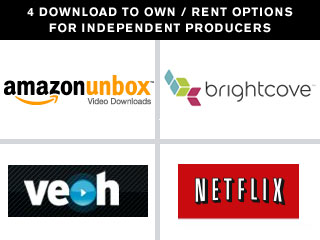
online-market_4-options.jpgYou’d rather watch ads than pay to download-to-own or rent a film or show. Google Video‘s marketplace for downloads met its demise, announced this last Friday, August 10th. Independent video producers can see this as a major trend for online video distribution.

The cost to watch

Google Video — originally a social video network that became a video search engine once it bought industry-leader YouTube — announced August 10 that it is discontinuing its DTO/DTR (download-to-own/rent) program.

DTO/DTR is becoming a big deal. Several other video networks like Veoh and Brightcove are still in the download business. As a content producer, you can choose if your audience can download or pay to download the ad-free content. Amazon.com’s Unbox and Netflix also offer owned and rented content, respectively.

If you can, it’s common to provide both: ad-laced to watch on demand, and ad-free to purchase. CBS, ABC, NBC and other major television networks, as well as some other social video networks like Videoegg, allow you to watch some content for free as long as you wait through interstitial ads. The “cost” of waiting is greatly preferred to purchasing. Several fellow filmmakers oft cite that “it’s worth it.” The networks also have pay-to-download deals with marketplaces like iTunes, which is not yet an option for independent producers.

The Los Angeles Times, which covered the story on August 10, interviewed director/DP Ben Rekhi (IMDb) about his exclusive distribution deal via Google Video in July 2006. His award-winning feature film ended up with 80,000 viewers, but only 300 went on to purchase the $3.99 download. “It was an exciting opportunity and amazing experience to be a pioneer in the digital distribution realm,” he said. “But with any new technology, there’s going to be a few lambs that get slaughtered. We just happen to be that.”

Limits to your purchase

Google Video’s downloads use DRM (digital rights management), which in a variety of ways can limit the usage of the download for the consumer. In an e-mail sent out August 10, Google is refunding the amount spent by download-to-own customers or around $5 for download-to-rent customers. Their e-mail noted that “(a)fter August 15, 2007, you will no longer be able to view your purchased or rented videos.” Even though you downloaded to “own,” ownership is temporary and contingent on the distributor’s leash.

One workaround may be to “rename the .gvi files to .avi and load them up in VLC media player (a free and open source media player). They’ll play fine in that player,” notes Muhammad on the Techcrunch post.

Looking for a win/win

On the surface, the negative buzz compounds anti-DRM sentiments with the threatened trust that’s forged whenever you purchase anything online. It can sound just like getting short-term notice that your iTunes Music Store downloads were going to no longer work, and weren’t really yours despite your purchase. DRM technology is a win/lose for distributors and customers, respectively.

But was Google Video’s distribution model working for you? Nope. Some online commentary, like Charbax on the NewTeeVee post, suggests Google probably has something better in the works, like adding download-to-own/rent to YouTube without DRM.

Food for thought

Would you download higher-res original content on YouTube for a couple bucks? Would people who tag your work as a “favorite” pony up the cash to keep it for good?


Author

Aaron Proctor
Founder, FWD:labs
Director of Photography site
Contact


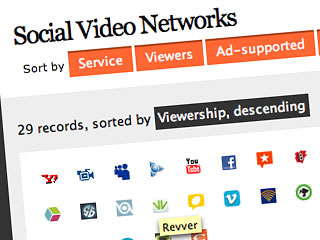
social-video.jpgAs a creative, you care about control and trust. In the frenzy of build-ups and buy-outs in social video networking, there’s a lot of competition, compensation and communities vying for your best work. Building a relationship with an online service may take some informed schooling. I get asked all the time, “Which online networks put ads on my work?” “What’s the alphabet soup?” “Who’s neck-and-neck in popularity with YouTube?

Now you can find out in one place, in our newly re-aligned exclusive resource at FWD:labs, “Social Video Networks.”

This collaborative resource began in March 2007 as a step-by-step guide for getting your films online. But that wasn’t enough. It needed to be a real utility, sortable for your needs, freshened up to do justice to the movers and shakers out there. And now it is: our “museum” of social video networks is open. Additions and edits to the data are in your hands; ideas for searching, comparing or sharing the data are also encouraged.

In November 2005, Techcrunch compared the “Flickrs of video,” where Michael Arrington geared them for his Web 2.0 audiences. Our resource is appropriately suited for our audience: active participants in cinema, creatively and/or financially interested in the future utility of online video.


Author

Aaron Proctor
Founder, FWD:labs
Director of Photography site
Contact