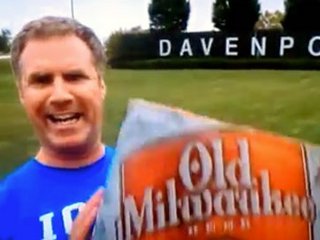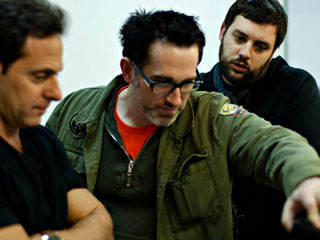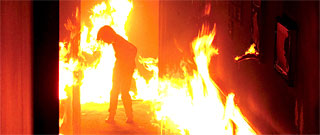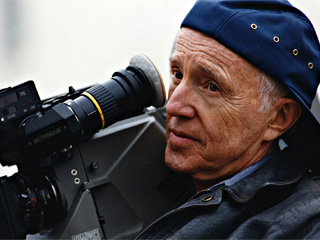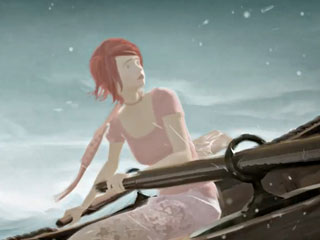
Will Ferrell’s Low-Budget Beer Ads (adweek.com) shows us what can be done when you embrace content over quality (via director Matt Checkowski)- Ice Cube’s Ode to The Eames (nytimes.com) showcases a fresh perspective for the museum exhibit, “Pacific Standard Time: Art in L.A. 1945-1980” (via designer Charlie Hess)
- #letsfly (twitter.com) brings us a introductory video and microsite to announce a new Twitter interface, which launches today (via entrepreneur Joshua To); also check out stories.twitter.com
- 5 Alternatives to PayPal (wired.com) can be handy for crowd funding your film, including Amazon WebPay’s no-fee processing model, undercutting the usual 3-8% that PayPal or Kickstarter take
- Cinema Treasures let’s you find 30,000 movie theaters around the world, “[b]ecause you’re tired of watching movies on your laptop;” it’s also a historical database of architects, photos, and seat-counts, including theaters that have closed
Follow All Articles

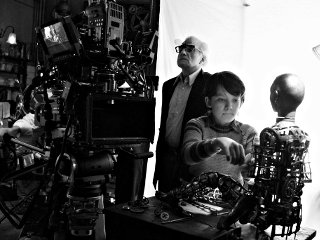
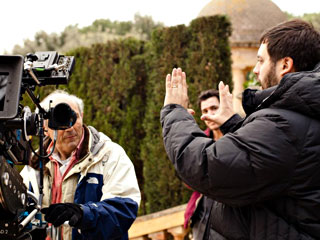
Behind the scenes of "Hugo." Photo from NYTimes.com.
“Quite honestly, I would [shoot all my movies on 3D.] I don’t think there’s a subject matter that can’t absorb 3D; that can’t tolerate the addition of depth as a storytelling technique. We view everyday life with depth. I think certain subject matters aren’t meant for 3D but you have to go back to Technicolor; when it was used in 1935 with Becky Sharp. For about 10-15 years, Technicolor was relegated to musicals, comedies and westerns. It wasn’t intended for the serious genres, but now everything is in color. And so it’s just a different mindset. Granted once the technology advances and you can eliminates glasses that are hindrances to some moviegoers, so why not? It’s just a natural progression.”
— Scorsese, who founded the Film Foundation and believes in its preservation, recently told Deadline.com he thinks 3-D is a natural progression for cinema.
(via Moviefone)

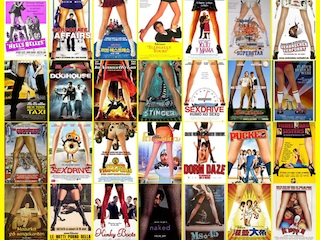
Legs stand for raunch-factor
French distributor Christophe Courtois has compiled a photo blog of film posters sorted by red, blue, and black trends to highlight some of the cliches — or visual indicators — of marketing studio and independent feature films. Check out all of his posts or take a look at these three to start:
- Revealing a face using other film details
- Portraits with overlaid typography
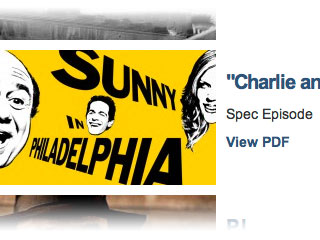
- Yellow must mean an independent film
(via Flavorwire via designer Stefani Manger)


Joe White on the "11-11-11" set
As the film’s director of photography, what are you most proud of with “11-11-11?”
Joseph White Lighting-wise I think it’s one of the best things I’ve done. We had some truly spectacular locations – making Barcelona look bad is a bit like failing gym class. So much history and texture surrounded us at all times, the city itself was a constant source of inspiration. This was the second film I shot on the Arri Alexa and even in harsh situations it held up brilliantly. It’s a very contrasty film and the camera lent itself to that style. My gaffer Oscar Felices was nothing short of brilliant, and his crew was equal to every task presented to them.
What’s one thing you learned — before, during or after production?

On the set of "Mother's Day," where Joe also worked with director Darren
JW I guess I’d say the thing I’m learning more and more after every movie is to simplify, simplify, simplify. No matter how elaborate I want something to be or how precious I want to be with lighting, if it’s not explicitly telling the story (or more often helping the director make his or her day and get the coverage they need) it’s the wrong choice. When I started I was so excited by sexy sculpted lighting and complex movement (and don’t get me wrong I still strive to do a lot of both) whereas now I’m a lot more conscious of what the film as a whole needs. I’d also say to any aspiring DP to pay really close attention to your actors’ desires and instincts – don’t show them where to go, let them take you there and make it look right.
How has the changes in film technology affected your work — for better or worse?

Joe with his crew
JW Technology is always advancing and even though I still love a lot of the tried and true methods and techniques, cinematographers who are obsessed with the past don’t have much of a chance being a part of the future. I’m a fan of the technological developments that have broadened the canvas of cinematography, but there are some troubling notions coming from the top about new HD cameras not needing to be “lit” as much. I think no matter how many lines of resolution you have and how small the cameras get, our craft is still telling story with light, movement, and composition and every new development, in the right hands, pushes the medium forward. I’m also a huge fan of things getting smaller and cheaper, as the more pluralized and democratized film production gets, the more of a pure art form it becomes. The easier it is for people to get their hands on a camera and editing software, the more stories from diverse and previously marginalized sections of our population will get told, and that can only be a good thing.
What’s it like working regularly with director Darren Lynn Bousman?

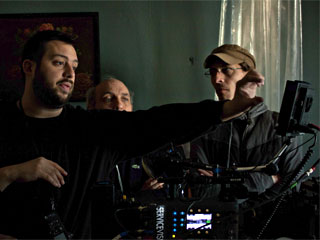
Darren (center) and Joe (right) on "11-11-11"
JW Darren is an incredible collaborator – “11-11-11” was our third feature together and we recently wrapped our fourth film “The Barrens” with Stephen Moyer, shot on Super 16mm in Toronto. Working with Darren is fantastic – he trusts me enough to know that I’m going to work tirelessly to give him what he wants, yet he always gives me the freedom to experiment and push the envelope. We went very dark with some of the scenes in “11-11-11” and his trust in me and what I do allowed us to get some pretty stark and unique images.
What are some of your regular influences for creative ideas?

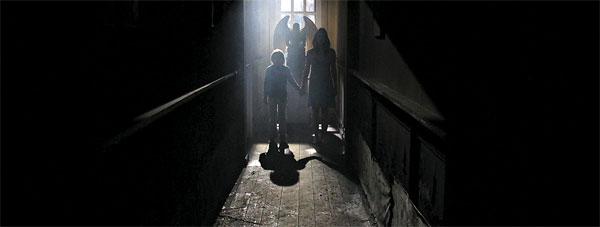
"11-11-11"
JW I try not to emulate, but I’m always inspired and I try to devour all aspects of the visual arts when I’m prepping and shooting a film, not just movies. I think it’s important as cinematographers and filmmakers in general to not just limit ourselves to the medium we’ve chosen when it comes to inspiration. When I read a script, I think about music, about still photography, painting, sculpture, food, scents, everything. The broader our frame of reference is as artists, the better at communicating those ideas to our collaborators and, ultimately, our audience we will be. There are so many cinematographers out there whose work I find amazing, and I consider myself incredibly fortunate that I get to do this for a living.
What next — both for you and for filmmaking?
JW I just completed principal photography on “The Barrens,” which was a really fun project that I think people will really get into when Anchor Bay releases it theatrically next year. I’m reading some scripts now and will be shooting something in January or February. As for filmmaking, I have no idea — and that’s what is so exciting. I just want to be a part of it!
#
Watch some of Joe’s work at josephwhitedp.com and his witty commentary at @tableforjoe, which is how I met Joe before grabbing some coffee in Silver Lake. The film “11-11-11” comes out today and you can check out the trailer, embedded below.
It’s unfortunately all too common to experience long hours in the film industry. What can be done to manage or distribute time on set and in post, so day rates are worth their weight in hours and you’re giving/given the respect the cast or crew deserves? Here are some recent perspectives:
- David Stripinis writes “Fixing It In Post”:
“And across the board, at facilities large and small, pressure was on with schedules. Ever since ILM pulled off a miracle with ‘War of the Worlds’ – completing the post-production in only twelve weeks, every show is expected to be done on that schedule. So VFXers are routinely expected to work 60, 70, 80+ hours a week. Often, illegally, without compensation for the overtime worked. … Long term, we need to rethink how VFX is done. A model where artists work directly for a production company – paid directly by them, would be ideal. Then, and only then, would they see the true cost of their behavior. But that can’t and won’t happen overnight.” - 12on/12off shares “Toughest Exam Question: What Is the Best Way to Study?”:
“As if we need more proof that working excessive hours in the film business is unproductive as well as unsafe, a recent Wall Street Journal article quotes a university researcher’s conclusion that cramming all night preparing for examinations results in much poorer performance. Some things can’t be fixed in post.” - Anonymous Production Assistant writes Stop! Overtime!:
[M]oney’s money, and at least overtime means more of it. Unless you’re me. See, this low-budget, [non-union] cable pilot I was working on had an eight day schedule. The plan was to shoot Tuesday through Saturday, take Sunday off, then finish the next week on Monday through Wednesday. We fell behind schedule, as you do, and the producer decided we needed to add another day. Not Thursday, though. No, we’d be working Sunday. … I’m sure that’s exactly what the California legislature intended when they wrote the overtime laws. - Haskell Wexler, ASC, who made a film on this subject called “Who Needs Sleep” (see excerpt video below), recently penner an open letter to the Occupational Safety and Health Administration

Haskell Wexler, ASC
Routinely, workers union and non-union work twelve, thirteen, fourteen hours per day – and more. This occurs with minimum time available for sleep. These conditions occur on split shifts, where day is night and night is day, resulting in dangerous safety hazards. This lack of sleep becomes the cause of many of the safety hazards listed by OSHA. … At this time, specific abatement proposals may not be organizationally practical, but since it is an overriding health and safety concern, a strong statement by OSHA would be a major step toward realizing the OSHA pledge “to help workers come home alive and healthy at the end of the day.â€
For context, here are some union rules for overtime:
- WGA: 9 or more hours or more than 40 hour a week (source)
- DGA: 13 or more hours or more than 5 days
- Local 600 IATSE: 10 or more hours or more than 5 days
- SAG: 9 or more hours (source)
One member of Local 839 IATSE recommended this language to colleagues on a recent project, which resulted in paid overtime:
“Per the pre-negotiated rules set out by the Local 839 IATSE, unpaid overtime is illegal. If you believe you cannot finish your workload with the resources provided in the timeframe given, it is your responsibility to alert your production coordinator or supervisor to allot more resources.”
What are your experiences with working overtime? When has it been handled well? When do you walk at twelve hours and when do you stay?

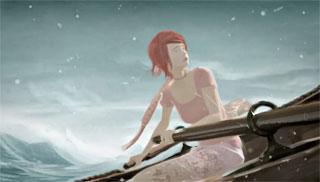
An integrated campaign stemming broadcast and web, Twinings “Gets You Back To You” utilizes over $7 million to deliver the brand message about how to take 10. According to their press release, which also offers a link to Charlene Soraia’s “Wherever You Will Go” track on iTunes, the campaign is a message of “reconnect(ing) with yourself.”
[UPDATE: Video at https://www.youtube.com/watch?v=LdkcsDueSMM no longer available.]
The spot stands out by appearing like a short film, void of the product until the very final frames. It may be no surprise that Psyop, the director/label behind this commercial, also made the Coca-Cola spot, “Happiness Factory.”
Commentary on the spot ranges from applause to jumping-the-shark. In terms of craftsmanship, Stu Maschwitz, a director who commented on the spot on Twitter, notes that “part of what makes this spot so gorgeous is the artistic choice of a low frame rate.” On the flip side, Martin Brinks, a 3D graphic artist, calls it “a pathetic and terrible eyesore” in the comment threads of Motionographer.
Executive Creative Director: Paul Brazier
Copywriter: Diane Leaver
Art Director: Simon Rice
Agency Planner: Bridget Angear, Michael Lee
Media Agency: Zenith Optimedia
Media Planner: Lucy Affleck
Production Company: Psyop / Smuggler
Director: Psyop
Psyop Creative Director: Kylie Matulick
Executive Producer: Neysa Horsburgh
Producers: Mark Knockles, Jenn Dewey, Amanda Miller, Hillary Thomas
Associate Producers: Minh Ly, Anu Nagaraj
3D lead: Kyle Cassidy
Animation Lead: Dan Vislocky
Compositing Leads: Danny Koenig, Julie Lenoble
Compositor: Cris Kong
Storyboards: Vinny Dellay, Josh Weisenfeld
Storyboard colorist: Danelle Davenport
Editorial: Brett Nicolletti
Lead Design: Paul Kim
Additional Design: Andrew Park, Georgia Tribuiani, Kenesha Sneed
Modeling and Texturing: Rie Ito, Ibtisam Ahmed
Rigging: Sean Kealey
Pre-Vis Animation: Blake Guest, Dan Vislocky
Animators: Dan Vislocky, Minor Gaytan, Chris Meek, Jacob Frey, Sashdy Arvelo, Yvain Gnabro, Todd Akita
3D: Katie Yoon, David Chontos, David Barosin, Barry Kriegshauser, Hao Cui, Roman Kaelin, Eric Rosenthal, Andreas Berner
Rotoscoping: Stephen Holbrook
Water and particle effects: Kiel Gnebba, Wayne Hollingworth, Brian Alvarez
Cloth Effects: Victor Garza
2D animation: Song Kim, Dylan Spears, Melvina Wong, Kendra Ryan
Audio Post Production: Grand Central
Audio Post Production: Soundtree
Digital Design Company: Grand Union
Song: Wherever You Will Go / Charlene Soraia
PR Agency: Freud Communications

Mickey Finnegan
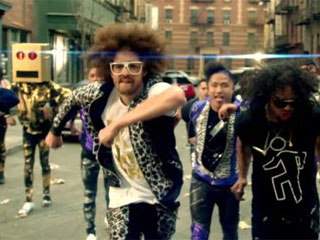
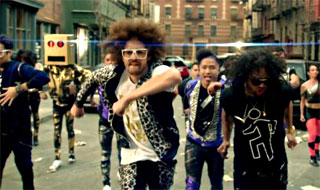
Music video director Mickey Finnegan has been wiggling and shuffling through the last 7 videos for LMFAO. His latest work, “Sexy And I Know It,” premiered two weeks ago and has almost 20,000,000 views on YouTube/VEVO.
What’s your creative process? Any stories of how you came up with treatments? Any elements of the videos evolve from idea to edit?
Mickey Finnegan Most of the inspiration for the LMFAO videos come from listening to the music and brainstorming with the fellas. The guys in the group are real creative and have lots of good ideas themselves. They might give me a couple goals they want the video to have.

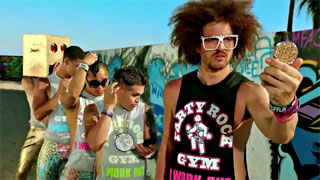
"Party Rock Anthem" has 229 million views on YouTube/VEVO within seven months; watch the embed below
For instance, with Party Rock, Foo told me that he “just want to showcase this dance called shuffling and everyone in the video needs to be doing it.” From there I created the zombie play. Then for the “sexy and I know” it video he talked about wanting to be strutting around in speedo’s. So I pitched him a “zoolander-esque” model off between the two guys. Then we have a dialogue and reform the ideas from there.

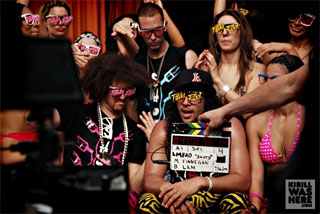
"Shots" has chalked up 50,000,000 views on YouTube/VEVO (photo by kirillwashere.com)
How have things changed since doing your first LMFAO video? What have you learned about the music or video business?
MF I think the main thing that has changed is the guys’ themselves being more aware of the process. Knowing what is possible to pull off and what is not.
The main thing I have learned in this industry is that there are so many people involved in the process and everyone has different goals with what they want. It’s not always about creating what you think is the best video, sometimes its about creating the video that is best for everyone, appeasing the interest of the label, the artist, the managers, the A&R team, the agencies who product place, etc.

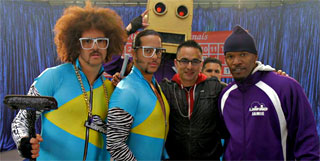
LMFAO, Mickey Finnegan, and guest Jamie Foxx for the "Yes" video, which runs over ten minutes in running time
There are a lot of things you can’t control. How do you execute your concept if your artist is 6 hours late? Or a random celebrity shows up and NEEDS to be in the video and can only stay for 10 minutes, how do you work them in? Or you have to product place Beats headphones even though the video takes place in the 1400’s etc. The business is full of hurdles that you have to roll with as they come. And you are a hero if you can at the end of the day walk away with a good product that appeases all these interests.

"Champagne Showers" traded a wet and sticky camera crew with over 42 million views in the first three months
What inspires you most with directing music videos? Who or what are some of your biggest influences?
MF Some of my favorite music video directors of all time are guys like Joseph Kahn, Dave Meyers, Francis Lawrence. I look up to those guys tremendously. The things I find inspiring about music video directing is probably different than what other people find inspiring.
I think people tend to think of music videos as a very “creative artform.” Which it is, but the true genius in my opinion are the videos that are effective from a marketing and branding standpoint. As much as I like the Michel Gondry/Spike Jonze style videos that are visually quirky or original. I’m often much more impressed by the guy who does the generic “rap” video or generic “pop” video but gives it a unique twist or storyline or something to differentiate. That’s true genius, giving the artist the video that deep down they want, but putting a small creative spin on it. I think the guys I mentioned above are masters at that.

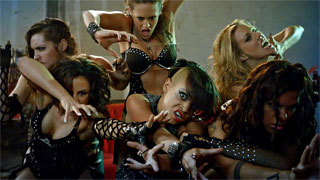
"Sexy And I Know It" brings "wiggle" new meaning and, with over 19 million views, Mickey tweets, "do music video directors get residuals yet?"
How has play on YouTube been a different experience than MTV? Where do you think the music video industry is headed?
MF I think everything is headed to the web — be it music video, tv, film, etc. The line between professional and consumer continues to shrink and I think that’s a good thing. Music videos being on youtube is great because it gives every artist the same opportunity/platform to exhibit themselves on. It also allows filmmakers and music video directors to showcase their work which in turn forces people to be more innovative, creative or cutting edge.
![]()
Watch the Videos:
“Party Rock Anthem” (featuring Lauren Bennett and GoonRock)
“La La La”
“Shots” (featuring Lil Jon)
“Yes”
“Champagne Showers” (featuring Natalia Kills)
“Sexy And I Know It”
“One Day” (co-directed by Anthony Chirco)

Today we’re excited to officially release a little new feature on FWD:labs that’s just for screenwriters: PDF embeds.
PDF embeds let you share your scripts or treatments right there inline on your site. Your site has always had PDF resume support, but now with PDF uploads for all of your projects your visitors can see the work as well.
You no longer need to attach your scripts to an e-mail. Simply upload a PDF once to one of your projects and it will automatically link up and embed using Google Reader’s interface with no additional effort required. With the time saved, you’ll have more time to get back to doing what you love: writing.

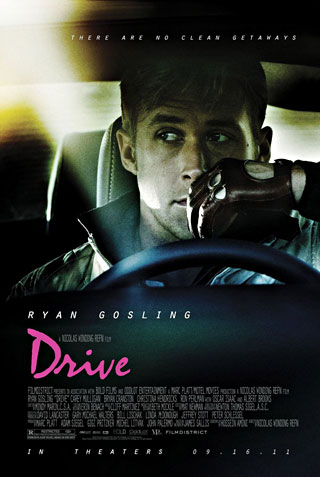
Nicolas Winding Refn, director of “Drive,” thanked Chilean avant-garde filmmaker Alejandro Jodorowsky (see 2:10 into the video, above) at the 2011 Los Angeles Film Festival back in June for advice he received, which is inspiring for all to hear:
“Coming from Europe to America, I always thought I was going to fight the devil. And he told me that if I want to make my kind of films in Hollywood, I just had to to smile and nod a lot as everyone talked to me. So I smiled and nodded a lot and it worked out.”
(via screenwriter Eric Szyszka)
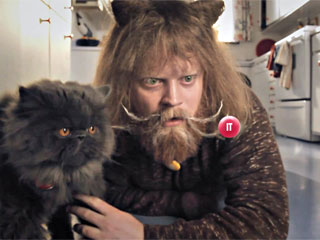
Skittles “Touch the Rainbow” work by BBDO in March used a low-fi technique as users “watch[ed] as their finger played a starring role in five humor-packed online commercials.” It won a Cyber Gold Lion at Cannes in June.- Spike Lee’s composer, Terence Blanchard, picks his five favorite soundtracks from the last quarter century.
- Cinema journalist Benjamin B, author of a new book from the ASC Press, analyzes how Hitchcock shot his romances like a murder.
- Saskia Wilson-Brown, who co-produces and co-curates the Cinema Speakeasy which started in Los Angeles, published Golden Rules to Running an Independent Film Screening Series.
- Wacom has a new product called Inkling that transfers sketch work to vector graphics using a pressure-sensitive pen; this will be quite a game changer for motion graphics workflow and creativity.

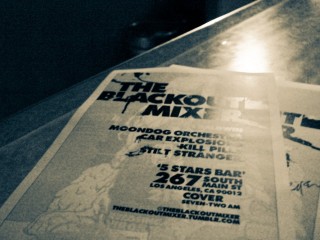
What is the BlackOut Mixer and how is it unique?
John Conway The BlackOut Mixer is a variety show put on by LA-based filmmakers, musicians, and artists — for filmmakers, musicians, and artists. The mixer is not a typical “mixer.” We’ve tried to make the event entertaining in all aspects.
We include live music from local LA artists, three blocks of short films from all over the world, and stand-up comedy. As a filmmaker, I’ve been to a grip of networking parties and mixers, and they all seem to have a similar mentality, “Come out to [bar or club name goes here] and network with industry professionals,” but once you get there it’s a bunch of people standing around, listening to some DJ spin a dubstep version of Foster The People’s “Pumped Up Kicks.”
The BlackOut Mixer is a cheap way to come out and meet local artists, while enjoying a great show. It’s in a “late night” format, where as our host Mitchel Baldwin, has an opening monologue, and also does a Q&A with our artists after their band plays or their film screens.
What inspires you to host this event for filmmakers, musicians, artists and the general public?
JC I’ve been out here in LA for roughly 5 years and it took me about three years to find a music scene I dug. After meeting our music promoter Omar, it was obvious that the musical talent here in LA is outrageous. I’m also a sucker for short films. I think they’re a great way to show an up and coming filmmakers talents. Most of these short films will never get seen, or played in front of an audience for that matter, and that sucks. Basically, I look at the friends and colleagues around me and think, “Shit, they all have talent, people need to see what they are doing!”
How has the event evolved through the first three? Where do you hope to take it in the next year?
JC We’ll we’ve actually had 4 mixers total. We had a 2.5, which was introduced as a ‘buffer’ until we figured out the new location, and what we could achieve there. It’s confusing, but 2.5 was our rebirth. The first mixer was rough, as we had maybe 15-20 people there, most of them friends… But, our online presence grew, as did the team, and we’re able to reach out to fans that had no clue what the mixer was. By Episode 2.5, we had tripled the amount of attendees. Every show has it’s bumps, but that’s all part of the fun. We’re hoping that next year the show can steer itself. All three of us have full time jobs, and have a hard time preparing, but with the help of our friends, we seem to make it work. Next year we’d love to do an all-day festival in LA, showcasing the alum and other artists of course.
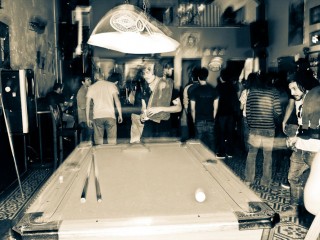
Walk me through the process. You found R Bar and then Five Star Bar receptive to hosting the event… You have calls for content weeks in advance… You promote via Tumblr, Facebook, and Twitter, most notibly with getting the attention of other Twitter accounts in the media and industry… You’ve got help with checking IDs and collecting some cover fees at the door… What’s the biggest challenge?
JC We got really lucky starting the mixer out here in LA. I attempted to do a public access show out of Daytona Beach, similar to what we do now, but for TV, I didn’t really have the knowledge to follow through, so it kinda fizzled out. We got asked to produce an event at the R BAR in Koreatown one Sunday a month, we did, it went over well, but after the second mixer we needed a bigger space, so we took the idea to the 5 Stars Bar. They seem to love the event, and have giving us the rest of the year to do the show.
As far as finding the talent, we lurk on Vimeo and YouTube for short films. I’ve been lucky to have my short film in a couple of festivals this year, so I been able to get some filmmakers on board after viewing their shorts. Omar gets us our musicians, and he’s great a bringing in an array of different sounds. Mitch, our host, bring the comedians, and basically guides the audience through the show.
The most challenging part of the mixer has to be the mixer itself. We don’t make a dime from the mixer. So doing all of this is for the love of whatever it is we’re doing. All the money collected at the door goes to the bands and takes care of what we dish out.
What’s one of your favorite moments around the event, whether it’s a special guest or audience reaction?
JC A buddy of mine over at Cinema Slaughter had promoted his horror film fest, as part of our ‘Violent Filmmaking Series’, where we screen our horror shorts. I had spoke to him a couple times before the event and asked him not to tell me what he had planned to promote his event, so I could be surprised. Two days before Episode 2.5, I got a little worried, and if you knew him, you would be. So I asked. It involved this girl naked, covered in blood, and touching herself, as she read a poem inspired by blood. Now the plan with the mixer was that it was an open forum — to an extent. I’m cool with anything, but because we wanted to stay at the 5 Stars Bar, and not have to look for another location, that stunt had to be trimmed down. So we came to a compromise. The girl still went up there, poured blood on herself while reading her ode to blood, but she was fully clothed, and she wasn’t touching herself. Haha, it was entertaining to say the least.
Any lessons learned putting this mixer together?
JC A couple quick things I’ve learned producing this mixer is to, make sure you don’t do this alone, it’ll end up killing you, always ask for help. Don’t give up, interact with your audience, ask them what works and doesn’t, it’s the only way to get creative feedback. And lastly, make sure your happy doing it, cus if you’re not, then why bother…
Where can people follow, attend, and contribute to your events?
JC Check out theblackoutmixer.tumblr.com for updates. And send all your links, either your stand-up, short films, or band pages to theblackoutmixer@gmail.com.

“[I]f you follow your bliss, you’ll have your bliss whether you have money or not. If you follow money, you may lose the money, and then you don’t have even that. The secure way is really the insecure way and the way in which the richness of the quest accumulates is the right way.” — Joseph Campbell (An Open Life, 1990)
(via screenwriter Joe Halstead)