FWD:labs

Blog


adobe-creative-suite-3.jpg

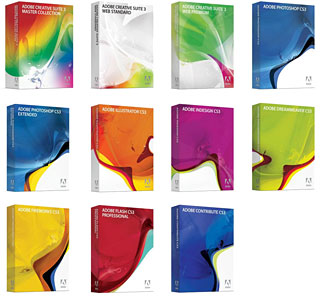
Adobe Creative Suite 3 (CS3), announced Tuesday, is an upgraded line of software relevant — now, very relevant — to film, web and design projects in cinema.

Four kinds of packages:

  • Design – Premium (Acrobat 8 Professional, Dreamweaver CS3, Flash CS3 Professional, Illustrator CS3, InDesign CS3, Photoshop CS3 Extended) and Standard (no Dreamweaver or Flash) options for print ($1799, $1199)
  • Web – Premium (Acrobat 8 Professional, Contribute CS3, Dreamweaver CS3, Fireworks CS3, Flash CS3 Professional, Illustrator CS3, Photoshop CS3 Extended) and Standard (no Acrobat, Illustrator or Photoshop) options for development ($1599, $999)
  • Production – One option for digital media and video ($1699)
  • Master Collection – 17 applications ($2499)

A la carte upgrades are also available for the Adobe and Macromedia products. Most English versions available by the end of April 2007.

In 2005, Adobe acquired Macromedia, gaining Flash (leading online video format) and Dreamweaver (leading web application). The end-result highlights their announced strategy for integration, like the ease-of-use to add rich media onto static web sites.

adobe-home-page.jpg

As a designer, Pablo Matilla noted the similarity to CS2 with one major exception: Flash. Adobe Flash. “It’s the most amazing thing. Import from Illustrator, Photoshop, straight to Flash. And now Premiere can export to Flash video. It’s pretty much everywhere now, so it’s a huge hook to have Premier. People might use Premier to release videos themselves with Flash.”

During Adobe’s launch event presentation, a mobile marketing and design firm, Punchkick Interactive, took some very clear notes, which point out the major feature improvements with programs like Photoshop and their integration improvements.

Leading up to this announcement, Adobe released a video, “What is in the box?,” on YouTube on March 1st to promote the launch. It’s been seen over 100,000 times.

Apple, a competitor for the video market, has a lot of collaboration in this campaign, including a new micro-site. The Apple Store had CS3 demos today, continuing tomorrow, and the online store has pre-ordering.


Author

Aaron Proctor
Founder, FWD:labs
Director of Photography site
Contact


<joe-carnahan-poster.jpg

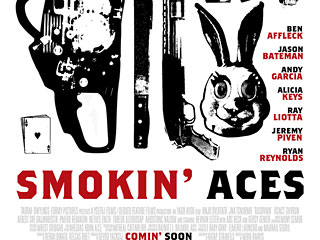
Director Joe Carnahan, behind this year’s Smokin’ Aces and the break-through Narc, has used his blog for posting killed movie poster concepts, some of which he really enjoyed:

Posterwire’s recent post, picked up this week on Signal vs. Noise, appreciated Carnahan’s online features. “It’s a rare opportunity to see all the unproduced movie posters that never make it to your local movie theatre lobby. As most film advertising art directors and designers will tell you, sometimes their best poster design work never sees the light of day beyond their own portfolios.” Carnahan also admirably opened it up to his fans with a poster contest in January.

Inversely, some concept work can be (accidentally) posted en masse around town, rather than just online. Last week, posters for the upcoming movie Captivity, starring Elisha Cuthbert (24, The Girl Next Door), show her depicted as being tortured and killed. The posters went up on 1,400 New York taxicabs and 30 Los Angeles billboards; due to much complaint, they came down this Monday.

In the story covered by Reuters, according to the distribution partner After Dark Films’s CEO, Courtney Solomon, the ads were accidentally sent to the printer who accidentally sent them to the billboard company without approvals. In a response on MotherJones.com, the process for print jobs is summed up best: “Anyone who’s ever worked at even the lowliest ad agency, production house, or print shop knows there is no possible way anything ever gets done without about 10,000 proofs, endless back-and-forths, and everyone from the board to the receptionist signing off. Whether they knew the campaign would immediately be taken down, or were just completely clueless, it’s hard to fathom how it could have actually been a mistake.”

The other distribution partner, Lions Gate Entertainment, was not involved in the marketing, but was due to see other concepts for promotion. For films seeking an MPAA rating, ads normally have to be approved by the MPAA’s advertising administration as a signatory.

See the Captivity taxicab ad on Flickr or the Captivity movie poster on the Internet Movie Poster Awards Gallery.

For more from designer Art Machine Digital, see the gallery also at IMPAwards, including the poster for Saw II that got Lion’s Gate in trouble with the MPAA last year.

For more “unseen” movie posters, like one for JFK where “art director Alex Swart’s comp/concept with a shadow of Oswald and his rifle across Jim Garrison/Costner’s forehead was ultimately rejected by producer-director Oliver Stone because the design made it look too much like a generic Kevin Costner movie,” read the articles at TVparty.


Author

Aaron Proctor
Founder, FWD:labs
Director of Photography site
Contact


5-steps-for-social-video.gif

Updated 3/2009: LiberatedFilms.com bit the dust.

In our first public resource, we introduce 5 steps to consider, within context to some base assumptions, and then chart them against 8 top contenders.

  1. Select your audience
  2. Note the lowdown
  3. Check the requirements/limits
  4. Upload the file
  5. Promote the video

YouTube is the obvious consideration, but have you considered Vimeo, LiberatedFilms or Metacafe? When it comes to social video networks, there are some hot alternatives to recommend, 20 more to highlight and many more hoping for some attention.

Our resource will be a living document, updated here on out, reflecting actual usage of these social sites.


Author

Aaron Proctor
Founder, FWD:labs
Director of Photography site
Contact


  • Published in Film + Web

Part of a series of posts about up-and-coming artists, projects or movements across film, web, or design in cinema that go the extra mile for their audience.
mesh-networking.jpg

At the OMMA conference today in Hollywood, the editor of Mediapost, Joe Mandese, told me the next big thing is “peer-assisted, streaming mesh networks.” Quite a mouthful of buzz; such a term seemly first appeared online in research (PDF) published by Microsoft in October 2005, but resurfaced in January with Shelly Palmer’s Media 3.0 blog.

Mesh networking isn’t a very sexy term. Mesh, like the pourous but flexible material, refers to the network of getting something from you to me via everyone else who has the file and their broadband. It’s downloading a file care of multiple, decentralized sources at once, so you’re less likely to lose the transfer. This and others work like voice with Skype and downloads with file-sharing networks.

Peer-assisted is a much simpler concept. One word: Napster — king of peer-to-peer (P2P) file sharing. Since Napster’s death (and rebirth as something else), file sharing has gone mostly underground with torrent downloads. Video networks that hope this is the next big thing in exchanging video include Joost (to-be-released), Veoh and BitTorrent.

The major benefit of exchanging large files like this is a play-as-you-download ability. “By the end of 2007, bandwidth costs for video delivery over the top will be at or near zero,” said Palmer. It’ll “fly under the Net Neutrality radar and make serving lots of ‘over the top’ video cost effective.” According to the research findings, as of 2005, a few minutes of buffering are needed to up to 90% playback.


Author

Aaron Proctor
Founder, FWD:labs
Director of Photography site
Contact


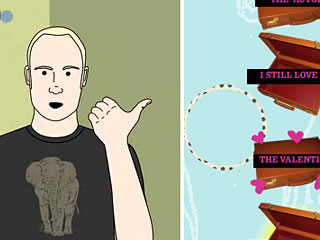
How Do I Say ThisInterview with “How Do I Say This?” site creator, Aaron Koblin, on collaboration, challenges and getting people intelligently engaged.

Your background is in design, data architecture and gaming. Can you tell me a little more about yourself, your approach and your influences?

Aaron Koblin Well, I’m probably more artist than designer… or at least designer in the broadest sense of the word. I received my MFA from UCLA’s department of Design | Media Arts and have since been working on a number of data-driven projects. I’ve become interested in creating systems to deal with large amounts of data, particularly human data. That is to say information about culture and humanity. I suppose I’m an odd mix of techno-dork and social tinkerer.

This project, which started as a contest with MTV, just won an award at the SXSW festival. What has been the emotional ride since the first idea came your way?

AK The whole thing was rather exciting. It’s not everyday that someone gives you cash and says “make something fun.” It was great having the opportunity to work with some really talented people and throw a bunch of ideas around. At times I think we were all skeptical of certain aspects, but working with each other we learned a lot and pulled everything together rather well.

How was your collaboration with filmmakers David Harris and Dagmar Weaver-Madsen?

AK The project was really David’s creation. His imagination, combined with Dagmar’s enthusiasm and attitude really made the project come together. They can’t be given enough credit for kicking everything into high gear and making things materialize the way they needed to.
How Do I Say ThisWhat were some of the challenges you faced for constructing a rich media site like this?

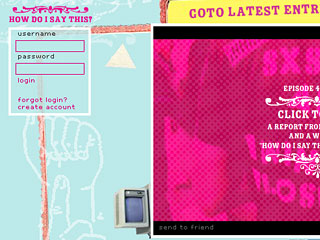
AK The usual issues were there of course, designing for a wide range of machines and users. We decided to go almost entirely Flash and this helped to standardize the experience a bit. We were trying some relatively hacked technologies with this site. Using the new bitmap access features of Flash 8 to save user drawings and icons, and the interface itself as well as the user account system were rather hacked together (luckily no one is examining my code ;) ). The beauty of these systems though is that its really just an infrastructure, ultimately it’s the users who really make it a rich experience.

The user-centric, experimental site: can you explain if this is something that’s come to be expected for a viral campaign, having people sign up to “play?”

AKI think it has come to be rather expected. That’s not to say that I think it’s necessary, or even the right approach. Account driven systems have some major advantages. I think there are reasons why this method is desirable and logical, but I’m working on another project right now which takes an alternative direction… I’m not sure that the “sign-up” methodology needs to be the core of a good user-centric site. I always say the less overhead for the end-user the better, of course there needs to be a balance, and assuring the quality of the content is paramount in these systems.

What expectations were met — or not — after launching the project?

AK Personally, I wanted to make a site that worked. I believe we succeeded in that regard. I think David and I both had ideas about ways to take the interaction further and I believe we could have dramatically boosted the viral nature of the project. Given the practical constraints we were dealing with though, I’m happy with our creation.

It was interesting to me to see you’ve done several conceptual web projects — commercial work like Sprite and personal work like The Sheep Market — and taught a class in game design on the web. Where do you see yourself going next or will you continue to explore similar work like with Processing and Flash?

AK Yes, I’ve been all over the place, and I intend to keep it that way! I’m currently working with Yahoo! in a group called Design Innovation. It’s great and I’m sure some of the things I’m working on will soon be public (and fun to talk about). I will also continue working independently on art and design projects. I guess my highest priority is making systems that get people intelligently engaged in new and unique ways.

Overall, what do you think is going to be the next big step forward in user-centric web sites?

AK Well, if I’ve learned anything it’s that users like things to be done for them, but not without their knowledge. On the practical side of things, systems that can take advantage of the wealth of existing knowledge from other popular services online and create fusions and intersections between such services will have and obvious draw. Anything that can pull people away from MySpace in large clusters will be a good thing. I think in general designers of these systems need to think more specifically (and creatively) about incentive systems and how to clarify and solidify rewards.

Thank you for your time!


Author

Aaron Proctor
Founder, FWD:labs
Director of Photography site
Contact


Over at the SXSW festival, just like at Sundance panel discussion, organizers brought some key players together to discuss the future of online video.

Tim Napoleon (Akamai), Libby Freligh (Brightcove), Chris Hock (Adobe), Will Law (Hostcast), Garrett Nantz (Big Spaceship). Great paraphrased transcript from an unknown reporter at PCWorld. Themes: Flash won because it “just worked”, lowered user costs… rights-management helps production investment… video rendering will go beyond-the-box; video interactivity will go beyond playback controls; video metadata will go beyond titles and keywords; video social use will go beyond links… machine recognition of information within video content… video will be used to program the masses. Organizing video remains one of the most important issues.

(via John Dowdell, via Scott Gruber)

Will Law at HostCast, claiming Flash will become the “MP3 of video,” ended with the best quote: “The problem isn’t storing content right now, it’s discovering and finding good content to consume.”

You can explore new, artist-managed profiles for their film, web and design work with cinema are going live this Wednesday.


Author

Aaron Proctor
Founder, FWD:labs
Director of Photography site
Contact


  • Published in Film

tarantino

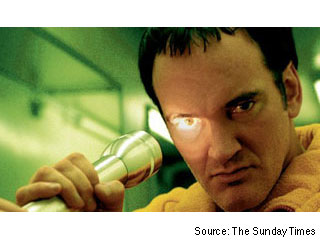
From Tarentino’s article, “I call the shots here,” on Times Online:

I’ve given nobody the authority over me to say I can’t do anything — I can do anything I want or can achieve. I don’t ask permission. I might ask forgiveness, but I won’t ask permission. There is no “they”. … If you’re an artist, as opposed to a careerist, and your movie is more important to you than a career in this town, they can never beat you. You have a loaded gun, and you know you’ve got what it takes to put it in their faces and blow their heads off. It’s about never taking the gun out. It’s about never touching the gun, never raising it, never pulling the trigger, never blowing their heads off. It’s about not going there — but knowing you can. So, if you have to flash it, it means something.

(via Kottke)


Author

Aaron Proctor
Founder, FWD:labs
Director of Photography site
Contact


  • Published in Film

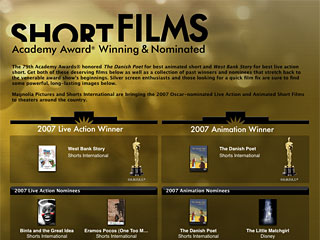
2007-02-28_itunes.jpgTo coincide with the Academy Awards, a new set of short films became available on iTunes. For $1.99, Oscar®-nominated and “winning shorts of this and year’s past are now “download-to-own,” part of a three year agreement.

In general, short films are limited to friend-of-friend networks, film-aficionado festivals, and self-promotional sites; FWD:labs works to tie all of these together for our members and capitalize on the ways to reach an expanding audience.

With iTunes, which films make the cut? One blogger noticed “Lifted” from Pixar was nominated, but not available (until summer). Their selection is unclear, unlike user-generated video uploaded to revenue-generating sites like Metacafe and Revver.

The iTunes deal adds to their content from Sundance, which went up last month with several festival-screened shorts. Less than half of the live-action and animation shorts are for sale; most are still streamed for free on the Sundance web site, but only for three months after the festival run. Back in November 2006, 16 shorts from graduates of the AFI Conservatory went on iTunes (search for “Shorts International”) for sale.

Filmmakers apparently get the bulk of the $1.99 sale. The remainder is split by Apple and, in the case of the Sundance shorts, between the Sundance Institute and the Sundance Channel. The artists are able to make deals with other distributors.

Why stop with shorts? John Cooper, the Sundance Institute’s director of programming, told the Associated Press that, “Sundance is really known for (it’s) platform for people to sell their films, and that’s mainly the feature film. We didn’t want to really interfere with that yet.” As for Apple, which tends to be a pioneer, the ability to buy and download-to-own feature films may be coming up fast. FWD:labs will be pioneering for the artists who want to push their work in this new medium.


Author

Aaron Proctor
Founder, FWD:labs
Director of Photography site
Contact


  • Published in Film + Web

At the Sundance Film Festival this last weekend, a forum of online film execs like Suzie Reider (CMO, YouTube) and Steve Starr (CEO, Revver) debated the role of the web as profitable distribution for short and feature films. Thanks to sites for emerging media, films are exposed to new audiences and/or revenues. CNET.com carried the story, “The Web, where filmmakers are also producers.”

Some predicted Hollywood blockbusters might one day premiere online. Others see the Web primarily as place for marketing films and doubt it will ever become a viable revenue-generating distribution tool.

But on this, they all agreed: we’re only in nascent stages of an unstoppable media revolution–or at least a media “evolution,” as moderator Kara Swisher of The Wall Street Journal put it–fueled by better broadband access, emerging tools and gadgets, and sites that build communities and identity.

Swisher suggested that it might just take someone like George Lucas distributing a film over the Internet–and making big money off it–in order take online distribution to the next level.

(via Mickipedia)


Author

Aaron Proctor
Founder, FWD:labs
Director of Photography site
Contact


  • Published in Film

Part of a series of posts about active artists with the tenacity to take their project to completion.

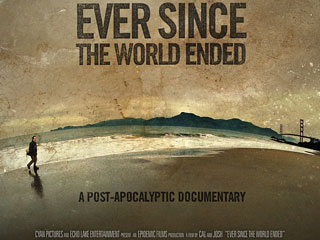
ever-since-the-world-end_sm.jpgSir Winston Churchill once wrote that “a pessimist sees the difficulty in every opportunity; an optimist sees the opportunity in every difficulty.” Filmmakers Joshua Atesh Litle and Calum Grant didn’t give up for the last six years it took to get distribution. Their post-apocalyptic documentary screens in New York City next week, January 10th thru 17th.

Ever Since the World Ended (Official Site, IMDb Listing), which was Litle’s first full-length feature, was offered broadcast acquisition for cable as well as receiving theatrical and DVD distribution. The film — completed in 2001 — follows two filmmakers wandering an empty San Francisco with a camera, twelve years after a plague has emptied the world of people, making a documentary portrait of a small community that perseveres.

“Because it is a small, modest art-house film, it will be a limited engagement of one-week only (!) at the Pioneer theater (9pm at 155 East 3rd St.) in the East Vilage.” Litle used his own e-mail list to keep those interested informed over the years. Consider buying advance tickets.

Update: The New York Times reviewed the film, available on their site, during the week-long run. The film’s distributor, Cyan Pictures, also has a micro-site for the project.


Author

Aaron Proctor
Founder, FWD:labs
Director of Photography site
Contact


  • Comments Off on [Tenacity] “Ever Since the World Ended”

  • Published in General

In the last two months, FWD:labs has experienced some long-awaited growing pains. Recently, the focus has turned to gathering feedback, scaling scopes, and switching gears to accommodate the needs of the users.

FWD:labs now collectively includes another director, writer, photographer, designer, cinematographer and a publicist, with several more soon ready to speed ahead with their best work, often for the first time online.

For me, all of this has been — and still remains — a passion for me to create, use, and now share with several new members. It’s been my focus to engage members and simplify, simplify, and further simplify. For example, members will soon receive an e-mail along the lines of “what you can do in a spare 2 minutes.” This, by far, has been the largest misstep for engagement; most people seem to expect they need a bit of time, when in fact they do not. This simple improvement should increase initial activity and help show first-timers how FWD:labs is easy and satisfying to use, ready and waiting for that kind of action.


Author

Aaron Proctor
Founder, FWD:labs
Director of Photography site
Contact


  • Comments Off on Growing Pains, but Growing Greater


burnout

In the December 4, 2006 issue of New York Magazine, the cover story follows burnout, an appropriate term almost everyone can relate to; it’s one of the problems FWD:labs aims to help solve for cinema artists. And no better time than a case when an anti-burnout type of feature is now available for members of FWDlabs.com, to better personalize their work before their public and social audience.

Jennifer Senior relates her article on this specialty of psychology to Wes Anderson’s 1998 film:

Whenever I’ve finished a big project … or whenever I’ve found myself listening to the 10 P.M. whir of vacuum cleaners in our office start for the tenth night in a row, there’s no one I identify more with than the Bill Murray character in Rushmore, particularly as he’s blankly tossing golf balls from a wire basket into his swimming pool.

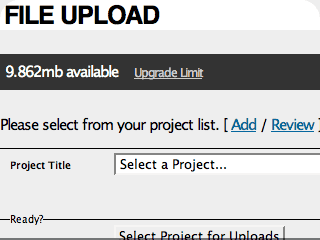
File UploadThe number one most requested feature for the new FWDlabs.com is media uploads, obviously essential for visual communications here. The feature was held and developed to be unique, as much as it can, to artists working in film, web, and design. It’s limited to JPG and PDF uploads, for example; there was no need to enter the pro-bono 320×240 video sharing business.

Graham Green’s A Burnt-Out Case, which comes in in the article, begins with a hopeless protagonist, which tends to be a feeling with cinema artists dealing with the web. Instead of accepting that truth, think of the feature building process here as a means for keeping everything organized — you’re sitting down, new to the job, with automatic filters and intuitive suggestions to get you on track from the get-go. So, no more handling web media with a blank stare; let it rip.


Author

Aaron Proctor
Founder, FWD:labs
Director of Photography site
Contact