Fast Forward

Criterion's Correction


criterion_last-emperor

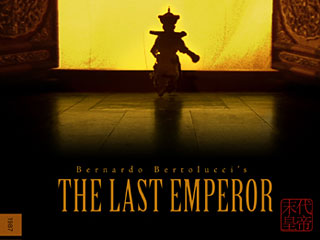
The Criterion Collection recently announced the re-distribution of Bernardo Bertolucci's Oscar-sweeping 1987 film, "The Last Emperor."

On the company's blog, which dates back to early 2006 with quote enriched details on the creative and calculated choices for the collection, the multi-author posts often address specific customer feedback. In one case, about the aspect ratio of "The Last Emperor," and how the new release has a new number. Even though it was originally seen one way, the production did not intend for the normal Academy ratio of 2.35:1, but instead planned for the ratio of 2:1. The slim but dense 70mm negative was the intended release format, which we also know in one form as IMAX.

Now, here was an opportunity to correct the film, to do justice to the injustice a whole 15% of the projected image. Criterion's president, Peter Becker, boldly affirms in a recent post that "while some viewers may prefer the wider framing, the filmmakers must have the final say. This is not a case of our losing track of our mission, but rather one of being true to it."

For a company known for his high-quality of film licensing, digital transfer, extra supplements and box packaging (as well as appropriately premium prices), it's refreshing to have a valued line on the market. It's like buying the hard cover edition when the soft would suffice. Or like designing the experience with the author in mind or in counsel: relevant rather than removed. The effort, especially with an art direction strategy of starting from scratch, serves the audience who cares about the art of the film.

For an in-depth comparison of this DVD release compared to others, from DVD menu, data bitrate and beyond, see a review for "The Last Emperor" on DVDBeaver.com.

Criterion's 4-disc set for "Emperor" came out in February 2008. The company is re-releasing about 3 titles per month.

Aaron Proctor
Founder, FWD:labs
Director of Photography site
Contact /


Finding a Familiar Face

  • Published April 13, 2008 on Web

Print by Sam Fuchs
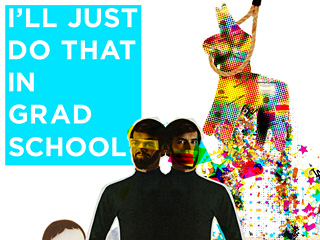
I'll just do that in grad school. Print by Sam Fuchs available at HellaMoreFunner.com

During a recent college basketball game, Sam Fuchs, designer and musician working in San Francisco, spotted a familiar face and sought out an answer online. He soon wrote on Facebook, "hey. i just saw the 76 commercial while watching the basketball game, recognized Liam, looked it up, and FWD:labs came up." The commercial was directed by Chris Yi and search engine traffic is the second most popular way people find him and his work online. (First place goes to direct links to chrisyi.com.)

Aaron Proctor: What's it like to have this 76 spot — and the Green Dot School spots — running on television at age 22?

Chris Yi: I'm not going to lie, it's pretty sweet. I still can't believe it, getting phone calls from friends saying, "Hey I just saw your commercial during the game!" It's more than I could've asked for, seriously. I'm really thankful for getting these opportunities and hopefully — fingers crossed — more will come in the future.

AP: How did the 76 project come together and with whom did you collaborate?

CY: Over the summer I was interning at an ad agency and my friend Natalie, who runs the UCLA Ad Team with me, heard about this commercial contest for 76. Natalie knew how I was into advertising and filmmaking, so she thought it'd be perfect for me.

When we found out, there was only a week before the deadline, so I threw together a small team. Jesse Epstein helped me write it and Liam Humble acted in it but also created the entire piece on the wall. I also had a lot of help from the people on my Ad Team and we all came together to pull this off.

AP: What's your biggest fear with filmmaking and how do you deal with it?

CY: With all the creative work in my life, I've always been insecure about it. I always second guess myself and worry that it won't turn out as great as I see it in my head. To combat that, I work my ass off to make sure that it turns out the way I want it to and I guess through some miracle. It always ends up working out.

AP: What are your goals for the near future?

CY: With filmmaking and advertising, I just always want to be better tomorrow than I am today. I just want to learn as much as I can and keep working on projects that help me grow my skills and keep growing as a filmmaker. So I guess my immediate goal is to find some cool people to collaborate with, make something awesome, and just learn from it. Any takers? Hit me up.


Aaron Proctor
Founder, FWD:labs
Director of Photography site
Contact /


My First Red Camera Experience

  • Published April 6, 2008 on Film, Web

Updated 8/13: You can watch the finished music video at pleasejustsaymyname.com.

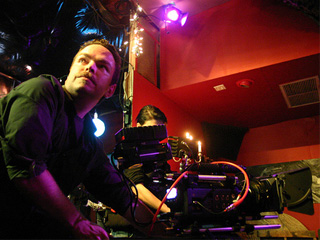
Director/DP Aaron Proctor and the Red One camera
Directing and shooting with the Red One camera Photo by Tom Smith Jr., drummer for Negative Blue


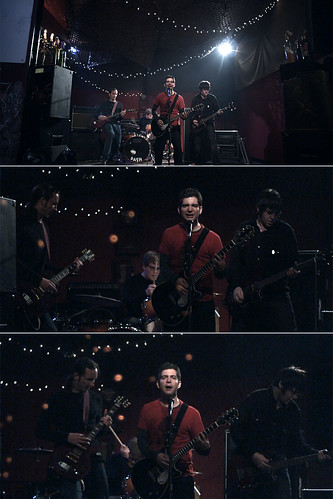
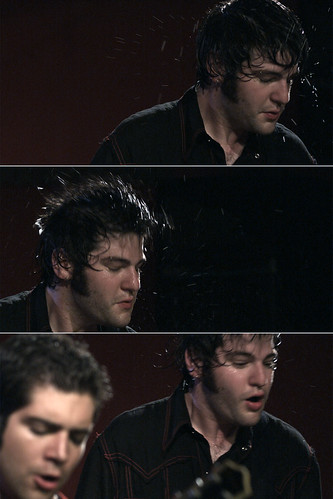
Stills from the Red footage

First Look: Negative Blue

First Look: 120fps

I just finished directing and shooting the music video for Negative Blue's "Crash", which used the new Red camera. Here is what I learned:

  • Do the right thing (on set)
    • Hire an owner/operator, like C.J. Roy, at least as your DIT: tips and tricks will spread through the crew all shoot long
    • Shoot 4K at the sure-thing aspect ratio of 2:1, instead of 16:9, but dial in your gridlines to operate
    • Learn what doesn't work: there's no viewfinder (yet), the product design is a lot of form and only a little function, and the film plane's hook for measuring focus is right by the big red record button; expect to discover you're own behind-the-scenes footage burning to disk
    • Suck it up and shoot at half the size — 2K at 120fps … or at the technology-limited 113fps if all you've got is CompactFlash cards and not hard drives
  • Know your place: you're on the bleeding-edge
    • Use double redundancy backups with FW800 and/or eSATA from Fantom Drives; they're handy to give one to an editor, too
    • Think of yourself in the same boat at Peter Jackson, Doug Liman, and Steven Soderbergh — their latest projects were shot with this camera — and then get over it
    • If you're an owner/soon-to-be-owner, the camera really costs much more than the pricetag ($17,500)
    • Figure out your post production workflow, even though the Red post production workflow isn't all that figured all out yet; support is mostly crowdsourced
    • Upgrade (or downgrade) the camera's operating system: development (and bug-squashing) is fast
    • Everything you set, short of the focus and aperature, is metadata; the inside joke of "fix it in post" is no longer a joke
  • Familiarize yourself with the community
  • Be prepared to give up shooting film
    • Director/DP Steven Soderburg notes on the company's web site, "I should call up Film on the phone and say, 'I've met someone.'"

Aaron Proctor
Founder, FWD:labs
Director of Photography site
Contact /


For more posts, view the complete archive

FWD:labs
Part of the FWD:labs collective.
For gathering, sharing and celebrating cinema artists
and their work in film, web and design.

About FWD:labs • Blog • Collective Resources • Contact FWD:labs
Terms of Service • Privacy • Copyright © 2008 FWD:labs. All rights reserved.