


-
Format
 Cool business card designs (creativebits.org)
“Combine different papers. Use office scrap. Write fun copy. Free one way ticket to the moon.”Inkjet Printed Film Process (jemof.com)
“Video frames printed onto transparency film.” -
Titles
The Art of Branding (guykawasaki.com)
“Brands are built on what people are saying about you, not what you’re saying about yourself. People say good things about you when (a) you have a great product and (b) you get people to spread the word about it. … As much as a I love marketing, at the end of the day, customers ultimately determine what your brand means.” Down With Titles (garrettdimon.com)
For those without clearly defined roles: “With descriptions instead of titles, you really get down to explaining what it is that we do much better than any single word or phrase could do.” -
Constraints = Creativity
 Moo Cards – “Competent, if Not Brilliant” (niallkennedy.com / willotoons.com)
Podcast, interview with Richard Moross of Moo Cards: “They’ve been around for 300 years. They’re the single most successful networking tool of all time, bar none. … We could offer you a thousand different choices. However, it helps people move through the process quickly when they have fewer choices.”What’s in a name? (andybudd.com)
“Everybody is either a ‘web designer,’ a ‘musician’ or a ‘DJ,’ and usually all three. … (But) you need to be able to explain to potential employers and clients what you do as succinctly as possible. Secondly you need to be able to differentiate yourself from potential competition, and the hordes of hobbyists out there.” -
Design
How to make business cards that people keep (valleywag.com)
“Hire a real designer. They can pull off slick layouts that you won’t find in Microsoft Publisher.” -
Considerations
- Process – letterpress, printing press, photo copier, etc.
- Shape – 3.5″ x 2″ norm in U.S., half-size, square, etc.
- Color – one-, two-, four-color [CMYK], white space
- Copy – too much vs. too little, serious vs. witty
- Quantity – sustainable information, titles
- Variants – differences in color, image, title, etc.

Follow All Articles


Wired Magazine ran a blog post on May 21, 2007 about failed TV shows going big, thanks to their online potential. It’s no mystery anymore that TV programs new, old or still in development show up online — often in the same night, legally or otherwise — and people tune in. When you’re not “on the (studio) lot,” it’s no loss going online; the producers can at least get someone to watch and maybe recognize their sleeper success. And maybe if they plan it right, with the faux MySpace profiles, convenient “e-mail to a friend” sidebars, catchy official sites with community-building plug-ins and the cold calls to YouTube to “feature me,” the show might have a chance.
Where the money’s going
In New York City this last week, there was the networks’ annual “don’t-you-know-how-amazing-this-is” event for media agencies and advertisers called the “Upfronts,â€? where the TV network’s line-ups are announced and ad buys are made in a frenzy. The big change this time around — thanks to the advent of Tivo, YouTube, DVR’s and the increasing coolness of not watching TV anymore — they’re no longer buying just a primetime slot. AdWeek notes (link no longer online) that it’s now about “live-plus-same-day” or “live-plus-three-day,” since people aren’t glued to the tele at the original airtime.
Reinventing the remote control
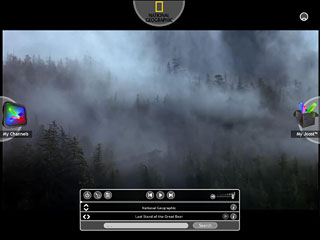
Of course, one start-up that pleases both producers and advertisers — excluding the “user generated” echelon — is Joost. This soon-to-launch online video distribution platform is a big deal and its gearing up to take on your primetime viewing rituals. Think of it as how iTunes handles television shows: democratizing the solo episode, but for free. In the last two months, since their first commercial aired during the Super Bowl, Joost made deals where YouTube and News Corp. could not: they wrangled Viacom, CBS, Warner Music Group, CNN, Sony and others like Creative Artists Agency, Sports Illustrated, NHL and Hasbro. (Check Techcrunch’s regular coverage.) And in terms of advertising, the model for Joost is — for now — quality over quantity. (Read Wired Magazine’s interview [2/2007]; Kazaa and Skype are part of the track-record for Joost’s founders.) Since they’ll be able to target your show, zip code and recency of viewing, you’ll see a five- to ten-second ad pop-up over the show.
Ad-supported free TV is quite a turn on
Here are some example trends of existing ad-supported free TV:
- “30 Rock”
Recent entire episodes on NBC.com’s own video player (Flash)
Separated into 4 parts with single-sponsor ad 4 times per half-hour per show - “Shark”
Recent entire episode on CBS.com’s own “Innertube� video player (Flash with RealPlayer)
Separated into 5 parts with single ads 5 times per half-hour per show - “Lost”
Recent entire episodes on ABC.com’s own video player (Flash with third-party plug-in)
Not separated into parts with single-sponsor ad 2 times per half-hour per show
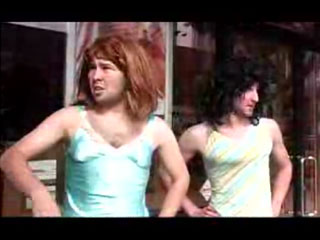
But for video producers without network distribution deals, making a big impression is key. You need millions of viewers, not dollars, to be taken seriously. The famous user-generated video distributor, YouTube, recently paid reward to their most subscribed original hits. (Many competitors — see our collective resource of social video sharing networks — already share ad revenue with their most popular distributions.)
Up-and-coming quality television
Example shows off the tube and on the internet, already in (or should be in) the news:
- “Gay Robot” (pilot only)
Why watch? Adam Sandler team’s involved. - “Nobody’s Watching” (pilot only)
Why watch? The CW’s ol’ WB network passed it up. - “Lonelygirl15” (on-going series)
Why watch? 10 million viewers and 93,000 subscribers, even after it was exposed as fake early-on. - “smosh” (on-going series)
Why watch? YouTube’s all-time #1 broadcaster, for now, with 74 million plays. - “DERRICKcomedy” (on-going series)
Why watch? Self-described improv between “silly and awful.” - “Fireside Chats” (on-going series)
Why watch? Regular screenings at UCLA are packed.

Max Sokoloff is a 14-year old director in San Francisco. His film, “Voyage of the Mind,” was recently awarded an honorable mention in the 2007 Northern California Television Academy Awards. I was re-introduced to Max on a trip to San Francisco in December 2006, at Ronald Chase’s Art & Film for Teenagers — a group that meets on Fridays and Saturdays and is open for anyone to attend, with a separate filmmaker’s workshop, of which I’m an alum. Astute, intellectual and serious, Max is a young award-winning filmmaker, studying and practicing with art films while in the midst of high school.
What are you most proud of and what do you want to do next?
Max Sokoloff I’m most proud of a film I made [in 2006] called “Intermissions.” Mainly, just because it is the most ambitious project I’ve worked on. It was filmed all in one day (9 hours) and surprisingly turned out really well considering the circumstances. This year I’ve been working on so many different projects. Slowly, some of them seem to be coming together and some seem to be falling apart. I just finished a dance film inspired by Wong Kar Wai.
“What ___ Taught Me About ___”
MS Watching the films of Wong-Kar-Wai have taught me so much about movement and how the camera can be used effectively. He is an expert when it comes to movement as emotion and his films have this visual poetry, which very few filmmakers can measure up to.
What real or imaginary technology in emerging media (mobile, web) would you want to explore and why?
MS I never have really thought about imaginary technology. Right now, I am still just trying to learn the basics and learn how to make a good film.
With whom and how do you collaborate with best?
MS I think one of the important qualities of being a director is being able to work with a variety of people under a variety of circumstances. I try and work with as many people as possible and I end up working in such different ways.
I have been working a lot lately with Oren Ratowsky on scripts and productions. He does fabulous camera work. And I always check my scripts by Isaiah Dufort because he is an outstanding writer (especially gifted when it comes to dialogue).
Your top regular influences for creative ideas?
MS I have been reading some short stories by Isak Dinesen, which have been really inspiring. She has wonderful imagery in her writing and it seems perfect for film. Yesterday, I just re-watched a film by the Dardenne brothers called L’enfant.
I wasn’t sure at first, if film was what I wanted to pursue, but after seeing [Frederico] Fellini’s 8 1â?„2 I was convinced. The imagery, symbolism, and metaphor, and the truthful qualities of the story are spectacular. The ending scene is burned into my brain, and I believe it is one of the most amazing scenes in film. All these people from Guido’s life come and start dancing with their hands held together on a circus ring, as if to say, “Life is like a circus.” In this way, the scene is a metaphor for his life, and his life becomes his film. He joins in this circle and dances with his life and dances in his work, and he is a part of his art and his art is inseparable from who he is. I feel exactly the same as Guido and Fellini. My art is apart of me and who I am.
One other big influence: [Krzysztof] Kieslowski. Kieslowski is god.
(Photo by Oren Ratowsky.)