Fast Forward

Gratefulness

  • Published April 24, 2007 on General

joshua-bell-experiment.jpg

On April 8th, 2007, the Washington Post conducted an experiment during a Washington D.C. rush hour. A man with a violin started to play at the L'Enfant Plaza Station. Little did anyone realize, as they rushed past in judgment, the musician was world-famous Joshua Bell, competing for their attention. But most kept on about their day. To some, this is depressing; to others, this is understanding gratefulness.

"'At a music hall, I'll get upset if someone coughs or if someone's cellphone goes off. But here, my expectations quickly diminished. I started to appreciate any acknowledgment, even a slight glance up. I was oddly grateful when someone threw in a dollar instead of change,' (said Bell to staff writer Gene Weingarten.) This is from a man whose talents can command $1,000 a minute."

You can read the full article online and watch video of the passers-by at WashingtonPost.com, who uses Brightcove to embed and serve up their video.

(via Andrea)


Aaron Proctor
Founder, FWD:labs
Director of Photography site
Contact /


Thanks Technology, I'm Looking Better Already

  • Published April 20, 2007 on Film

apple-finalcut-server.jpg

A handful of professional editors recently contributing to the 2006 ACE survey. Final Cut Pro came in third, behind Avid Media Composer and Avid Adrenaline, for systems used in the industry. Last Sunday, on April 15, 2007, Apple announced a handful of pro-grade improvements at the NAB conference in Las Vegas:

  • Final Cut Server, new Apple-fied version of a video management system originally called Artbox by proximitygroup.com, which Apple acquired in December 2006
  • Final Cut Studio 2, new versions of video and audio editing software
  • Color, a pro-facing color grading app
  • AJA's I/O-HD, up- and down-converting HD hardware to link up a Macbook
  • ProRes 422, new compression format ideal for broadcast(For live coverage in depth, see Engadget's post.)

Joel Coen (O Brother, Where Art Thou?, Fargo), speaking in a promotional video for Apple, explains how these advances in technology speak more for the artist's creative thinking. "As the machines get more sophicated, the thinking about it can get more sophisticated. That kind of symbiosis is interesting, that why all the new technology is interesting. We're not interested in technology per se, but how it lets you think about new things and do new things."

So, between announces like how Matrox is going to offer lower-cost HD resolution for non-HD monitors and how Panasonic has a new 1080i format camera (AG-HPX500 P2 HD) and portable field player (AG-HPG10), technology is rapidly evolving the workflow and aesthetic for faster, cheaper, and hopefully better works.

red-one.jpg

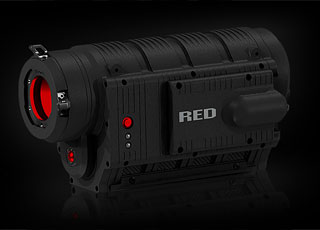
On April 10, 2007, on his blog at fuzby.com, director of photography Matt Uhry shares his opinion with how technology like the Red One camera — last year's NAB favorite, plugged this year for it's Final Cut compatibility — does not advance the quality of cinematic storytelling at large.

"These cameras will change everything and nothing. In the next 2 years they will displace film cameras at the low and middle ends of the market. At the high end, where the cost savings are less important aesthetic or practical choices will rule. Crews will change some, the film loader will still sit in the dark, but he/she will be copying drives and maybe making DVD's for dailies in the camera truck. … Electronically shot films will start look much better, but the cameras won't make better films, that will still be up to you and me."


Aaron Proctor
Founder, FWD:labs
Director of Photography site
Contact /


5 Problems with All Flash Web Sites

  • Published April 12, 2007 on Web

all-flash_mycadillac.jpg

1. Linear lock-down

Problem: Start at the beginning. No user-empowerment. No "chapter skip," even if there isn't a splash animation. No persistent mute button. Frustration ensues.

Solution: You could break your Flash site into different chapters. You could use conventional approaches, like contrast and mouse-overs. You could put links to everything up-front. You could use Flash's shared objects to store a preference for each visitor. This is a good place to use a flow chart if you're the designer. Nothing concrete, more like a general description of each "page" or "user stop", with lines mapping out expected, or forced, navigation to the next page(s). This also is irreplaceable when it comes to later versions.

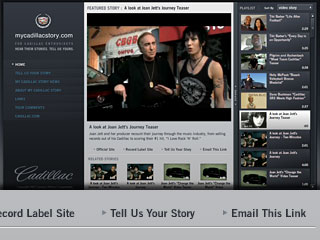
Example: mycadillacstory.com, a video site for brand enthusiasts to share their experiences, allows you to "Email This Link" for individual videos, so you can easily return to specific parts of the all-Flash site. "Permalinks" (jargon for permanent links) also help with tracking visits and returning to a page after it falls off a front page. (Site by Modernista.)
all-flash_designcanchange.jpg

2. Super-unusable uses

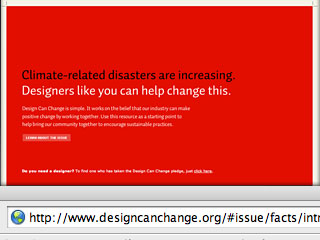
Problem: Web browser only, no "back" button, no print, no deep bookmark. HTML sites set up some rules and expectations, which help people judge a site's efficiency in getting where they want.

Solution: On the heels of linear control, you could bring them into different HTML pages. This helps with going "back" and pulling up bookmarks. You could even offer up the print option if your content is laid out separately and piped into Flash with text files or a database.

Example: Design Can Change, a recently-created site encouraging sustainable design, uses special addresses like "…/#resources/facts/intro" for getting around with ease. (Site by smashLAB.)
all-flash_aiga.jpg

3. Search engines? I don't need no stinkin' search engines.

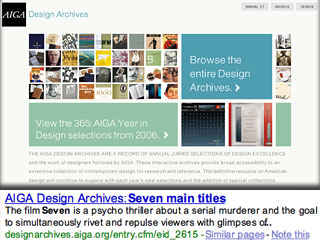
Problem: Finds page one. No deep links. No keywords. Even small HTML sites can be found through the "back door," finding your relevant content first, rather than go through the front door.

Solution: Along with control benefits, you could tag deeper pages, but you're still missing the bonus points of contextual relevance. Optimize as many pages (HTML) as you need with routing to that frame/chapter/file. And test drive with "swf2html" in Adobe's Flash Developer Kit.

Example: AIGA Design Archives, an expansive and updated directory of jury-selected design work, has simply titled pages for every item, so searching for "Seven main titles" — to piggy-back on our recent film titles post — finds entry #2615. (Site by Second Story and thirdwave.)

Note: In March 2007, 40% of traffic to FWDlabs.com were organic referrals, or visitors coming from (often very specific) Google searches.
all-flash_imaginaryforces.jpg

4. Load, cache and two smokin' versions

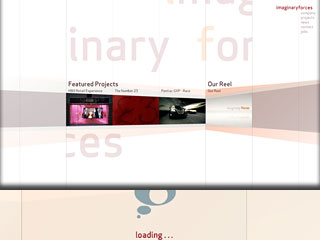
Problem: You've got to be careful to pre-load, auto-refresh the cache, and consider a lo-fi version, which can get out of date or miss the sell.

Solution: You could load files within files to save yourself and your visitors some time. You could use Flash ActionScript for randomly generated numbers, tag-teamed with an HTML no-cache reference. You could run your site off a CMS (content management system) to auto-generate two versions at once.

Example: Imaginary Forces, who updated their reel in March 2007, has multiple "loading" loops while going across the site, but runs out of one container - a single Flash file.

all-flash_newsmap.jpg

5. Build now, update later, right?

Problem: Once you're set, how quick can you update? This is the number one problem with building first, asking questions last. Most Flash sites are static, like an informational kiosk, or map out their information architecture to plan for growth. It's also a common problem with inexperienced software developers.

Solution: You could build your Flash site with a plan to grow, where it's not stuck behind hours of update steps and instead ready to run right beside you. Text and links are easiest to update. Images and video are trickier. User interface elements like navigation can be trickiest. This is another good place for a simple flow chart. Break down by area, function, etc. using a "now, next, later" analogy.

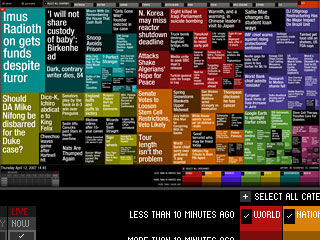
Example: Newsmap, which changes based on algorithms to judge the recency and repetition of news headlines, is designed to update automatically. (Site by Marcos Weskamp.)

More in Web

On deck with some established artists linked on FWD:labs will be more dynamic web sites running off our app, some which may choose to have Flash here and there or everywhere. All will be brandable to the user's taste. This will be a premium feature.

Special thanks to Joe Carlson for editing assistance.


Aaron Proctor
Founder, FWD:labs
Director of Photography site
Contact /


Anatomy of a Saul Bass title design


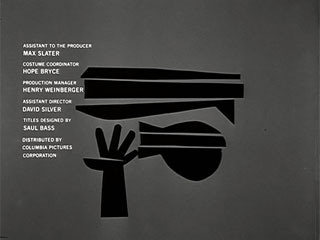
saul-bass-titles.jpgWith Otto Preminger's 1959 film Anatomy of a Murder, film critic Leo Goldsmith — a contributor to Reverse Shot and The Village Voice — describes part of the stark opening sequence: "Echoing the deliberate manner in which the film dissects the circumstances of a murder case, the credits also provide some witty juxtapositions of titles and images: James Stewart naturally gets the head; Lee Remmick a leg; Duke an arm; and Preminger’s credit comes once a disembodied hand seems to cover the lens." Goldsmith elaborates on an inspiring tribute site for Saul Bass at NotComing.com, featuring stills and overviews of his title design collaborations.

Bass, who passed away in 1996, was featured Bass as a design pioneer in Communication Arts magazine, who spoke with director Martin Scorsese about his designs. “Bass fashioned title sequences into an art, creating in some cases, like Vertigo, a mini-film within a film. His graphic compositions in movement function as a prologue to the movie—setting the tone, providing the mood and foreshadowing the action." Bass did the opening titles for Scorsese's Goodfellas, Cape Fear and Casino.

YouTube, as you can expect, has most of the opening sequences, amalgamated recently at BlogDeCine.com.

A short biography, stills and graphic identities are on DesignMuseum.org; a Bass retrospective took place at the London museum last year.

There are also many related links and books on TheDesignEncyclopedia.org.

A retrospective on Bass just ended at the Skirball Cultural Center in Los Angeles. Some images made it to Flickr.

Upcoming April 11, in the world of opening film titles, Kyle Cooper (Se7en, Dawn of the Dead, Spider-Man series) will be speaking on the art of title design at an AIGA Atlanta event. Cooper and Bass are often compared, but take the introductions in very different directions, as elaborated in Jon M. Gibson's article for Wired Magazine. He was interviewed last week by Curt Holman at CreativeLoafing.com.


Aaron Proctor
Founder, FWD:labs
Director of Photography site
Contact /


For more posts, view the complete archive

FWD:labs
Part of the FWD:labs collective.
For gathering, sharing and celebrating cinema artists
and their work in film, web and design.

About FWD:labs • Blog • Collective Resources • Contact FWD:labs
Terms of Service • Privacy • Copyright © 2008 FWD:labs. All rights reserved.